

Most bloggers in 2026 are already using AI tools — but only a few are using the ones that actually drive traffic and rankings.The best AI tools for blogging have fundamentally changed how content gets made — and in 2026, they are no longer optional extras for serious bloggers. They are the difference between publishing consistently and falling behind.
Whether you run a personal blog, manage content for a brand, or freelance as a writer, AI tools now assist with every stage of the process: topic research, draft generation, SEO optimisation, editing, and repurposing. The bloggers outperforming their competition are not necessarily more talented — they are better equipped.
This guide covers the eight best AI tools for content creation available today, with clear assessments of what each one does, who it suits, and what it costs.
If you work across other writing tasks, see our guides to the best AI writing tools in 2026, the best AI tools for students in 2026, and the best AI tools for research in 2026.
Why Use the Best AI Tools for Blogging in 2026?
Blogging in 2026 is more demanding than it has ever been. Readers expect well-researched, clearly written, search-optimised content published on a consistent schedule. That is a significant workload — especially for solo bloggers or small teams managing multiple channels at once.
AI writing tools reduce the time and effort involved in every stage of content production without reducing quality. Here is what the right tools actually do for your workflow:
- Accelerate drafting. A blogger who previously spent three hours producing one post can now complete a first draft in a fraction of that time, with more time left for editing and strategy.
- Maintain consistency. AI tools lower the barrier to getting started, reducing blank-page moments and helping you publish on schedule.
- Improve content quality. Grammar tools, clarity checkers, and SEO analysers catch the weaknesses that are easy to miss when you are both writer and editor.
- Strengthen search performance. The best blogging AI tools in 2026 include SEO features that help your content rank — not just read well.
The bloggers seeing the strongest results are not replacing their judgment with AI. They are using it to extend their output, protect their time, and focus on the creative and strategic work that machines cannot replicate.
The 8 Best AI Tools for Blogging in 2026
1. ChatGPT – Best All-Round AI Writing Assistant
ChatGPT, developed by OpenAI, is the most widely used AI tool in content creation — and it earns that position through genuine versatility. It handles brainstorming, outlining, drafting, rewriting, research assistance, and format conversion with equal competence, all through a simple conversational interface.
Key features:
- Long-form draft generation across any topic or format
- Conversational editing through follow-up prompts
- Research assistance and concept explanation
- Headline, meta description, and social caption generation
- Document and image uploads on paid plans
- Supports dozens of languages
Pros:
- Handles every stage of the blogging process, not just drafting
- Free tier includes GPT-4o — capable enough for most daily tasks
- Adapts naturally to specific tone, length, and format instructions
Cons:
- No native SEO analysis or keyword data built in
- First drafts require editing — outputs are starting points, not finished articles
- Facts need independent verification before publication
Best use cases: Generating post outlines, writing first drafts, repurposing content across formats, writing meta descriptions and social copy.
Pricing: Free. ChatGPT Plus costs $20/month.
2. Jasper – Best AI Tool for Marketing and Brand Content
Jasper is built specifically for content marketers and high-volume bloggers who need consistent, branded output at scale. Its Brand Voice feature learns how your brand or blog sounds and applies that style automatically — making it particularly valuable for teams and multi-site publishers.
Key features:
- Brand Voice for consistent tone across all content
- Long-form document editor with inline AI suggestions
- 50+ templates for blog posts, ads, email, and social media
- SEO mode with keyword guidance built in
- Built-in plagiarism checker
- Supports 25+ languages
Pros:
- Best tool on this list for producing large volumes of branded, long-form content
- Brand Voice genuinely reduces editing time on team-managed blogs
- Strong template library covers most marketing content types
Cons:
- No free tier — the most expensive option reviewed here
- More than most solo bloggers publishing infrequently will need
- Output still requires editing for accuracy and originality
Best use cases: Marketing blogs, content agencies, brand-managed editorial calendars, high-frequency publishing.
Pricing: Plans start at $49/month.
3. Copy.ai – Best for Headlines and Short-Form Blog Copy
Copy.ai was designed for marketers who need high volumes of short-form content quickly. It generates multiple variations of headlines, introductions, email subject lines, and social captions simultaneously — making it especially useful when you want options to choose from rather than a single output to edit.
Key features:
- 90+ copywriting templates covering marketing use cases
- Workflow builder for multi-step automated content production
- Brand voice settings and Infobase for storing brand guidelines
- Bulk generation for large content projects
- Multi-language support
Pros:
- Minimal learning curve — beginners are productive within minutes
- Multiple content variations generated at once
- Workflow automation handles repetitive formatting tasks efficiently
Cons:
- Less suited to full-length blog articles — better for supporting short-form copy
- Outputs can feel repetitive without customisation
- Full automation features take time to set up and learn
Best use cases: Blog headlines and introductions, email newsletter copy, social media posts, ad copy, CTA writing.
Pricing: Free plan available. Paid plans start at $49/month.
4. Writesonic – Best Blogging AI Tool for SEO Articles
Among blogging AI tools in 2026, Writesonic stands out for its SEO focus. Its Article Writer produces long-form content with search-optimised structure built in, while Chatsonic — its live-search AI assistant — draws on current web data so your content reflects the most recent information available.
Key features:
- Long-form article writer with SEO-friendly structure
- Chatsonic: AI chat with live web search integration
- Surfer SEO integration for real-time keyword optimisation
- One-click article generation from a headline or brief
- 100+ templates across content formats and industries
Pros:
- One of the strongest SEO-oriented content generation tools for bloggers
- Live web data keeps generated content current and relevant
- Produces structured long-form articles quickly
Cons:
- Output quality varies on technical or narrow-niche topics
- Articles require editing before publication
- Interface takes some time to navigate for new users
Best use cases: SEO blog posts, product reviews, affiliate content, news-style articles, content at volume.
Pricing: Free trial available. Paid plans start at $16/month.
5. Grammarly – Best AI Tool for Editing Blog Content
No list of AI tools for content creation would be complete without Grammarly. In 2026, it has evolved well beyond grammar checking into a full writing quality assistant — offering tone analysis, clarity scoring, conciseness suggestions, and AI-assisted rewriting across every platform where you write.
Key features:
- Real-time grammar, spelling, and punctuation corrections
- Tone detection and register adjustment suggestions
- Clarity and conciseness scoring with targeted rewrites
- Plagiarism checker against billions of web pages (Premium)
- GrammarlyGO for AI-assisted paragraph improvement
- Works inside Google Docs, Word, Gmail, and any browser
Pros:
- Integrates directly into the tools bloggers already use
- Free version covers most everyday editing needs
- Particularly valuable for non-native English writers
Cons:
- Some stylistic suggestions can flatten a deliberately distinctive voice
- Plagiarism checker and advanced features require Premium
- A writing quality tool, not a content generation tool
Best use cases: Proofreading before publication, tone checking, improving clarity in dense writing, plagiarism detection.
Pricing: Free. Grammarly Premium starts at $12/month.
6. Notion AI – Best AI Tool for Editorial Planning and Organisation
For bloggers managing content calendars, topic clusters, research notes, and drafts in one place, Notion AI is a genuine productivity upgrade. It combines flexible workspace organisation with AI that summarises notes, generates outlines, drafts content on request, and handles editorial planning — all inside a single environment.
Key features:
- AI summarisation of collected notes and research content
- Outline and content plan generation from brief descriptions
- Editorial calendar and content pipeline management
- Database views for topic clusters and idea banks
- Full-text workspace search and auto-fill for structured tables
- Desktop and mobile access with real-time sync
Pros:
- All-in-one workspace removes the need to manage multiple planning tools
- AI summarisation within your own notes speeds up content repurposing
- Flexible enough for both solo bloggers and small editorial teams
Cons:
- Learning curve for users new to Notion
- AI features are a paid add-on beyond the base plan
- Less powerful than ChatGPT for generating original long-form drafts
Best use cases: Editorial calendars, content ideation and clustering, repurposing posts for new formats, team content planning.
Pricing: Notion has a free plan. AI add-on starts at $10/month.
7. Surfer SEO – Best AI Tool for On-Page Blog Optimisation
Surfer SEO occupies a specific and essential role in the blogging toolkit: it tells you precisely how to structure and optimise a blog post to rank for a target keyword. While other tools on this list focus on creating and improving content, Surfer focuses on making sure that content performs in search.
Key features:
- Content Editor with real-time NLP-based optimisation guidance
- SERP analyser comparing your content against top-ranking pages
- Keyword research and topic cluster planning tools
- Content audit for improving existing published posts
- Integrations with Google Docs, WordPress, and Jasper
- AI outline generator based on top-performing competitor content
Pros:
- Provides specific, data-driven guidance for improving search rankings
- Content audit feature helps recover and improve existing underperforming posts
- Integrations with Jasper and Google Docs fit naturally into existing workflows
Cons:
- Higher price point than most tools reviewed here
- Most effective when you already have a working understanding of SEO
- Needs to be used alongside a writing tool — not a standalone content generator
Best use cases: Optimising new posts for target keywords, auditing and updating published content, building topic clusters and internal linking strategy.
Pricing: Plans start at $89/month. A free trial is available.
8. QuillBot – Best AI Tool for Rewriting and Refreshing Blog Content
QuillBot is the go-to tool when existing content needs to be improved, rewritten, or repurposed. Its paraphrasing engine offers multiple modes — Fluency, Formal, Academic, Creative, Shorten — giving bloggers precise control over how text is reformulated without losing its meaning.
Key features:
- Seven paraphrasing modes for different tones and purposes
- Summariser for condensing long articles and source material
- Grammar checker and plagiarism detector
- Co-Writer mode combining multiple tools in one environment
- Chrome extension for use inside any browser
Pros:
- Multiple modes give precise control over tone and register
- Summariser is useful for extracting key points from research and long drafts
- Free version handles most everyday rewriting tasks
Cons:
- Free tier limited to 125 words per paraphrase
- Not designed for generating original long-form content
- Best used as a refinement tool alongside a primary content generator
Best use cases: Refreshing outdated blog content, paraphrasing research sources, repurposing posts for different platforms, simplifying complex writing.
Pricing: Free. QuillBot Premium starts at $9.95/month.
Comparison Table: Best AI Tools for Blogging in 2026
| Tool | Best For | Free Plan | Starting Price |
|---|---|---|---|
| ChatGPT | All-round writing and ideation | Yes | $20/month |
| Jasper | Long-form branded content | No | $49/month |
| Copy.ai | Short-form copy and headlines | Yes | $49/month |
| Writesonic | SEO-focused blog articles | Trial | $16/month |
| Grammarly | Editing and proofreading | Yes | $12/month |
| Notion AI | Planning and organisation | Yes | $10/month |
| Surfer SEO | On-page SEO optimisation | Trial | $89/month |
| QuillBot | Rewriting and paraphrasing | Yes | $9.95/month |
How to Choose the Right AI Blogging Tool
With eight tools covering different parts of the content workflow, the most effective approach is matching each tool to the specific stage where you lose the most time — rather than searching for one solution that handles everything.
Identify your biggest bottleneck first. If drafting takes too long, prioritise ChatGPT, Jasper, or Writesonic. If your content is written but not ranking, Surfer SEO addresses that directly. If editing and polish are the issue, Grammarly is the highest-impact addition to your workflow.
Match cost to publishing frequency. Solo bloggers publishing a few times a month will get strong value from the free tiers of ChatGPT, Grammarly, and QuillBot combined. Teams or high-frequency publishers will see faster return from paid plans that remove usage limits and add workflow automation.
Consider how tools integrate with your current setup. Tools that work inside Google Docs, WordPress, or your browser create no workflow friction. Tools that require a new platform take time to build into habits. Prioritise the ones that fit naturally around how you already work.
Start with one or two tools and expand deliberately. You do not need every tool on this list. Start with the one that targets your biggest immediate challenge, use it consistently, evaluate the impact, and add further tools as specific needs emerge.
Conclusion: The Best AI Tools for Blogging Are Worth Using in 2026
The best AI tools for blogging in 2026 do not replace what makes a blog worth reading — your voice, your perspective, and your expertise. What they replace is the friction that slows down every other part of the process.
Used strategically, the right combination of AI writing tools gives bloggers more time to focus on strategy and creativity, more consistent publishing schedules, and content that performs better in search. The tools reviewed in this guide cover every major stage of content creation, and most of them are free to start.
Build your toolkit around your workflow. Start small, evaluate what works, and let the results guide your investment. The bloggers gaining ground in 2026 are the ones who have made AI a natural part of how they work — not an occasional experiment.
Frequently Asked Questions
Are AI tools for content creation suitable for beginner bloggers?
Yes. Most tools reviewed here have free tiers and minimal learning curves. ChatGPT, Grammarly, and QuillBot are the most beginner-friendly — you can produce useful output within minutes of signing up. As your blog grows and your workflow becomes clearer, more specialised tools can be added.
Can blogging AI tools help with SEO?
Directly, yes — particularly Surfer SEO and Writesonic. Surfer provides real-time, data-driven guidance for optimising blog posts around target keywords. Writesonic generates content with SEO structure already built in. ChatGPT also assists with keyword research and meta description writing even without native SEO features.
Will AI writing tools affect the originality of my blog?
Only if you publish AI output without editing it. The tools on this list generate starting points — drafts, outlines, variations — that still need your perspective, experience, and editorial judgment applied to them. The editing stage is where your content becomes distinctively yours. Bloggers who treat AI as a collaborator rather than a ghostwriter maintain originality while improving output.
Which AI tool is best for bloggers on a tight budget?
The free combination of ChatGPT + Grammarly + QuillBot covers most everyday blogging needs at zero cost. ChatGPT handles drafts and ideation, Grammarly handles editing and proofreading, and QuillBot handles rewriting and paraphrasing. If one paid upgrade makes sense, Writesonic at $16/month offers strong value for SEO-focused content creation.
Published on AIarena.tools — reviewing and comparing AI tools for productivity, blogging, and content creation. Updated March 2026.
Best AI Tools for Blogging and Content Creation in 2026
The best AI tools for blogging have fundamentally changed how content gets made — and in 2026, they are no longer optional extras for serious bloggers. They are the difference between publishing consistently and falling behind.
Whether you run a personal blog, manage content for a brand, or freelance as a writer, AI tools now assist with every stage of the process: topic research, draft generation, SEO optimisation, editing, and repurposing. The bloggers outperforming their competition are not necessarily more talented — they are better equipped.
This guide covers the eight best AI tools for content creation available today, with clear assessments of what each one does, who it suits, and what it costs.
If you work across other writing tasks, see our guides to the best AI writing tools in 2026, the best AI tools for students in 2026, and the best AI tools for research in 2026.
Why Use the Best AI Tools for Blogging in 2026?
Blogging in 2026 is more demanding than it has ever been. Readers expect well-researched, clearly written, search-optimised content published on a consistent schedule. That is a significant workload — especially for solo bloggers or small teams managing multiple channels at once.
AI writing tools reduce the time and effort involved in every stage of content production without reducing quality. Here is what the right tools actually do for your workflow:
- Accelerate drafting. A blogger who previously spent three hours producing one post can now complete a first draft in a fraction of that time, with more time left for editing and strategy.
- Maintain consistency. AI tools lower the barrier to getting started, reducing blank-page moments and helping you publish on schedule.
- Improve content quality. Grammar tools, clarity checkers, and SEO analysers catch the weaknesses that are easy to miss when you are both writer and editor.
- Strengthen search performance. The best blogging AI tools in 2026 include SEO features that help your content rank — not just read well.
The bloggers seeing the strongest results are not replacing their judgment with AI. They are using it to extend their output, protect their time, and focus on the creative and strategic work that machines cannot replicate.
The 8 Best AI Tools for Blogging in 2026
1. ChatGPT – Best All-Round AI Writing Assistant
ChatGPT, developed by OpenAI, is the most widely used AI tool in content creation — and it earns that position through genuine versatility. It handles brainstorming, outlining, drafting, rewriting, research assistance, and format conversion with equal competence, all through a simple conversational interface.
Key features:
- Long-form draft generation across any topic or format
- Conversational editing through follow-up prompts
- Research assistance and concept explanation
- Headline, meta description, and social caption generation
- Document and image uploads on paid plans
- Supports dozens of languages
Pros:
- Handles every stage of the blogging process, not just drafting
- Free tier includes GPT-4o — capable enough for most daily tasks
- Adapts naturally to specific tone, length, and format instructions
Cons:
- No native SEO analysis or keyword data built in
- First drafts require editing — outputs are starting points, not finished articles
- Facts need independent verification before publication
Best use cases: Generating post outlines, writing first drafts, repurposing content across formats, writing meta descriptions and social copy.
Pricing: Free. ChatGPT Plus costs $20/month.
2. Jasper – Best AI Tool for Marketing and Brand Content
Jasper is built specifically for content marketers and high-volume bloggers who need consistent, branded output at scale. Its Brand Voice feature learns how your brand or blog sounds and applies that style automatically — making it particularly valuable for teams and multi-site publishers.
Key features:
- Brand Voice for consistent tone across all content
- Long-form document editor with inline AI suggestions
- 50+ templates for blog posts, ads, email, and social media
- SEO mode with keyword guidance built in
- Built-in plagiarism checker
- Supports 25+ languages
Pros:
- Best tool on this list for producing large volumes of branded, long-form content
- Brand Voice genuinely reduces editing time on team-managed blogs
- Strong template library covers most marketing content types
Cons:
- No free tier — the most expensive option reviewed here
- More than most solo bloggers publishing infrequently will need
- Output still requires editing for accuracy and originality
Best use cases: Marketing blogs, content agencies, brand-managed editorial calendars, high-frequency publishing.
Pricing: Plans start at $49/month.
3. Copy.ai – Best for Headlines and Short-Form Blog Copy
Copy.ai was designed for marketers who need high volumes of short-form content quickly. It generates multiple variations of headlines, introductions, email subject lines, and social captions simultaneously — making it especially useful when you want options to choose from rather than a single output to edit.
Key features:
- 90+ copywriting templates covering marketing use cases
- Workflow builder for multi-step automated content production
- Brand voice settings and Infobase for storing brand guidelines
- Bulk generation for large content projects
- Multi-language support
Pros:
- Minimal learning curve — beginners are productive within minutes
- Multiple content variations generated at once
- Workflow automation handles repetitive formatting tasks efficiently
Cons:
- Less suited to full-length blog articles — better for supporting short-form copy
- Outputs can feel repetitive without customisation
- Full automation features take time to set up and learn
Best use cases: Blog headlines and introductions, email newsletter copy, social media posts, ad copy, CTA writing.
Pricing: Free plan available. Paid plans start at $49/month.
4. Writesonic – Best Blogging AI Tool for SEO Articles
Among blogging AI tools in 2026, Writesonic stands out for its SEO focus. Its Article Writer produces long-form content with search-optimised structure built in, while Chatsonic — its live-search AI assistant — draws on current web data so your content reflects the most recent information available.
Key features:
- Long-form article writer with SEO-friendly structure
- Chatsonic: AI chat with live web search integration
- Surfer SEO integration for real-time keyword optimisation
- One-click article generation from a headline or brief
- 100+ templates across content formats and industries
Pros:
- One of the strongest SEO-oriented content generation tools for bloggers
- Live web data keeps generated content current and relevant
- Produces structured long-form articles quickly
Cons:
- Output quality varies on technical or narrow-niche topics
- Articles require editing before publication
- Interface takes some time to navigate for new users
Best use cases: SEO blog posts, product reviews, affiliate content, news-style articles, content at volume.
Pricing: Free trial available. Paid plans start at $16/month.
5. Grammarly – Best AI Tool for Editing Blog Content
No list of AI tools for content creation would be complete without Grammarly. In 2026, it has evolved well beyond grammar checking into a full writing quality assistant — offering tone analysis, clarity scoring, conciseness suggestions, and AI-assisted rewriting across every platform where you write.
Key features:
- Real-time grammar, spelling, and punctuation corrections
- Tone detection and register adjustment suggestions
- Clarity and conciseness scoring with targeted rewrites
- Plagiarism checker against billions of web pages (Premium)
- GrammarlyGO for AI-assisted paragraph improvement
- Works inside Google Docs, Word, Gmail, and any browser
Pros:
- Integrates directly into the tools bloggers already use
- Free version covers most everyday editing needs
- Particularly valuable for non-native English writers
Cons:
- Some stylistic suggestions can flatten a deliberately distinctive voice
- Plagiarism checker and advanced features require Premium
- A writing quality tool, not a content generation tool
Best use cases: Proofreading before publication, tone checking, improving clarity in dense writing, plagiarism detection.
Pricing: Free. Grammarly Premium starts at $12/month.
6. Notion AI – Best AI Tool for Editorial Planning and Organisation
For bloggers managing content calendars, topic clusters, research notes, and drafts in one place, Notion AI is a genuine productivity upgrade. It combines flexible workspace organisation with AI that summarises notes, generates outlines, drafts content on request, and handles editorial planning — all inside a single environment.
Key features:
- AI summarisation of collected notes and research content
- Outline and content plan generation from brief descriptions
- Editorial calendar and content pipeline management
- Database views for topic clusters and idea banks
- Full-text workspace search and auto-fill for structured tables
- Desktop and mobile access with real-time sync
Pros:
- All-in-one workspace removes the need to manage multiple planning tools
- AI summarisation within your own notes speeds up content repurposing
- Flexible enough for both solo bloggers and small editorial teams
Cons:
- Learning curve for users new to Notion
- AI features are a paid add-on beyond the base plan
- Less powerful than ChatGPT for generating original long-form drafts
Best use cases: Editorial calendars, content ideation and clustering, repurposing posts for new formats, team content planning.
Pricing: Notion has a free plan. AI add-on starts at $10/month.
7. Surfer SEO – Best AI Tool for On-Page Blog Optimisation
Surfer SEO occupies a specific and essential role in the blogging toolkit: it tells you precisely how to structure and optimise a blog post to rank for a target keyword. While other tools on this list focus on creating and improving content, Surfer focuses on making sure that content performs in search.
Key features:
- Content Editor with real-time NLP-based optimisation guidance
- SERP analyser comparing your content against top-ranking pages
- Keyword research and topic cluster planning tools
- Content audit for improving existing published posts
- Integrations with Google Docs, WordPress, and Jasper
- AI outline generator based on top-performing competitor content
Pros:
- Provides specific, data-driven guidance for improving search rankings
- Content audit feature helps recover and improve existing underperforming posts
- Integrations with Jasper and Google Docs fit naturally into existing workflows
Cons:
- Higher price point than most tools reviewed here
- Most effective when you already have a working understanding of SEO
- Needs to be used alongside a writing tool — not a standalone content generator
Best use cases: Optimising new posts for target keywords, auditing and updating published content, building topic clusters and internal linking strategy.
Pricing: Plans start at $89/month. A free trial is available.
8. QuillBot – Best AI Tool for Rewriting and Refreshing Blog Content
QuillBot is the go-to tool when existing content needs to be improved, rewritten, or repurposed. Its paraphrasing engine offers multiple modes — Fluency, Formal, Academic, Creative, Shorten — giving bloggers precise control over how text is reformulated without losing its meaning.
Key features:
- Seven paraphrasing modes for different tones and purposes
- Summariser for condensing long articles and source material
- Grammar checker and plagiarism detector
- Co-Writer mode combining multiple tools in one environment
- Chrome extension for use inside any browser
Pros:
- Multiple modes give precise control over tone and register
- Summariser is useful for extracting key points from research and long drafts
- Free version handles most everyday rewriting tasks
Cons:
- Free tier limited to 125 words per paraphrase
- Not designed for generating original long-form content
- Best used as a refinement tool alongside a primary content generator
Best use cases: Refreshing outdated blog content, paraphrasing research sources, repurposing posts for different platforms, simplifying complex writing.
Pricing: Free. QuillBot Premium starts at $9.95/month.
Comparison Table: Best AI Tools for Blogging in 2026
| Tool | Best For | Free Plan | Starting Price |
|---|---|---|---|
| ChatGPT | All-round writing and ideation | Yes | $20/month |
| Jasper | Long-form branded content | No | $49/month |
| Copy.ai | Short-form copy and headlines | Yes | $49/month |
| Writesonic | SEO-focused blog articles | Trial | $16/month |
| Grammarly | Editing and proofreading | Yes | $12/month |
| Notion AI | Planning and organisation | Yes | $10/month |
| Surfer SEO | On-page SEO optimisation | Trial | $89/month |
| QuillBot | Rewriting and paraphrasing | Yes | $9.95/month |
How to Choose the Right AI Blogging Tool
With eight tools covering different parts of the content workflow, the most effective approach is matching each tool to the specific stage where you lose the most time — rather than searching for one solution that handles everything.
Identify your biggest bottleneck first. If drafting takes too long, prioritise ChatGPT, Jasper, or Writesonic. If your content is written but not ranking, Surfer SEO addresses that directly. If editing and polish are the issue, Grammarly is the highest-impact addition to your workflow.
Match cost to publishing frequency. Solo bloggers publishing a few times a month will get strong value from the free tiers of ChatGPT, Grammarly, and QuillBot combined. Teams or high-frequency publishers will see faster return from paid plans that remove usage limits and add workflow automation.
Consider how tools integrate with your current setup. Tools that work inside Google Docs, WordPress, or your browser create no workflow friction. Tools that require a new platform take time to build into habits. Prioritise the ones that fit naturally around how you already work.
Start with one or two tools and expand deliberately. You do not need every tool on this list. Start with the one that targets your biggest immediate challenge, use it consistently, evaluate the impact, and add further tools as specific needs emerge.
Conclusion: The Best AI Tools for Blogging Are Worth Using in 2026
The best AI tools for blogging in 2026 do not replace what makes a blog worth reading — your voice, your perspective, and your expertise. What they replace is the friction that slows down every other part of the process.
Used strategically, the right combination of AI writing tools gives bloggers more time to focus on strategy and creativity, more consistent publishing schedules, and content that performs better in search. The tools reviewed in this guide cover every major stage of content creation, and most of them are free to start.
Build your toolkit around your workflow. Start small, evaluate what works, and let the results guide your investment. The bloggers gaining ground in 2026 are the ones who have made AI a natural part of how they work — not an occasional experiment.
Frequently Asked Questions
Are AI tools for content creation suitable for beginner bloggers?
Yes. Most tools reviewed here have free tiers and minimal learning curves. ChatGPT, Grammarly, and QuillBot are the most beginner-friendly — you can produce useful output within minutes of signing up. As your blog grows and your workflow becomes clearer, more specialised tools can be added.
Can blogging AI tools help with SEO?
Directly, yes — particularly Surfer SEO and Writesonic. Surfer provides real-time, data-driven guidance for optimising blog posts around target keywords. Writesonic generates content with SEO structure already built in. ChatGPT also assists with keyword research and meta description writing even without native SEO features.
Will AI writing tools affect the originality of my blog?
Only if you publish AI output without editing it. The tools on this list generate starting points — drafts, outlines, variations — that still need your perspective, experience, and editorial judgment applied to them. The editing stage is where your content becomes distinctively yours. Bloggers who treat AI as a collaborator rather than a ghostwriter maintain originality while improving output.
Which AI tool is best for bloggers on a tight budget?
The free combination of ChatGPT + Grammarly + QuillBot covers most everyday blogging needs at zero cost. ChatGPT handles drafts and ideation, Grammarly handles editing and proofreading, and QuillBot handles rewriting and paraphrasing. If one paid upgrade makes sense, Writesonic at $16/month offers strong value for SEO-focused content creation.
Published on AIarena.tools — reviewing and comparing AI tools for productivity, blogging, and content creation. Updated March 2026.
ChatGPT – Best All-Round AI Writing Assistant
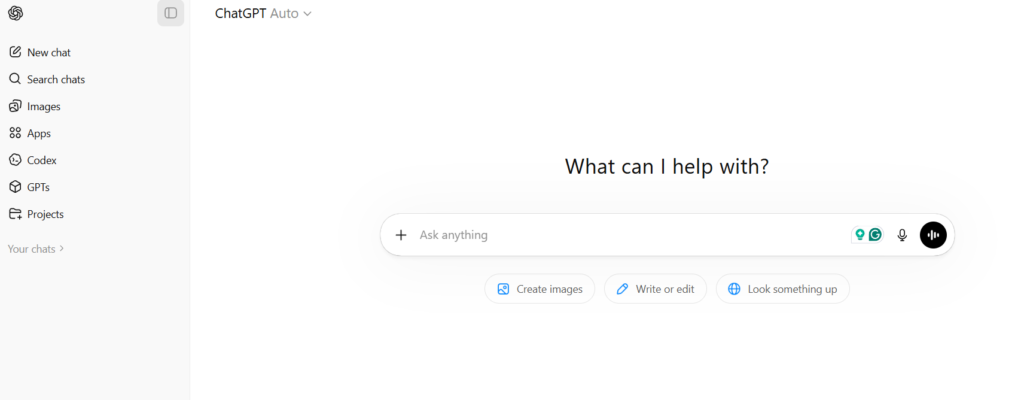
ChatGPT is one of the best AI tools for blogging and content creation in 2026. It helps generate blog ideas, create structured outlines, write full-length articles, and refine content through conversational prompts. Bloggers use ChatGPT to speed up content production while maintaining quality and flexibility.
Jasper – Best AI Tool for Marketing and Brand Content
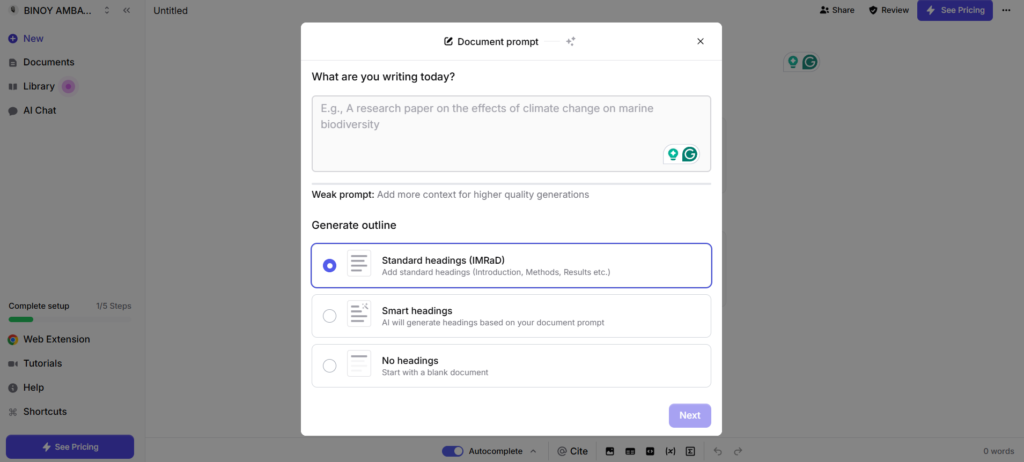
Jasper is a powerful AI writing tool designed for marketers and bloggers who need consistent, branded content. Its Brand Voice feature ensures that all content matches your tone and style, making it ideal for businesses and content teams producing large volumes of blog posts.
Copy.ai – Best for Short-Form Blog Content
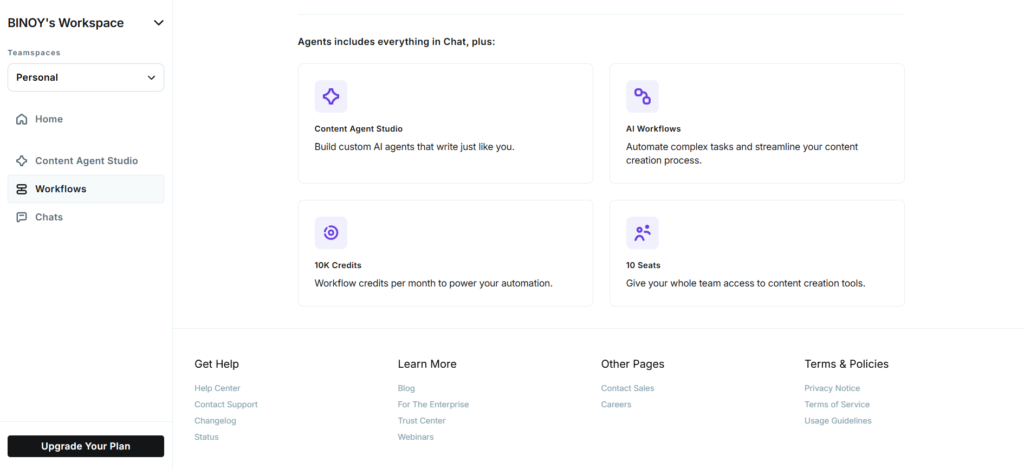
Copy.ai specializes in generating short-form content such as blog introductions, headlines, and social media captions. It is perfect for bloggers who need quick content ideas and multiple variations to choose from, improving creativity and efficiency.
Writesonic – Best AI Tool for SEO Blog Writing

Writesonic is an SEO-focused AI tool that helps bloggers create optimized articles quickly. With features like AI article generation and real-time web data integration, it enables users to produce content that is both relevant and search-friendly.
Grammarly – Best AI Tool for Editing and Proofreading
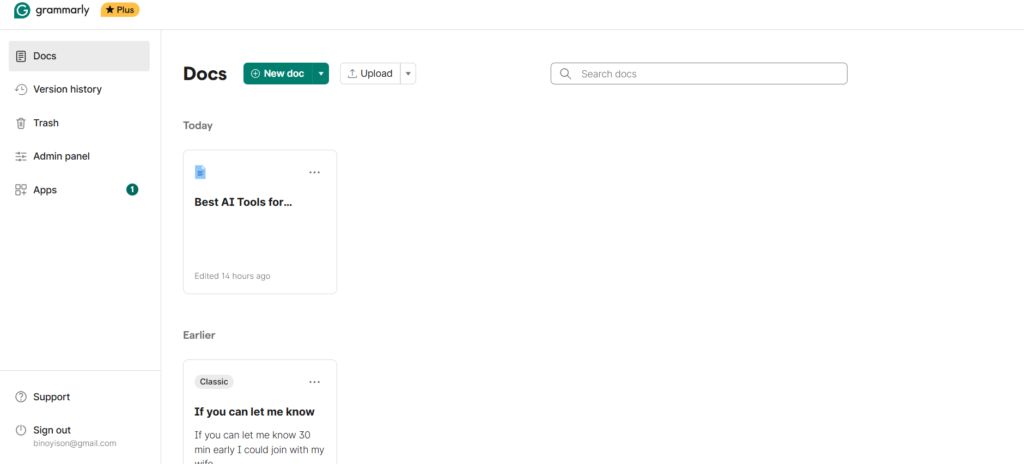
Grammarly is an essential tool for improving the quality of blog content. It checks grammar, spelling, tone, and clarity in real time, helping bloggers produce polished and professional articles before publishing.
Notion AI – Best AI Tool for Content Planning
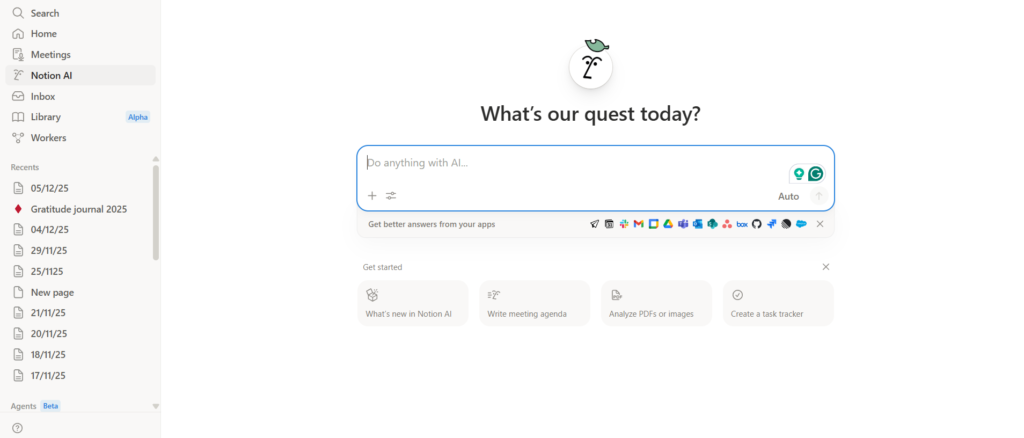
Notion AI helps bloggers organize their content workflow, manage editorial calendars, and generate structured outlines. It combines note-taking and AI-powered writing assistance in one place, making it ideal for planning and managing blog content.
Surfer SEO – Best AI Tool for Blog Optimization

Surfer SEO is a powerful optimization tool that helps bloggers improve their search rankings. It provides real-time SEO suggestions, keyword insights, and content structure recommendations to ensure blog posts are fully optimized.
QuillBot – Best AI Tool for Rewriting Content
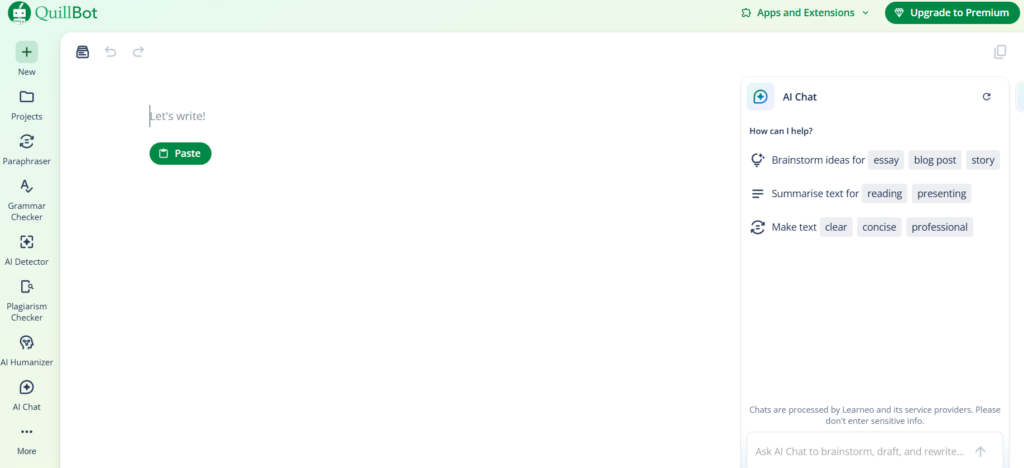
QuillBot is an AI-powered paraphrasing tool that helps bloggers rewrite and improve existing content. It offers multiple writing modes and summarization features, making it useful for refreshing blog posts and simplifying complex text.