
Google AI search update 2026 is already reducing website traffic — and most creators don’t realize why yet.
You didn’t get a warning. Google didn’t send an email. Your rankings didn’t fall — but your clicks did. Your content is still on page one. Your audience just isn’t finding it anymore, because Google is answering their questions before they ever reach your site.
Most people will realize this too late.
The sites that understand this shift now — in early 2026, while the competitive gap between adaptive and stagnant publishers is still narrow — will have a structural advantage that compounds over the next two years. The sites that ignore it will spend 2027 trying to recover traffic they can’t get back.
This is what changed, who it affects, and what you need to do right now.
[AdSense Ad Placeholder]
What Just Changed in Google AI Search

The change is called Google AI Overview — and it is the most consequential structural shift in search since Google first introduced featured snippets.
Here is how search used to work:
Before: User searches → sees 10 ranked links → clicks the most relevant one → visits your site → reads your content → you earn the traffic, the pageview, the ad impression, or the affiliate click.
Here is how it works now:
After: User searches → reads an AI-generated answer synthesized from multiple sources directly at the top of the results page → their question is answered → they leave without clicking → your site receives zero traffic from that search.
This is the google ai overview update at its most direct. The user’s intent is satisfied entirely within Google. The blue links still appear — they are simply lower on the page, less prominent, and consistently overlooked by users who already have their answer.
According to Google’s official Search blog, AI Overviews now appear across a substantial proportion of informational queries in the United States, with rollout continuing across more query categories and global markets through 2026.
This is not temporary. This is the new architecture of search.
Why This Matters: Traffic, Revenue, and the SEO Shift
The google ai search changes are not abstract. Their impact on content-based income is direct and measurable.
Click-through rates are collapsing for informational queries.
Informational queries — “how to,” “what is,” “best X for Y,” step-by-step instructions, comparisons, definitions — are the traffic foundation for most blogs, niche sites, and affiliate content operations. These are the exact query types AI Overview targets first and most aggressively. The website traffic drop google ai is most severe where most content sites are most dependent.
Monetization chains are breaking.
AdSense revenue requires pageviews. Affiliate income requires clicks. Lead generation requires visits. Every content monetization model depends on traffic arriving at your page. If users never arrive because Google answered the question first, no amount of on-page optimization repairs the model.
SEO in 2026 has new success metrics.
Ranking #1 no longer guarantees the traffic it once did. The relevant new metric is whether your content earns source consideration within the AI Overview itself — a fundamentally different optimization target. Sites that understand this are restructuring their content strategy accordingly. Sites that haven’t noticed yet are watching metrics decline without a clear cause.
Statista’s research on AI adoption projects AI-influenced search interactions will dominate the majority of global queries by 2027. The ai search impact on seo will intensify, not plateau.
Who Will Lose — The Sites Already Bleeding Traffic
The google search ai update is not random. It systematically disadvantages specific types of content and specific site profiles. If you recognize your site here, action is urgent.
Generic informational blogs with no original perspective.
Content that answers widely-available questions without personal experience, tested outcomes, or unique analysis — content that could have been written by anyone — is directly replaceable by AI Overview synthesis. The user doesn’t need your site if Google already has the answer.
AI-generated content farms without editorial judgment.
There is a particular irony here: low-quality AI content flooding the web partially accelerated Google’s decision to build AI-powered search. Google’s systems have become effective at identifying thin, generic, judgment-free content and deprioritizing it across ai search ranking factors in 2026.
Low-authority niche sites built on keyword volume alone.
Sites built around keyword density and search volume targeting — without topical depth, named authorship, or genuine subject matter expertise — are losing both traditional ranking visibility and any consideration as sources within AI Overviews.
Any site whose core value is answering questions Google can answer itself.
This is the fundamental exposure point. If your content’s primary contribution is information that exists across multiple other sources and is synthesizable by an AI model, your traffic risk is high and growing.
Who Will Win — The Opportunity Inside the Disruption
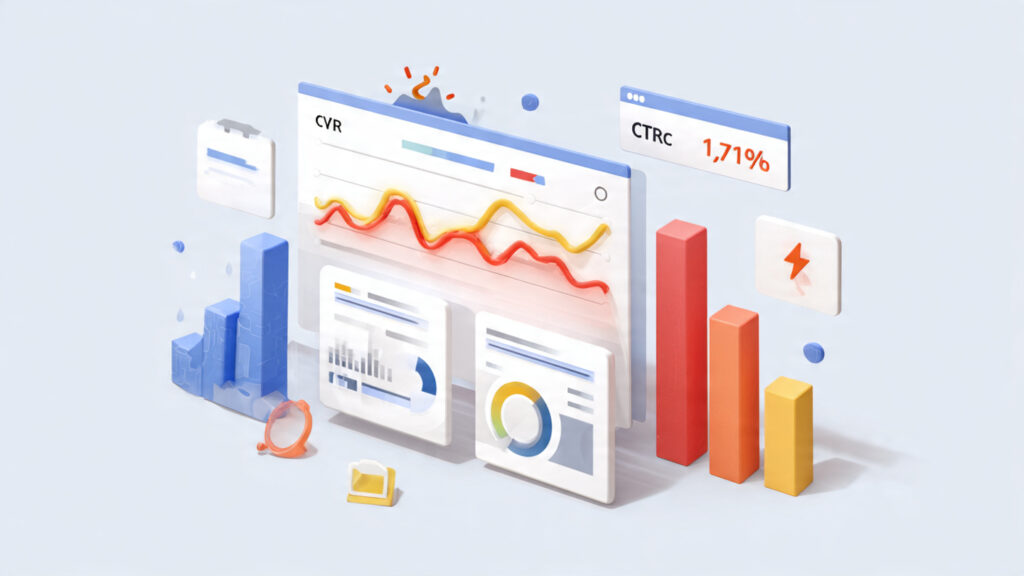
Every structural shift in how people access information creates a new hierarchy of winners. Ai search vs traditional search is no different — it is redistributing value toward a specific type of content creator.
Sites with original research and first-party data.
AI Overview cannot synthesize information that does not yet exist on the web. Original surveys, proprietary case studies, documented experiments, and first-party data are both source material for AI systems and compelling destinations for users who want the primary evidence behind a claim.
Experience-based practitioners with documented results.
“I tested seven CRM platforms across 14 client accounts over six months — here is what I found” cannot be replicated by an AI model trained on existing published content. The experiential dimension of documented practitioner work is structurally protected from AI Overview displacement in a way that general informational content is not.
Personal brands with verifiable expertise and E-E-A-T signals.
Named authors with professional credentials, editorial transparency, and documented track records carry trust signals that anonymous or AI-generated content cannot replicate. Google’s AI systems are explicitly trained to recognize and weight these signals — meaning personal brands with real-world credibility are increasingly favored in ai search ranking factors.
Authority sites with topical depth and trusted backlink profiles.
Sites demonstrating deep, consistent expertise in specific domains — with established backlink profiles from relevant sources and long track records of accurate, detailed content — are being surfaced as sources within AI Overviews. Being cited by the AI system that is displacing your direct traffic is the high-value position in the google ai search future.
What You Must Do Right Now — No Delays
These are not strategic considerations. They are survival actions for any site that depends on organic search traffic for income.
Shift every piece of content from information to experience.
Stop publishing what AI can summarize. Start publishing what AI cannot replicate: documented personal testing, step-by-step practitioner workflows, first-person outcome data, and unique frameworks grounded in real application. Every article should pass this test: “If I removed everything here that an AI could generate from existing web content, what remains?” What remains is your competitive advantage.
Create content with original data your competitors don’t have.
Survey your audience. Document your own results. Run experiments and publish findings. Compile proprietary data sets. This content is simultaneously AI-summarization-resistant, Google-citation-worthy, and genuinely valuable to human readers — the only combination that wins in the current environment.
Build topical authority in a defined domain.
Spreading content across broad keyword territories is a liability. Comprehensive, consistent, deep coverage of a specific topic — through the lens of documented expertise — builds the topical authority that AI ranking systems recognize and reward. Be the acknowledged expert in a narrow, well-defined area rather than a generic voice across many.
Diversify your traffic before you need to.
Email lists, YouTube audiences, community members, and social followers are immune to google ai search changes. Every piece of content you publish should include a mechanism for converting search-referred visitors into direct subscribers. Build that audience now while search traffic is still sufficient to fuel it.
Invest in skill development that protects your income regardless of algorithm shifts.
Our guide on AI skills to income in 30 days covers the specific skill sets that generate income independently of search traffic — and that grow in value as the AI-assisted content landscape becomes more competitive.
For the content tools that make this shift executable, see our guides on best AI tools for blogging and best AI tools for freelancers.
[AdSense Ad Placeholder]
AI Search Optimization Strategy — What Works in 2026
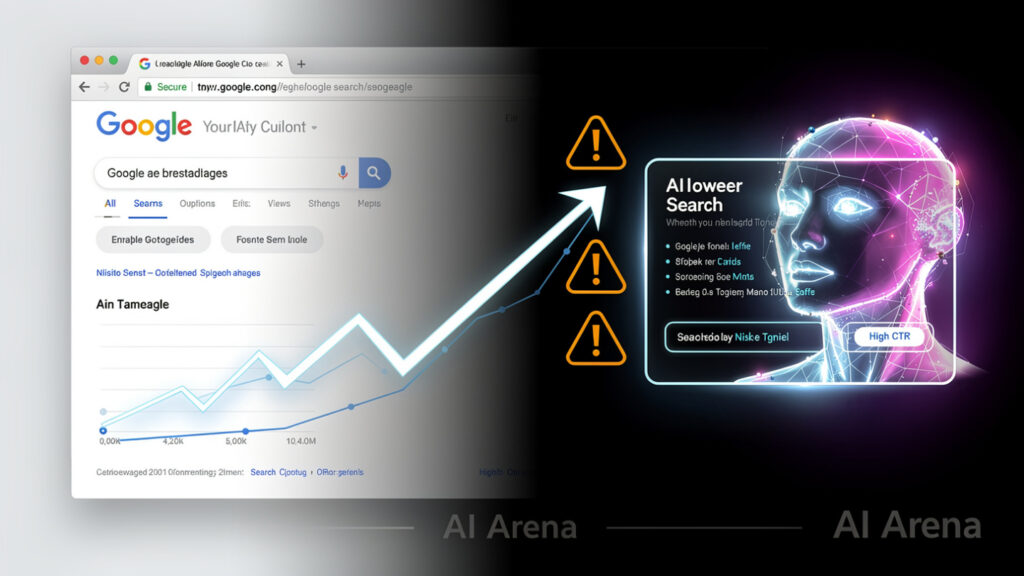
The question practitioners are asking is not whether ai search ranking factors have changed. They have. The question is what the new factors reward — and how to create content that earns both AI Overview consideration and direct click-through from users who want the primary source.
Lead with the answer, then build the depth.
AI systems and the users who rely on them want the direct answer immediately, context and depth second. Structure every section with the core answer in the opening sentence. Then expand with evidence, examples, nuance, and documented experience. This mirrors how AI Overviews are constructed — and makes your content both AI-parseable and genuinely valuable for readers who click through.
Build H2 and H3 hierarchies that mirror natural questions.
Clean heading hierarchies — written the way people naturally phrase questions — improve both AI Overview consideration and voice search relevance. “How does AI Overview affect click-through rates?” is a stronger H2 than “AI Overview CTR Impact.” Structure your content around natural language questions at every level.
Implement schema markup systematically.
FAQ schema, HowTo schema, and Article schema signal content structure to Google’s systems. Structured data does not guarantee AI Overview inclusion — but unstructured content is consistently excluded. This is a baseline requirement for how to survive ai search changes in a technical sense.
Make E-E-A-T signals impossible to miss.
Author bios with verifiable credentials. Named authorship on every article. Clear publication and update dates. Citations to primary sources. Editorial transparency about methodology. Consistency in factual accuracy. These are not optional polish items — they are the signals that determine whether Google’s AI systems treat your site as a trusted source or a generic content provider.
Target queries where experience cannot be replaced by synthesis.
“Best email marketing platform” is synthesizable. “What I found after using six email marketing platforms for three client accounts with $50K combined monthly spend” is not. Target the second category wherever your expertise and documented experience allow.
For the productivity tools that support this content approach, see our roundup of best AI tools for productivity in 2026 and best AI writing tools.
For practitioners building marketing services around the AI search environment, our guide on how to start an AI marketing agency covers the service models that are growing in this landscape.
Google AI Search Update 2026: What You Must Understand
Let’s be direct.
Ignoring the Google AI search update 2026 will cost most sites their traffic within months.
This is not hyperbole. The mechanism is already active. AI Overview is already reducing click-through rates on the informational query categories that drive the majority of organic traffic for content sites. The rollout is ongoing. The trajectory does not reverse.
The google ai search update 2026 represents Google’s deliberate repositioning as an answer engine rather than a referral network. Every quarter, more queries will be answered within Google’s interface. Every quarter, the click opportunity for external websites on informational queries will narrow.
According to McKinsey’s research on AI and competitive advantage, organizations and individuals who adapt their strategies to AI-driven environments in the early adoption window consistently outperform those who wait until the shift is complete. In search publishing, the early adaptation window is 2026.
The sites that adapt now — by building experiential content, establishing topical authority, diversifying traffic sources, and earning genuine brand recognition — are building positions that become more defensible as the lower-quality competition is displaced.
The sites that wait are making an increasingly costly decision.
FAQ
1. Will AI replace SEO entirely?
No — but it is fundamentally restructuring what SEO rewards. Traditional ranking signals remain relevant but are increasingly filtered through an AI layer that weights experience, expertise, and E-E-A-T far more than keyword density. Seo in 2026 is more demanding of genuine expertise, not obsolete. The sites that adapt to new ranking criteria will find the competitive landscape less crowded as generic content is displaced.
2. How does AI search specifically affect website traffic?
The primary mechanism is click displacement: AI Overview satisfies user intent directly on the Google results page, reducing click-through rates for informational queries. Sites tracking AI Overview rollout have documented CTR reductions of 20–60% on broad informational keyword categories. Sites with original, experience-based content and strong authority are measurably less affected than those producing synthesizable generic content.
3. How do you rank content in AI search results in 2026?
The most effective ai search optimization strategies combine: direct answers structured clearly at the opening of each section; documented first-person expertise and practitioner perspective; consistent E-E-A-T signals throughout the site; FAQ and HowTo schema markup; topical depth over broad coverage; and content that earns genuine brand mentions and citations — not just backlinks.
4. What exactly is Google AI Overview and how does it work?
Google AI Overview generates an AI-synthesized answer at the top of search results for a wide range of queries, drawing on multiple web sources to construct a single direct response. Unlike featured snippets that show one source’s text, AI Overview synthesizes from multiple sources and significantly reduces the visibility and click-through opportunity for blue links beneath it. Users receive complete answers without leaving Google.
5. Is blogging still worth starting or continuing in 2026?
Yes — with a clear condition. Generic keyword-targeting blogs built for AdSense revenue through informational content are under genuine structural pressure from the google ai overview update. Blogs that produce original research, documented personal experience, and genuinely differentiated perspective — and that build direct audience relationships alongside search traffic — are more valuable in 2026 than before. The quality bar has risen sharply. The ceiling for exceptional content has not.
6. Why is Google actively reducing website traffic with AI search?
Google’s business model is evolving from a referral network to an answer engine. Keeping users within Google’s interface — through AI Overview, knowledge panels, and direct answer features — increases engagement with Google’s own advertising products and reduces dependency on external sites for user satisfaction. For Google, this is a rational business evolution. For external publishers, it creates the structural traffic shift that how ai affects website traffic describes. Understanding Google’s incentive structure clarifies why this shift is permanent, not correctable.
Conclusion: The Window Is Open — But Not for Long
The google ai search update 2026 is not something to monitor and respond to later. The sites that are adapting right now — in the early months of 2026, before the competitive gap between adaptive and stagnant publishers becomes insurmountable — are building compounding advantages that will be visible in their traffic, authority, and income by year’s end.
The sites that are waiting to see whether things return to normal are making a specific bet: that a structural platform evolution driven by Google’s core business interests will reverse. That bet has not historically paid off for publishers, and there is no evidence it will now.
The future of seo with ai belongs to creators who produce what AI systems cannot replicate — real experience, original data, human judgment, practitioner perspective, and documented expertise that exists nowhere else on the web.
The window to build that position before the market fully catches up is open in early 2026. It will not remain open.
Start adapting now. The websites that evolve with AI will dominate — the rest will disappear.
Published by AI Arena | Updated: March 2026