

Introduction: AI Is Changing How We Understand and Manage Our Health
The relationship between technology and health has always evolved — from paper medical records to electronic health systems, from manual blood pressure cuffs to wearable biosensors. The current shift, driven by artificial intelligence, is arguably the most significant yet.
AI tools for healthcare are no longer experimental. In 2026, they’re embedded in consumer wellness apps used by hundreds of millions of people, deployed in clinical decision support systems, powering mental health support platforms, and helping individuals make more informed decisions about sleep, nutrition, fitness, and stress.
The scale of this shift is documented. According to the World Health Organization, digital health technologies — including AI-powered applications — are being prioritized globally as a means of expanding access to health information and improving health outcomes at population scale. McKinsey’s research on AI in healthcare estimates that AI applications in clinical and wellness settings could generate $350 billion or more in annual value across the healthcare system by 2030.
According to HubSpot, AI-powered tools are improving accessibility and scalability in digital health and wellness platforms.
For individuals, this shift is practical and immediate. AI wellness tools are making it easier to track physiological patterns, access mental health support, understand nutritional habits, and connect with evidence-based health guidance — on a personal device, without clinical appointments for every concern.
This guide covers the best AI tools for healthcare and personal wellness available in 2026 — what each tool actually does, who it’s most useful for, and what its limitations are. It’s an educational overview, not medical guidance. Always consult a qualified healthcare professional for any specific health concerns.
If you’re exploring how AI is transforming other industries, check out our guide on best AI tools for making money.
What Are AI Tools for Healthcare?

Understanding the distinction between different categories of AI health tools matters — both for setting accurate expectations and for using these tools safely.
Medical-Grade AI Tools
These are AI systems designed for use by trained healthcare professionals in clinical settings. They support tasks like medical imaging analysis, clinical decision support, diagnostic assistance, patient record review, and treatment planning. These tools are typically subject to regulatory oversight (FDA approval in the US, CE marking in Europe) and are not designed for unsupervised consumer use.
Consumer Wellness AI Tools
These are the AI-powered apps and platforms most individuals interact with directly — mental health support chatbots, fitness tracking AI, nutrition logging tools, sleep analysis apps, and symptom checkers. They are designed for personal health awareness and behavior change — not clinical diagnosis or medical treatment.
The most important thing to understand about consumer AI health apps: they can provide genuinely valuable health awareness information and support behavior change, but they are not a replacement for professional medical evaluation, diagnosis, or treatment. This distinction is not a limitation of the technology — it’s a fundamental boundary that responsible AI health tools are designed to maintain.
Why AI Tools for Healthcare Are Growing Rapidly in 2026
Types of AI Health & Wellness Tools
Mental Health and Emotional Wellness Tools
AI-powered platforms that provide CBT-based (Cognitive Behavioral Therapy) guided support, mood tracking, journaling prompts, and in some cases, crisis resource referral. Designed to supplement — not replace — professional mental health care.
Fitness and Activity Tracking AI
Wearable-integrated and app-based AI that analyzes activity patterns, personalizes workout recommendations, tracks recovery, and adapts training suggestions based on physiological data over time.
Nutrition and Diet AI
AI-powered food logging, meal planning, calorie and macronutrient analysis, and personalized nutrition guidance based on goals and dietary patterns. Some tools integrate with medical providers for conditions like diabetes management.
Clinical and Professional Medical AI
Tools designed for healthcare professionals — supporting clinical documentation, diagnostic imaging review, patient triage, and clinical decision support. These require professional context and are not designed for consumer self-diagnosis.
Health Monitoring and Biosensor AI
AI systems that analyze continuous biometric data — heart rate variability, blood oxygen, sleep staging, stress indicators — from wearable devices to surface health patterns over time.
AI tools for healthcare are becoming essential for building awareness, improving habits, and supporting better health decisions.
Best AI Tools for Healthcare & Personal Wellness (2026)
1. Ada Health — Best AI Symptom Assessment Tool
Overview:
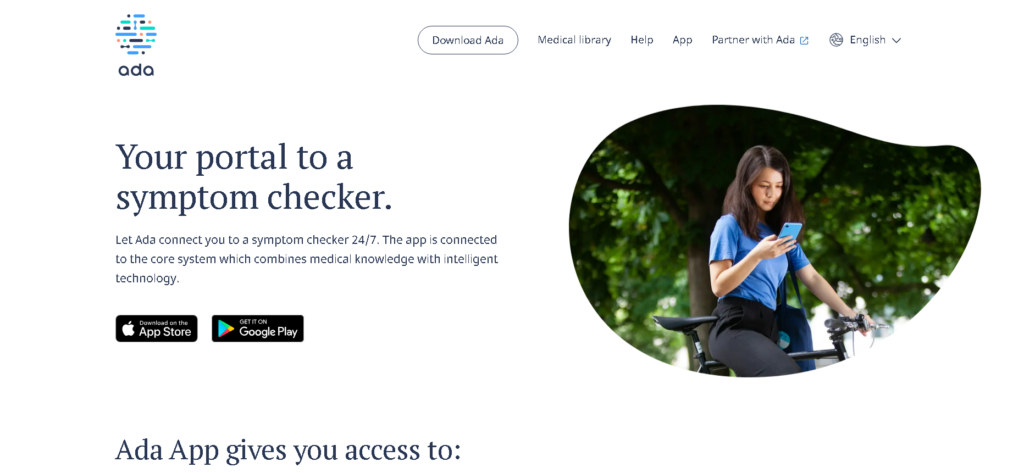
Ada Health is an AI-powered symptom assessment application used by both individuals and healthcare systems globally. Rather than providing diagnoses, Ada guides users through a structured symptom interview and surfaces a range of possible conditions for discussion with a healthcare professional. It’s designed explicitly as a triage and health navigation tool — helping people understand what kind of care they may need, rather than telling them what is wrong.
Ada has been used by over 13 million people and has clinical partnerships with healthcare providers in Europe, the US, and beyond. It’s one of the few consumer-facing AI health apps with published peer-reviewed clinical validation data.
Key Features:
- Structured symptom interview using AI-guided questioning to assess severity and likely condition categories
- Personalized assessment reports users can share with healthcare providers
- Condition library with educational information on a wide range of health topics
- Integration with healthcare system partnerships for referral pathways in select regions
- Available in multiple languages
Use Cases:
- A parent using Ada to assess whether a child’s symptoms warrant an urgent care visit or can wait for a scheduled appointment
- An individual in a region with limited primary care access using Ada to understand the urgency and nature of symptoms before seeking care
- Healthcare providers in some markets using Ada as a pre-consultation triage tool to surface patient history before appointments
Pros:
- One of the most clinically validated consumer AI symptom tools available
- Consistently clear about its role as an assessment aid — not a diagnostic service
- Generates shareable reports that are genuinely useful in professional consultations
- Available at no cost for basic personal use
Cons:
- Not a substitute for professional diagnosis — and is appropriately clear about this
- Assessment accuracy depends on the quality of symptom information the user provides
- Limited functionality in regions without healthcare system integration
- Does not cover emergency or acute crisis situations — directs users to emergency services when warranted
Best For: Individuals who want structured help understanding their symptoms before or alongside professional healthcare consultations. Useful for health-literate users who want to arrive at appointments with better-organized information.
🔍 Real-World Insight: Ada’s most practical function in everyday use is helping people make the “urgent vs. non-urgent” determination for medical attention — a decision that is genuinely difficult to make in the moment and that most people either over-escalate or under-attend to. Its value is in navigation, not diagnosis.
2. Woebot — Best AI Tool for Mental Health Support
Overview:
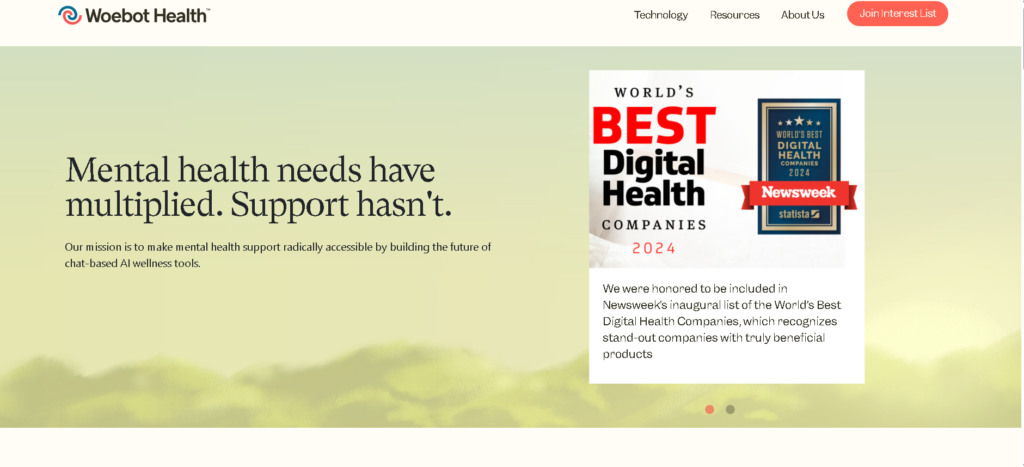
Woebot is an AI-powered mental health support application developed by clinical researchers from Stanford. It delivers evidence-based Cognitive Behavioral Therapy (CBT) techniques through a conversational chat interface — providing structured emotional support, mood tracking, and CBT-based exercises to users navigating stress, anxiety, and low mood.
Woebot is designed explicitly as a mental health support tool, not a mental health treatment service. It does not replace therapists or psychiatrists. For individuals experiencing clinical depression, serious anxiety disorders, or crisis situations, Woebot is clear that professional mental health care is required.
Key Features:
- CBT-based conversational support through AI-guided chat sessions
- Daily mood tracking with pattern visualization over time
- Evidence-based exercises for managing anxiety, stress, and low mood
- Built-in crisis support — recognizes distress signals and provides emergency resource referral
- Clinical research background with published efficacy studies
Use Cases:
- A college student managing academic stress and mild anxiety using Woebot between counseling appointments
- A professional using daily Woebot check-ins as a mental wellness maintenance practice
- Someone on a mental health therapy waitlist using Woebot as a structured support bridge while waiting for professional care access
Pros:
- Strong clinical research foundation — one of the most studied AI mental health support tools
- Delivers evidence-based CBT techniques rather than generic motivational content
- Crisis recognition and professional referral built into the experience
- Accessible and consistent — available 24/7 without appointment scheduling
Cons:
- Not appropriate for severe mental health conditions, active crisis, or clinical diagnosis
- Conversational AI cannot provide the relational depth of human therapeutic relationships
- Some users find the chat interface less engaging over extended use
- Limited to English in most of its core functionality
Best For: Individuals managing everyday stress, mild to moderate anxiety, or low mood who want structured, evidence-based support between professional appointments — or as a daily wellness practice.
🔍 Real-World Insight: The most consistent positive use of Woebot in practice is as a daily mood tracking and reflection tool — not necessarily for deep therapeutic work, but for building the habit of emotional awareness and identifying patterns in mood over time. That behavioral data becomes genuinely valuable context for professional therapy sessions.
3. MyFitnessPal (AI Features) — Best AI Nutrition and Calorie Tracking Tool
Overview:
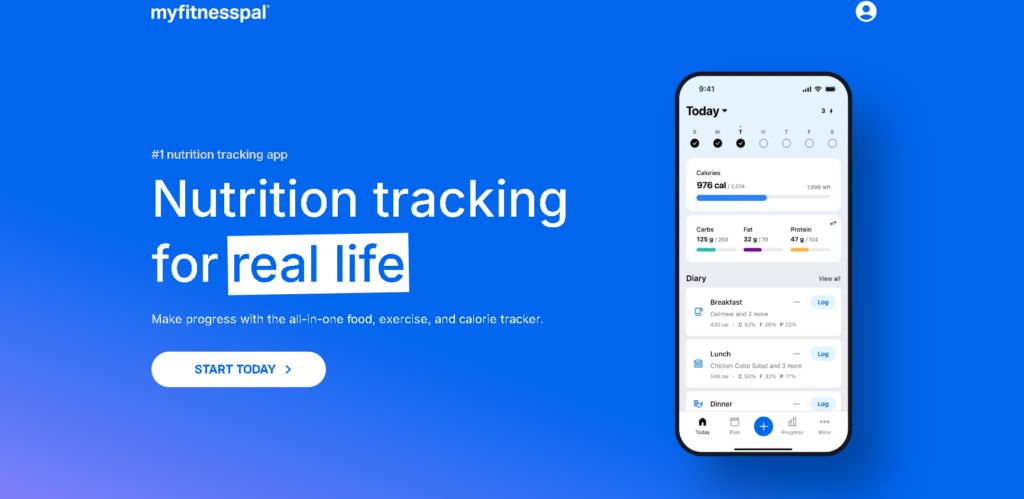
MyFitnessPal is one of the most widely used nutrition tracking platforms globally, with AI features that have expanded significantly in 2026. Its food recognition, personalized nutrition insights, and macro optimization guidance make it the most accessible entry point for individuals wanting to understand their dietary habits with data rather than estimation.
Key Features:
- AI-powered food recognition from photo — log meals by taking a photo rather than manual searching
- Database of 14+ million foods with barcode scanning
- Personalized macro and calorie targets based on goals (weight management, muscle building, athletic performance)
- AI-generated nutrition insights identifying patterns in dietary habits over time
- Integration with major fitness wearables for unified health data
Use Cases:
- A person managing weight through dietary awareness using MyFitnessPal to understand actual caloric intake versus estimates
- An athlete tracking protein and carbohydrate timing around training using macro goal features
- Someone managing a health condition with dietary implications (with physician guidance) using food logging to maintain dietary compliance
Pros:
- Largest food database of any nutrition tracking app — high accuracy for common and branded foods
- Photo logging significantly reduces the friction of manual food entry
- Wearable integration creates a unified fitness and nutrition picture
- Free tier provides meaningful functionality for basic nutrition tracking
Cons:
- AI photo recognition accuracy varies for complex mixed dishes or non-commercial foods
- Calorie targets are algorithmically generated and may not reflect individual metabolic variation — professional guidance recommended for medical dietary needs
- Some users find logging discipline difficult to maintain over time
- Premium features (AI coaching, advanced analytics) require paid subscription
Best For: Individuals who want data-driven awareness of their nutritional habits for general wellness, weight management, or fitness performance — not for managing clinical dietary conditions without professional guidance.
🔍 Real-World Insight: The most significant behavioral shift users report from MyFitnessPal isn’t from following a plan — it’s from becoming aware of what they’re actually eating versus what they thought they were eating. That gap between estimate and reality is where the tool’s educational value lives.
4. Fitbit AI — Best AI Fitness and Health Monitoring Platform
Overview:
Fitbit’s AI-powered health monitoring system — integrated through Google’s Fitbit platform — has become one of the most comprehensive consumer health monitoring ecosystems available. Its AI analyzes continuous biometric data from the wearable device to surface personalized health scores, sleep stage analysis, stress detection, and long-term health trends.
Key Features:
- Daily Readiness Score — AI-generated recovery assessment that recommends workout intensity based on sleep, HRV, and recent activity data
- Sleep Staging AI — Analyzes sleep architecture (light, deep, REM) using movement and heart rate data
- Stress Management Score — Uses heart rate variability to estimate physiological stress levels throughout the day
- Health Metrics Dashboard — Tracks SpO2, resting heart rate trends, breathing rate, and skin temperature variation
- Google Health AI integration — Surfaces health pattern insights and anomaly detection across continuous monitoring data
Use Cases:
- A fitness enthusiast using Daily Readiness Score to decide whether to train hard or take a recovery day — reducing injury risk through data rather than guessing
- An individual with a family history of cardiac concerns monitoring resting heart rate trends over time (with physician awareness)
- Someone managing stress using HRV-based stress scores to identify high-stress patterns and adjust lifestyle factors
Pros:
- Comprehensive continuous health monitoring from a consumer-grade device
- Daily Readiness Score is one of the most practically useful AI health features for active individuals
- Sleep staging analysis is generally accurate for healthy adult populations
- Long-term trend data becomes genuinely valuable for identifying meaningful physiological patterns
Cons:
- Consumer-grade biosensors have accuracy limitations compared to clinical measurement devices
- Health metric anomalies flagged by AI require professional follow-up — the device cannot assess clinical significance
- Premium Fitbit features require a Google/Fitbit Premium subscription
- Some AI features require consistent wear for data quality — intermittent wearing reduces insight accuracy
Best For: Fitness-oriented individuals and health-conscious users who want continuous biometric monitoring and personalized health insights from a wearable — with the understanding that findings of concern require professional evaluation.
🔍 Real-World Insight: The Daily Readiness Score has changed training behavior for many active users more meaningfully than any workout plan — because it makes the recovery decision data-driven rather than based on how someone feels in the moment. The correlation between low readiness scores and subsequent poor performance (or minor injuries) is consistent enough to shift behavior for users who pay attention to it.
5. HealthifyMe — Best AI Nutrition and Fitness Platform for South Asian and Global Diets
Overview:
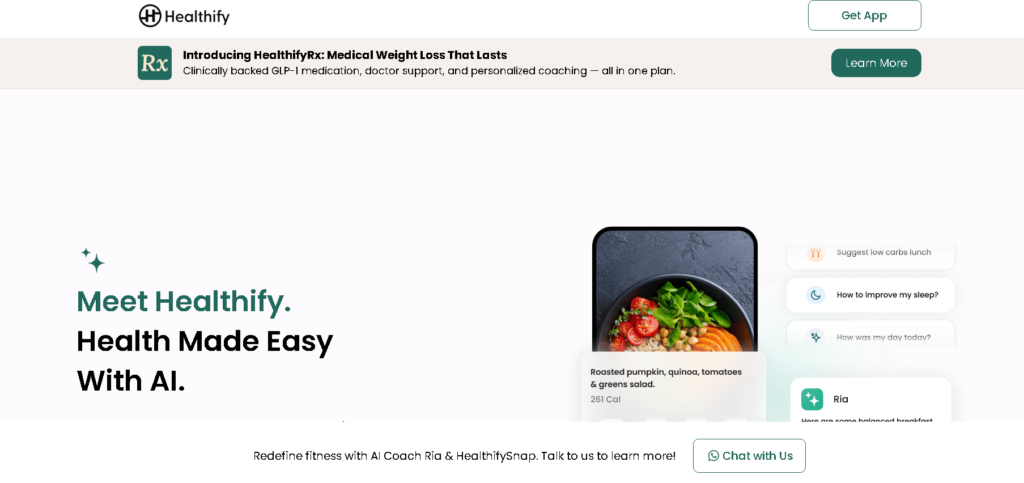
HealthifyMe is an AI-powered health and fitness platform with particular strength in nutritional analysis of South Asian, Middle Eastern, and other non-Western dietary traditions — addressing a significant gap in most Western-developed nutrition AI tools. Its AI coach, Ria, provides personalized nutrition guidance, calorie analysis, and fitness coaching through a conversational interface.
Key Features:
- Ria AI Coach — Conversational AI nutritionist and fitness coach providing personalized guidance
- Food database with regional cuisine — Comprehensive coverage of South Asian, Southeast Asian, and Middle Eastern foods often missing from US-developed apps
- Calorie and macro tracking with extensive local food database
- AI-generated meal plans based on goals, preferences, and regional dietary patterns
- Integration with wearables for unified health and fitness data
Use Cases:
- An individual from a South Asian background tracking nutrition using foods accurately represented in the database
- Someone following a plant-based or culturally specific diet who finds Western nutrition apps inadequate for their food logging
- Health-conscious users wanting AI coaching for both nutrition and fitness in a single platform
Pros:
- Regional food database coverage is genuinely superior to most Western competitors
- Ria AI coach provides more conversational, personalized guidance than static macro calculators
- Covers both nutrition and fitness coaching in a single integrated platform
- Available across multiple international markets with region-appropriate guidance
Cons:
- Less widely integrated with wearable ecosystems than Fitbit or Apple Health
- Premium coaching features carry a subscription cost
- AI meal planning recommendations are general wellness guidance — not appropriate for managing clinical dietary conditions without physician involvement
Best For: Individuals from South Asian, Southeast Asian, or Middle Eastern backgrounds who want accurate nutritional tracking and AI coaching that reflects their actual dietary patterns.
🔍 Real-World Insight: The database accuracy for regional cuisines is where HealthifyMe consistently outperforms Western-developed alternatives. Users who previously found nutrition tracking frustrating because their regular foods weren’t represented accurately find the platform significantly more usable — which directly impacts tracking compliance and long-term behavior change.
6. ChatGPT — Best General-Purpose AI for Health Information and Wellness Guidance
Overview:
OpenAI‘s ChatGPT functions as a versatile health information resource — capable of explaining medical terminology, describing how conditions are generally managed, surfacing questions to ask a doctor, summarizing research concepts, and providing general wellness guidance.
It is critically important to understand what ChatGPT is not: it is not a diagnostic tool, it is not a substitute for professional medical evaluation, and its health-related responses should always be verified with a qualified healthcare professional before acting on them.
Key Features:
- Plain-language explanation of medical terminology, conditions, and treatment concepts
- Research summaries and evidence discussion (with appropriate verification recommended)
- Health and wellness journaling, reflection prompts, and behavior change support
- Preparation assistance for medical appointments (generating question lists for physicians)
- Nutrition, sleep, and general wellness guidance based on general health knowledge
Use Cases:
- Preparing for a specialist appointment by using ChatGPT to understand terminology you’ve encountered in medical communications — then verifying understanding with the physician
- Understanding the general mechanisms of a prescribed medication before a pharmacist or physician discussion
- Getting evidence-based sleep hygiene or stress management suggestions to support an overall wellness practice
Pros:
- Exceptional plain-language explanation of complex medical concepts for health-literate personal research
- Appointment preparation function — generating relevant questions to ask healthcare providers — is genuinely valuable
- Flexible and conversational — adapts to specific follow-up questions
- Free tier accessible to anyone without additional subscription
Cons:
- Not a diagnostic tool — this cannot be emphasized strongly enough for health contexts
- AI-generated health information can contain errors and requires professional verification before acting on
- Does not have access to your personal health data, history, or current medications
- Knowledge cutoff means very recent medical developments may not be reflected accurately
Best For: Health-literate individuals who want to understand medical information, prepare for professional consultations, or explore general wellness concepts — with the clear understanding that all health decisions require professional guidance.
🔍 Real-World Insight: The most valuable ChatGPT health function in practice is pre-appointment preparation — specifically generating a prioritized list of questions to ask a specialist based on a described situation. This preparation function consistently leads to more productive medical consultations and better information exchange between patients and providers.
7. Google Health AI — Best AI for Personal Health Data Integration
Overview:
Google Health AI encompasses a suite of AI-powered health tools embedded across Google’s ecosystem — including search-integrated health information, Fitbit integration, medical imaging AI (used in clinical settings), and the Health Connect API that allows health data consolidation across apps.
For consumers, Google Health AI primarily manifests through the health data integration and insights layer in Android devices, Fitbit, and Google Search’s health information features.
Key Features:
- Health Connect — Unified health data integration across compatible apps and devices on Android
- AI-powered health search features — Google Search’s medical knowledge panels with clinician-reviewed information
- Fitbit AI integration — Google’s AI layer powering advanced health insights in the Fitbit ecosystem
- Medical imaging AI (clinical) — Google’s research-derived imaging AI deployed in partnership with healthcare providers globally
- Clinical NLP tools — AI for clinical documentation and medical record processing (healthcare professional use)
Use Cases:
- A consumer using Health Connect to consolidate fitness, sleep, and nutrition data from multiple apps into a unified personal health picture
- Individuals using Google Health’s search knowledge panels to access clinician-reviewed information on health topics
- Healthcare systems using Google’s clinical AI tools for imaging review and clinical documentation (professional context)
Pros:
- Health Connect provides the most comprehensive consumer health data integration on Android
- Google Search health panels are clinician-reviewed — more reliable than general web search for health information
- Breadth of Google’s ecosystem means integration with most major health and fitness apps
- Clinical AI tools represent genuine state-of-the-art capability in medical imaging and NLP
Cons:
- Consumer-facing AI health features are less unified and polished than dedicated wellness platforms
- Privacy considerations around health data in Google’s ecosystem are a meaningful factor for some users
- Clinical AI tools are not designed for or accessible to consumer self-care contexts
- Feature availability varies significantly by geographic region
Best For: Android users who want to consolidate personal health data across multiple apps and platforms — and individuals using Google Search as a starting point for health information who benefit from clinician-reviewed knowledge panels.
The tools covered in this guide are widely used in real-world wellness and healthcare-adjacent environments, but their effectiveness depends on responsible and informed use.
🔍 Real-World Insight: Health Connect’s data consolidation function addresses one of the most common frustrations in personal health tracking — having sleep data in one app, fitness data in another, and nutrition data in a third, with no way to see the relationships between them. The unified data view changes how users interpret their health patterns, even before any AI insight layer is applied.
Comparison Table
| Tool | Best For | Pricing | Primary Use Case |
|---|---|---|---|
| Ada Health | Symptom assessment & health navigation | Free (basic) | Pre-consultation triage |
| Woebot | Mental health support (CBT-based) | Free / Institutional | Emotional wellness support |
| MyFitnessPal | Nutrition tracking & calorie awareness | Free / Premium ~$20/month | Diet and nutrition logging |
| Fitbit AI | Fitness & biometric monitoring | Device + Premium ~$10/month | Activity and health tracking |
| HealthifyMe | Nutrition & fitness (regional cuisine focus) | Free / Premium | Nutrition coaching |
| ChatGPT | Health information & appointment prep | Free / $20/month Plus | General wellness information |
| Google Health AI | Health data integration (Android) | Free (Health Connect) | Multi-app data consolidation |
How AI Is Used in Healthcare: Real-World Applications
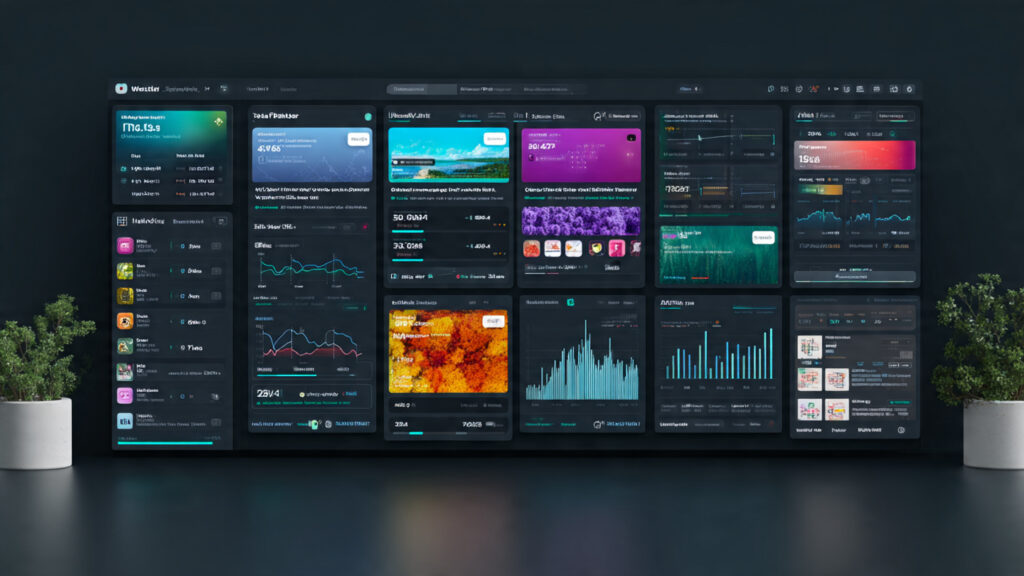
For Patients and Individuals
For everyday health management, AI health monitoring apps have become practical tools for tracking physiological patterns, understanding symptoms before consultations, maintaining mental wellness practices, and building informed health habits.
The most impactful applications are habit-driven: consistent sleep tracking over months surfaces patterns that single-night data cannot. Continuous nutrition logging reveals dietary habits more accurately than memory. Regular mood tracking with AI tools like Woebot identifies emotional patterns that daily experience doesn’t make obvious.
The consistent finding from health behavior research is that awareness precedes change. AI wellness tools create the awareness infrastructure that supports meaningful health behavior change — within the context of professional healthcare oversight for anything clinical.
For Fitness Enthusiasts and Athletes
AI fitness apps and wearable AI platforms have transformed training for millions of active individuals — not by providing generic workout programs, but by personalizing training recommendations to individual biometric data.
Recovery-aware training (using HRV and readiness scores), sleep optimization for athletic performance, and nutrition periodization based on training load are all areas where AI tools are providing individual-level guidance that would previously have required expensive professional coaching.
The appropriate caution: AI fitness recommendations are wellness guidance, not medical prescription. For individuals with health conditions that affect exercise safety, professional medical clearance and guidance remain essential before using AI fitness recommendations as a training guide.
For Healthcare Professionals
AI tools for healthcare professionals in 2026 are primarily deployed in clinical documentation, medical imaging analysis, clinical decision support, and patient communication.
AI clinical documentation tools reduce the administrative burden that contributes significantly to physician burnout — allowing clinicians to spend more time with patients and less time on note-taking and coding. AI medical imaging tools support radiologists and pathologists in reviewing high volumes of imaging data, flagging areas warranting closer attention.
These professional-grade AI tools operate under regulatory oversight and clinical quality standards entirely distinct from consumer wellness applications. They augment professional expertise — they do not replace clinical judgment.
Expert Insight: The Limitations of AI in Health — What You Need to Know
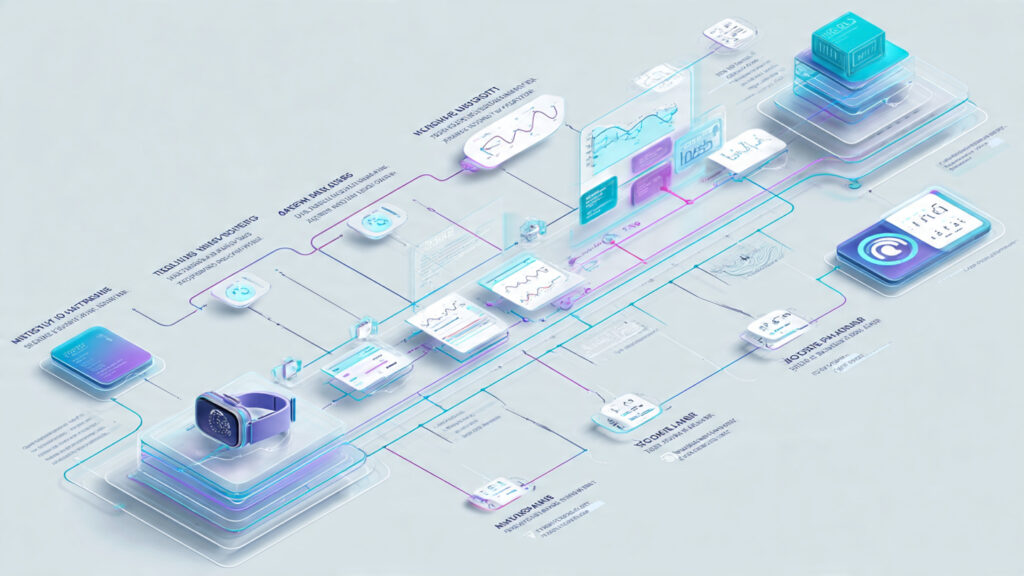
The most important thing to understand about AI tools for healthcare and wellness — from someone who has evaluated many of them — is that their value is inseparable from their appropriate use.
Consumer AI wellness tools are genuinely useful for building health awareness, supporting healthy behavior change, and improving the quality of information users bring to professional healthcare consultations. They are not useful — and are potentially harmful — when used as a substitute for professional diagnosis, treatment, or clinical oversight.
Where AI health tools add real value:
- Creating structured awareness of physiological patterns over time
- Supporting behavior change in sleep, nutrition, fitness, and stress management
- Helping individuals prepare better questions for professional consultations
- Bridging access to evidence-based mental wellness support when professional care isn’t immediately available
- Reducing the administrative burden on healthcare professionals to focus more time on patient care
Where AI health tools have clear limitations:
- They cannot provide clinical diagnosis — symptom information requires professional interpretation
- They cannot account for individual medical history, current medications, or clinical context
- Consumer biosensors have accuracy limitations compared to clinical measurement devices
- AI models can contain errors — all health information from AI tools requires professional verification before clinical application
- Emergency situations require emergency services, not AI health apps
The appropriate framework for using AI tools for healthcare: as tools that inform, support, and improve the quality of engagement with the healthcare system — not as a parallel healthcare system.
Human oversight — from qualified healthcare professionals — remains essential for any health decision with clinical implications. AI can support better health decisions. It cannot make them.
FAQ
1. Are AI health tools safe to use for personal wellness?
Consumer AI wellness tools — for fitness tracking, nutrition logging, mood monitoring, and general health information — are generally safe for healthy adults as personal health awareness aids. They are not designed for clinical diagnosis or medical treatment. For any health concerns with clinical implications, professional evaluation is required.
2. Can AI replace doctors or therapists?
No. Current AI health tools are designed to support, complement, and improve access to professional care — not replace it. Clinical diagnosis, therapeutic relationships, treatment decisions, and emergency care all require professional human expertise that AI tools cannot replicate. The goal of responsible AI health technology is to make professional care more accessible and effective, not to circumvent it.
3. What is the best AI app for mental health support?
Woebot is the most clinically validated consumer AI mental health support tool available — built on CBT principles with peer-reviewed research backing. It’s designed as a support tool for everyday stress and mild anxiety, not as a treatment for clinical mental health conditions. For clinical mental health concerns, professional care from a licensed therapist or psychiatrist is essential.
4. What is the best AI tool for fitness tracking?
Fitbit’s AI-powered ecosystem is the most comprehensive consumer fitness and health monitoring platform for general use — particularly the Daily Readiness Score and sleep staging features. For individuals focused specifically on nutrition, MyFitnessPal or HealthifyMe (especially for non-Western dietary patterns) provide the strongest tracking depth.
5. Can AI health apps diagnose medical conditions?
No. Consumer AI health apps are explicitly designed and regulated to not provide diagnosis. Tools like Ada Health surface possible conditions for professional discussion — not confirmed diagnoses. Any symptom information or health data surfaced by AI tools requires professional medical evaluation to determine clinical significance.
6. Are my health data and privacy protected in AI health apps?
Privacy practices vary significantly between platforms. Before using any AI health monitoring app, review the platform’s data privacy policy — specifically how health data is stored, whether it’s shared with third parties, and how it’s used to train AI models. Health data privacy is a meaningful consideration, particularly for sensitive categories like mental health data.
🚀 Explore More AI Tools and Resources on AI Arena
AI is transforming more than just healthcare — it’s changing how people work, earn, create, and build businesses.
If you’re interested in the broader landscape of what AI makes possible in 2026, explore these resources on AI Arena:
- How to make money with AI — practical income models for creators, freelancers, and entrepreneurs
- Best AI tools for making money — reviewed and ranked across major income categories
- AI tools for content creation — building content systems that scale with AI assistance
- AI tools for graphic designers — how creative professionals are integrating AI into design workflows
Conclusion
AI tools for healthcare and personal wellness have reached a point of genuine practical value for individuals, fitness enthusiasts, and healthcare professionals alike — while remaining appropriately bounded in what they can and should do.
The tools reviewed in this guide — Ada Health for symptom navigation, Woebot for mental wellness support, MyFitnessPal and HealthifyMe for nutrition tracking, Fitbit AI for biometric monitoring, ChatGPT for health information, and Google Health AI for data integration — each address specific aspects of the personal health management challenge.
Their collective value is in creating better health awareness, supporting positive behavior change, and improving the quality of engagement with the professional healthcare system. They are not a replacement for that system.
Used responsibly — with professional healthcare guidance for anything clinical — these tools represent a meaningful expansion of health awareness and wellness support that benefits individuals who engage with them thoughtfully.
The most important habit these tools can reinforce: regular engagement with qualified healthcare professionals. AI can make those engagements more informed, more prepared, and more productive. That’s a meaningful contribution to health — and the appropriate role for AI in personal healthcare in 2026.
⚠️ Disclaimer
This content is for informational purposes only and should not be considered medical advice. The tools and information discussed in this article are intended for general health awareness and wellness education. Always consult a qualified healthcare professional for medical concerns, diagnosis, treatment decisions, or before making changes to any health management plan based on AI tool outputs.
About the Author
Binoy Bahuleyan is the founder of AI Arena, where he shares practical insights on AI tools, automation, and digital income strategies. Based in Kochi, India, he focuses on helping creators, freelancers, and professionals leverage AI to build scalable online income streams for global markets.
Published by AI Arena | Updated: March 2026