
10 Best AI Writing Tools in 2026 – Free & Paid
Writing used to be the one thing people assumed AI could never quite get right. A few years later, that assumption has been thoroughly overturned.
In 2026, AI writing tools are being used by bloggers, students, marketers, novelists, and business owners to draft content faster, write more clearly, and overcome the blank-page paralysis that slows everyone down at some point. The tools have matured significantly — they are no longer just autocomplete on steroids. The best ones understand context, adapt to your voice, and actively improve your writing rather than just generating more of it.
That said, not every tool suits every person. Some are built for speed and volume, others for polish and accuracy. Some are completely free, others cost a subscription. This guide cuts through the noise.
Below are the 10 best AI writing tools in 2026, reviewed honestly — with what each one does well, where it falls short, and exactly who it is best suited for.
Students looking for AI study assistants should also read our guide to the best AI tools for students in 2026.
[Insert image: overview of AI writing tools on different screens]
10 Best AI Writing Tools in 2026
1. ChatGPT
The all-rounder that started the conversation — and still leads it.
ChatGPT needs little introduction at this point, but it is worth being specific about why it remains at the top of this list. It is not just the name recognition. GPT-4o, which powers the free version, is genuinely capable of producing well-structured, nuanced writing across almost any topic or format — from cover letters to technical documentation to creative short stories.
What makes ChatGPT stand out for writers is its conversational flexibility. You can give it a rough draft and ask it to tighten the argument, change the tone to be more formal, or cut it down by 30 percent. It responds to direction in a way that feels like working with a responsive collaborator rather than pressing a button.
Key features:
- Long-form content generation across any format or genre
- Conversational editing — refine and iterate through dialogue
- File, image, and document uploads on the Plus plan
- Memory that adapts to your preferences over time
- Supports dozens of languages
Pros:
- Exceptionally versatile — handles creative, academic, and business writing
- Free tier now includes GPT-4o access
- Responds naturally to nuanced instructions
Cons:
- No built-in SEO tools or keyword optimisation features
- Can occasionally produce confident-sounding but inaccurate information
- Requires clear prompting to get consistently useful output
Best use case: Students, writers, and professionals who need a flexible, all-purpose writing assistant for almost any task.
Pricing: Free. ChatGPT Plus costs $20/month.
2. Jasper AI
The professional’s choice for marketing and long-form content.
Jasper AI is built differently from most tools on this list. While others start from a general-purpose language model and add features around it, Jasper is designed from the ground up for marketing content, brand consistency, and long-form writing at scale.
The Brand Voice feature is genuinely useful for anyone producing content across a team — it learns how your brand writes and applies that style consistently. The Documents mode gives writers a clean, focused environment where AI suggestions appear in line as you type.
Key features:
- Brand Voice for consistent tone across all content
- Long-form document editor with inline AI suggestions
- 50+ templates for blogs, ads, emails, and social media
- Built-in plagiarism checker
- Supports 25+ languages
Pros:
- Best tool on this list for sustained long-form writing
- Excellent for teams managing brand guidelines
- Produces clean, publication-ready output
Cons:
- No free tier — the most expensive option reviewed here
- Can feel like overkill for casual or student writers
- Output always needs fact-checking
Best use case: Marketing teams, content agencies, and serious bloggers producing large volumes of branded content regularly.
Pricing: Plans start at $49/month.
3. Grammarly
The writing assistant that works wherever you do.
Grammarly occupies a slightly different space from the other tools here — it is less about generating content and more about making the content you have already written as good as it can be. Its real-time grammar, spelling, clarity, and tone suggestions have made it indispensable for students, professionals, and anyone who writes in English regularly.
The GrammarlyGO assistant, introduced in recent updates, adds genuine AI generation capabilities — you can ask it to improve a paragraph, adjust the formality of an email, or rewrite a sentence that is not quite landing. But the core strength remains its deep integration: it works directly inside Google Docs, Microsoft Word, Gmail, and any browser window.
Key features:
- Real-time grammar, spelling, and punctuation corrections
- Tone detection and adjustment suggestions
- Clarity and conciseness scoring
- Plagiarism checker against billions of web pages (Premium)
- GrammarlyGO for AI-assisted drafting and rewriting
- Works inside Google Docs, Word, Gmail, and anywhere via browser extension
Pros:
- Works seamlessly inside all the tools you already use
- The free tier is among the most useful of any tool on this list
- Particularly valuable for non-native English writers
Cons:
- Some suggestions can dilute a deliberately distinctive writing voice
- Plagiarism checking and advanced AI features require Premium
- Occasionally flags intentional stylistic choices as errors
Best use case: Students and professionals who want real-time writing improvements without switching between apps.
Pricing: Free plan available. Grammarly Premium starts at $12/month.
4. Copy.ai
Fast, structured content generation for marketing writers.
Copy.ai was built with one primary audience in mind: marketers who need copy quickly. It excels at producing short-to-medium-length marketing content — product descriptions, ad copy, email subject lines, social media posts, and sales page sections. Its workflow builder, introduced in recent updates, allows users to chain multiple AI tasks together to produce more complex content pipelines.
The interface is clean and beginner-friendly. You fill in a few details about your brand and audience, select a template, and Copy.ai returns multiple variations to choose from. This makes it particularly useful when you need ideas and options rather than a single output to edit.
Key features:
- 90+ copywriting templates for marketing use cases
- Workflow builder for multi-step content production
- Brand voice training from existing content
- Infobase feature to store brand facts, tone, and guidelines
- Multi-language support
Pros:
- Fast to learn and easy to use for beginners
- Produces multiple variations at once for easy selection
- Generous free tier compared to similar tools
Cons:
- Less suited to long-form content like articles or reports
- Outputs sometimes feel formulaic without customisation
- Workflow builder has a learning curve for new users
Best use case: Marketers and small business owners who need high volumes of short-form marketing copy without a steep learning curve.
Pricing: Free plan available. Paid plans start at $49/month.
5. Writesonic
The SEO-focused content generator for bloggers and digital marketers.
Writesonic stands out on this list for one specific strength: SEO content generation. Its Article Writer tool is designed to produce long-form blog posts that are structured for search, with built-in integration with tools like Surfer SEO for keyword optimisation. If your goal is to produce content that ranks, Writesonic takes care of more of that process than most competitors.
The Chatsonic feature functions as a real-time AI assistant with live web search — similar to Perplexity AI — which means the information it draws on is current rather than limited to a training cutoff.
Key features:
- Long-form article writer with SEO structure built in
- Chatsonic: real-time AI chat with live web search
- Surfer SEO integration for keyword-optimised content
- One-click article generation from a headline
- 100+ content templates
Pros:
- One of the strongest SEO-focused tools available
- Real-time web data through Chatsonic keeps content current
- Produces long articles quickly with good structure
Cons:
- Quality can be inconsistent on more complex or niche topics
- Requires editing — outputs are rarely publication-ready without refinement
- Some features feel scattered across the interface
Best use case: Bloggers and digital marketers focused on producing SEO-optimised content at volume.
Pricing: Free trial available. Paid plans start at $16/month.
6. Rytr
The budget-friendly AI writing tool that punches above its price.
Rytr does not have the brand recognition of Jasper or the depth of ChatGPT, but for what it costs, it delivers impressive value. It supports over 40 use cases — from blog posts and emails to YouTube descriptions and song lyrics — and generates usable output quickly within a clean, simple interface.
For freelancers, students, or small business owners who need a capable AI writing tool without a hefty subscription, Rytr is one of the most sensible choices available.
Key features:
- 40+ content use cases and writing formats
- Tone selector with 20+ tones (professional, enthusiastic, conversational, etc.)
- Built-in plagiarism checker
- Chrome extension for writing anywhere online
- Supports 30+ languages
Pros:
- Extremely affordable — free tier is genuinely useful
- Simple interface with almost no learning curve
- Covers a surprisingly wide range of content types
Cons:
- Less capable than premium tools for long-form, complex content
- Limited brand voice customisation compared to Jasper or Copy.ai
- Output quality drops noticeably for technical or specialised subjects
Best use case: Freelancers and small business owners who need a reliable, affordable AI writing assistant for everyday content tasks.
Pricing: Free plan (10,000 characters/month). Paid plans start at $9/month.
7. QuillBot
The paraphrasing specialist students rely on most.
QuillBot has carved out a specific and highly useful niche: helping people rewrite and improve existing text. Its paraphraser, summariser, grammar checker, and plagiarism detector work together to make it one of the most practical AI writing tools for students handling research and source integration.
The seven paraphrasing modes — Standard, Fluency, Formal, Academic, Simple, Creative, and Shorten — give you precise control over how a rewritten passage feels. The Summariser condenses long articles or papers into the key points, saving hours during research-heavy assignments.
Key features:
- Seven distinct paraphrasing modes
- Summariser for articles, papers, and documents
- Grammar checker and plagiarism detector
- Chrome extension for use anywhere online
- Co-Writer mode combining paraphraser, a summariser, and grammar tools
Pros:
- Genuinely useful free tier for daily student tasks
- The academic mode is particularly well-suited to essay writing
- Summariser handles long documents well
Cons:
- The free tier is limited to 125 words per paraphrase
- Overuse can flatten your natural writing voice over time
- Not designed for original long-form content generation
Best use case: Students working with academic sources who need to paraphrase, summarise, and polish written work.
Pricing: Free plan available. QuillBot Premium starts at $9.95/month.
8. Notion AI
The AI writing assistant that lives inside your workspace.
Notion AI is different from the other tools here because it is not a standalone writing app — it is an AI layer built directly into Notion, the popular productivity and note-taking workspace. For students and professionals who already live inside Notion, this integration is a genuine advantage. You do not need to copy text back and forth between apps; the AI is right there in your document.
It can summarise a page of notes, rewrite a rough draft, generate action items from a meeting summary, translate content, or improve the clarity of anything you have already written — all within a single keypress.
Key features:
- AI assistance built directly inside Notion documents
- Summarise, improve, translate, or rewrite any page content
- Generate outlines, to-do lists, and structured notes from prompts
- Autofill databases with AI-generated content
- Accessible on desktop and mobile
Pros:
- Zero app-switching — the AI works inside your existing workflow
- Excellent for students managing notes, research, and assignments in one place
- Improves existing writing rather than generating from scratch
Cons:
- Requires a Notion subscription — not useful if you don’t already use the platform
- Less powerful than ChatGPT for original long-form content generation
- AI features are an additional cost on top of the base Notion plan
Best use case: Students and professionals already using Notion who want AI assistance without leaving their workspace.
Pricing: Notion has a free plan. AI features start at $10/month.
9. Wordtune
The rewriting companion that improves what you have already written.
Wordtune takes a different approach from most tools here. Rather than generating content from scratch, it reads what you have written and suggests better ways to say the same thing — tightening sentences, adjusting tone, improving flow, and offering multiple rewrites to choose from in real time.
For writers who have the ideas but struggle with phrasing, or who need to adjust the register of a piece for a different audience, Wordtune is remarkably useful. It integrates directly into Google Docs and works via browser extension across any text field online.
Key features:
- Real-time sentence rewriting with multiple variations
- Tone adjustment: formal, casual, and neutral modes
- Expand and Shorten functions for length control
- Spices feature adds examples, statistics, and counterarguments
- Works inside Google Docs, Gmail, and via browser extension
Pros:
- Excellent at improving existing drafts rather than replacing them
- Helps writers find better phrasing without losing their original voice
- Spices feature adds genuine substance to thin paragraphs
Cons:
- Not designed for generating long-form original content
- Free tier has limited daily rewrites
- Less useful if you need to produce content from scratch quickly
Best use case: Writers who want to improve the quality and clarity of existing drafts rather than generate new content.
Pricing: Free plan available (limited daily rewrites). Wordtune Premium starts at $13.99/month.
10. Sudowrite
The AI writing tool is built specifically for fiction writers.
Every tool on this list so far serves a broadly general or professional audience. Sudowrite is the exception. It is built exclusively for creative and fiction writing — novelists, screenwriters, short story writers, and anyone telling a story that requires imagination, not just information.
Its features reflect that focus. The Story Engine walks you through plotting and drafting a full novel. The Describe tool generates vivid sensory descriptions for scenes. The Brainstorm feature helps when you are stuck on a plot or a character. The Canvas gives you a visual map of your story structure. It is, simply put, not designed for anything else — and that focus makes it the best creative writing AI tool available.
Key features:
- Story Engine for guided novel and story creation
- Describe a tool for rich, sensory scene-writing assistance
- Brainstorm for character, plot, and story idea generation
- Rewrite tool for revising scenes in a different style or tone
- Canvas for visual story structure mapping
Pros:
- Purpose-built for fiction — unmatched for creative writing tasks
- The Describe and Rewrite tools are genuinely impressive for authors
- Story Engine provides real structure for longer projects
Cons:
- Completely unsuitable for marketing, academic, or business writing
- More expensive than many general-purpose tools
- A smaller user base means fewer templates and community resources
Best use case: Novelists, fiction writers, and screenwriters who want an AI tool designed specifically around the craft of storytelling.
Pricing: Free trial available. Plans start at $19/month.
Comparison Table
| Tool | Best For | Free Plan | Starting Price |
|---|---|---|---|
| ChatGPT | All-purpose writing | Yes | $20/month |
| Jasper AI | Marketing and branded content | No | $49/month |
| Grammarly | Grammar and writing quality | Yes | $12/month |
| Copy.ai | Short-form marketing copy | Yes | $49/month |
| Writesonic | SEO blog content | Trial | $16/month |
| Rytr | Budget all-rounder | Yes | $9/month |
| QuillBot | Paraphrasing and summarising | Yes | $9.95/month |
| Notion AI | In-workspace writing help | Yes | $10/month |
| Wordtune | Rewriting and rephrasing | Yes | $13.99/month |
| Sudowrite | Fiction and creative writing | Trial | $19/month |
Best Free AI Writing Tools
If you are not ready to pay for a subscription, you are not stuck with poor tools. Several of the best AI writing tools offer free tiers that are genuinely useful for everyday tasks:
- ChatGPT (free) — GPT-4o access on the free plan makes this the most capable free writing tool available. Suitable for drafting, editing, brainstorming, and explaining.
- Grammarly (free) — Core grammar and spelling corrections that work everywhere you write. The single most useful free writing tool for improving existing text.
- QuillBot (free) — Up to 125 words of paraphrasing per session plus a summariser. Enough for most student tasks.
- Rytr (free) — 10,000 characters per month across 40+ content types. A strong option for freelancers needing occasional short-form copy.
- Copy.ai (free) — Limited but functional access to templates, good for testing whether the platform suits your workflow.
For most students and casual writers, the combination of ChatGPT + Grammarly covers the majority of everyday writing needs at zero cost.
Best AI Writing Tools for Beginners
If you are new to AI writing tools and not sure where to start, these three are the most approachable:
1. Grammarly — Install the browser extension, and it works automatically inside every app you already use. No prompts, no setup, no learning curve. It makes your writing better in real time.
2. ChatGPT — The conversational format feels natural from the first interaction. You do not need to learn templates or interfaces — just describe what you need in plain language.
3. Rytr — Pick a content type, fill in a few details, and click generate. The interface is simple enough that most beginners are producing usable output within minutes of signing up.
All three have strong free tiers, making them risk-free places to start.
Final Verdict
There is no single best AI writing tool — the right one depends entirely on what you are trying to write and how you prefer to work.
For most people, ChatGPT is the logical first choice. It is the most flexible, the most capable across a range of tasks, and the free tier is better than ever in 2026.
For students, the combination of Grammarly and QuillBot handles most everyday writing and research needs without costing anything.
For marketers and content teams, Jasper AI or Writesonic offer the structure, templates, and brand consistency features that general-purpose tools lack.
For creative writers, Sudowrite is in a category of its own — nothing else on this list comes close for fiction writing.
Start with the free tools, try two or three over a few weeks, and upgrade only when you have a clear sense of which one fits your actual workflow. The best AI writing tool is the one you use consistently — not the one with the most features.
This article is part of the AI Arena ongoing series reviewing the best AI tools across writing, studying, research, and productivity. Updated March 2026.
In this guide, we explore the best AI writing tools available today, including ChatGPT, Jasper AI, and Copy.ai.
Top AI Writing Tools
ChatGPT
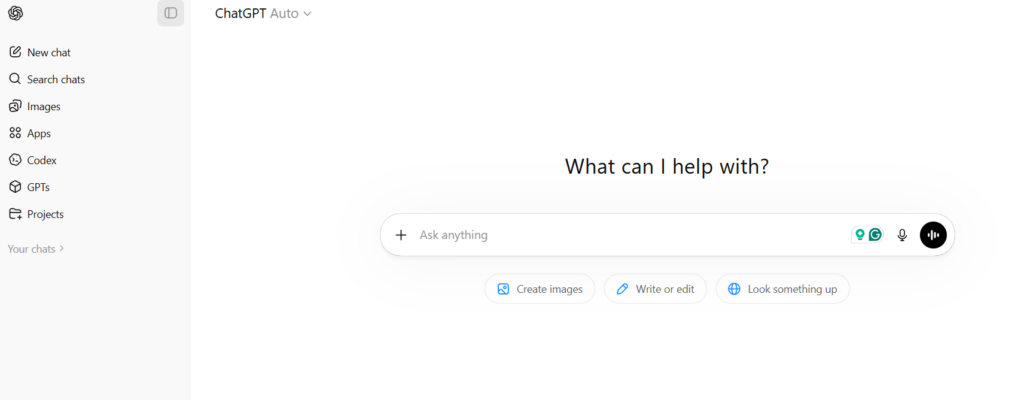
ChatGPT is one of the most powerful AI writing tools available today.
It helps users generate blog posts, marketing content, research summaries,
and even code using natural language prompts.
Grammarly

Grammarly is one of the most popular AI writing assistants used by students, professionals, and content creators. It helps improve grammar, spelling, punctuation, and writing clarity in real time.
The platform uses artificial intelligence to analyze sentences and suggest corrections, making your writing more professional and easier to read. Grammarly also provides tone detection, style suggestions, and plagiarism checking features.
Many writers use Grammarly while writing emails, blog posts, academic papers, and business documents. It integrates easily with browsers, Microsoft Word, Google Docs, and many online platforms.
For beginners and professionals alike, Grammarly is an essential tool for improving writing quality and avoiding common language mistakes.
Jasper AI

Jasper AI is a powerful AI writing platform designed for marketers, bloggers, and businesses. It helps users generate high-quality content quickly, including blog posts, marketing copy, social media captions, and product descriptions.
Jasper uses advanced artificial intelligence to understand prompts and create well-structured content with a natural tone. The platform also includes templates for advertising, email marketing, and website copy, making it a favorite among digital marketers.
One of Jasper’s strongest features is its ability to maintain brand voice and tone across different types of content. This makes it especially useful for companies that need consistent messaging across blogs, ads, and social media posts.
Copy.ai
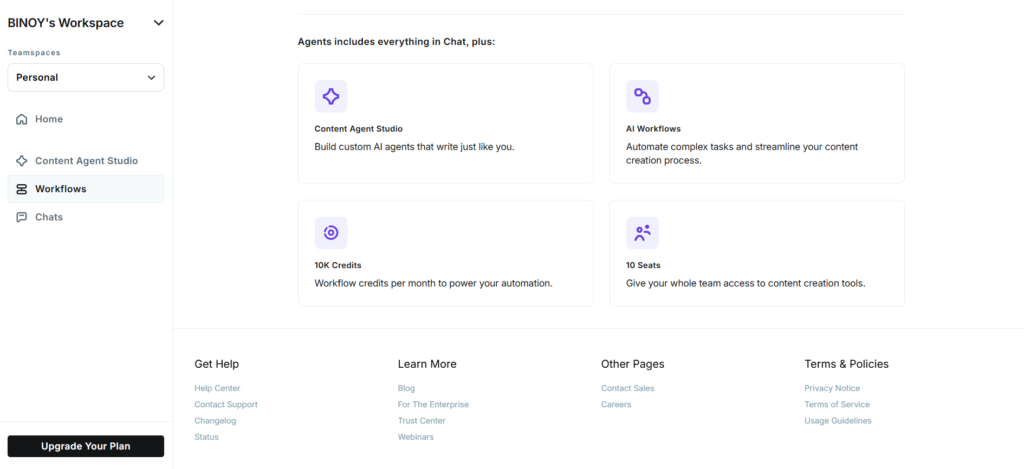
Copy.ai is an AI-powered content generation tool that helps users create marketing copy, blog outlines, social media posts, and email campaigns in seconds. It is designed to simplify content creation for entrepreneurs, marketers, and small businesses.
The platform offers multiple templates for different content types, including product descriptions, ad copy, and website headlines. Users simply provide a short prompt, and Copy.ai generates several content suggestions instantly.
With its easy-to-use interface and fast content generation, Copy.ai has become one of the most popular AI writing tools for creating marketing content efficiently.
Copy.ai is an AI-powered content generation tool that helps users create marketing copy, blog outlines, social media posts, and email campaigns in seconds. It is designed to simplify content creation for entrepreneurs, marketers, and small businesses.
The platform offers multiple templates for different content types, including product descriptions, ad copy, and website headlines. Users simply provide a short prompt, and Copy.ai generates several content suggestions instantly.
QuillBot
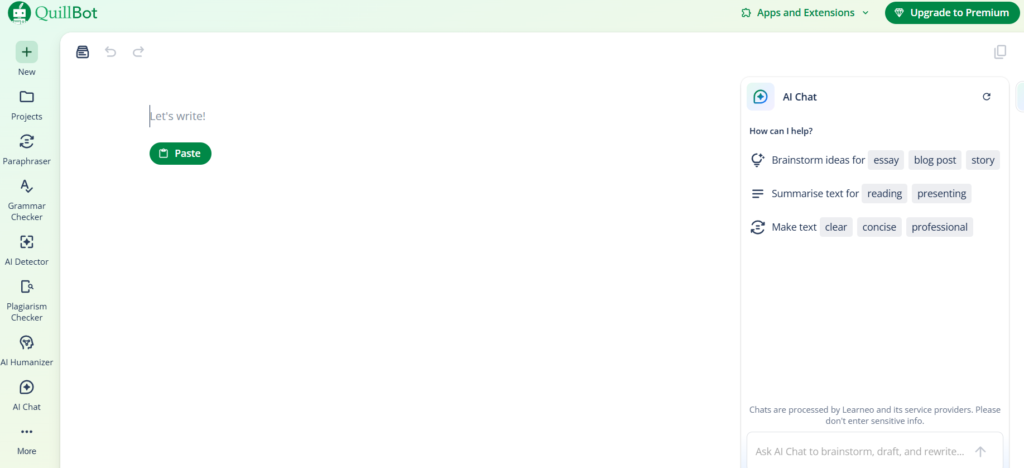
QuillBot is an AI writing tool best known for its powerful paraphrasing and rewriting capabilities. It helps users improve sentences, rephrase text, and make writing clearer while maintaining the original meaning.
Students, researchers, and writers commonly use QuillBot to refine essays, articles, and academic content. The tool also includes features such as grammar checking, summarization, and citation assistance.
With its easy-to-use interface and multiple rewriting modes, QuillBot helps writers improve clarity, avoid repetition, and enhance the overall quality of their writing.
Rytr
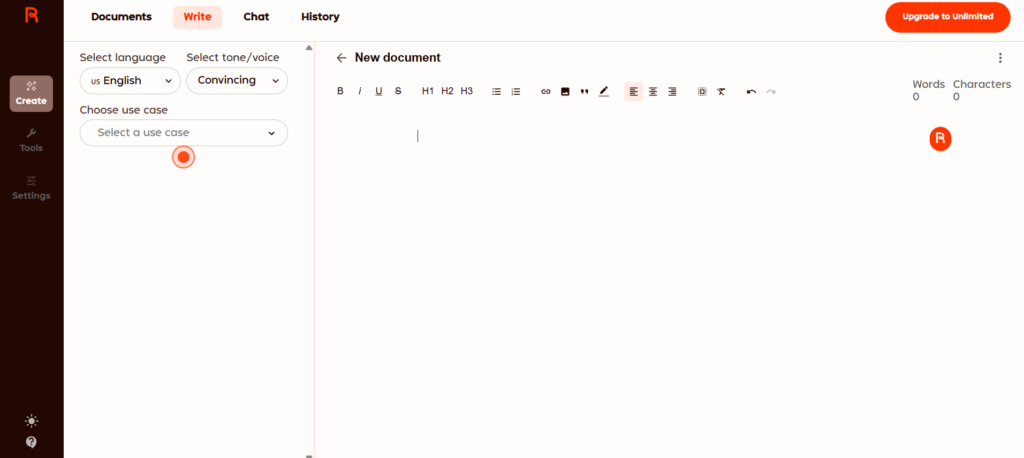
Rytr is a beginner-friendly AI writing assistant that helps users generate content quickly for blogs, emails, social media posts, and product descriptions. It is known for its simple interface and affordable pricing.
Users can choose different writing tones and content types, allowing Rytr to produce tailored text for various purposes. The platform also includes tools for rewriting sentences, expanding ideas, and improving readability.
For freelancers, bloggers, and small businesses looking for a simple AI content generator, Rytr offers an efficient and easy-to-use solution.
Anyword
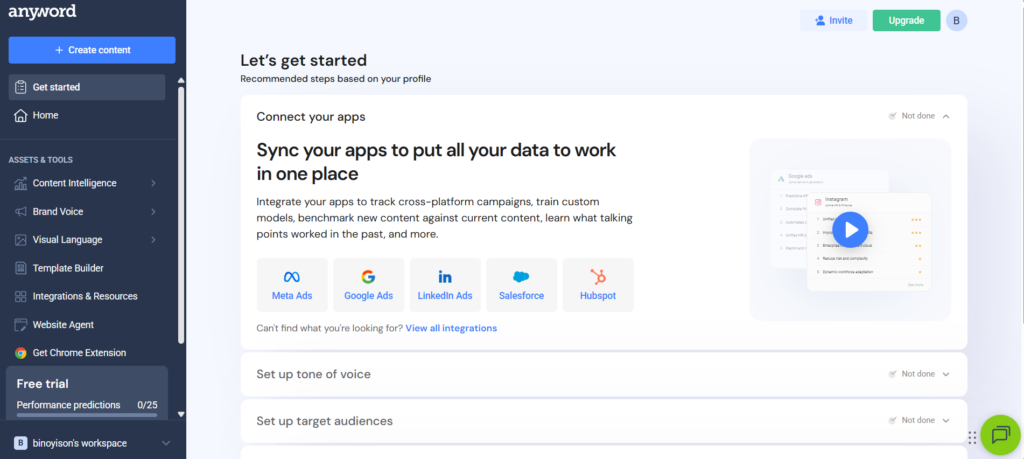
Anyword is an AI writing tool designed specifically for marketing and advertising content. It helps businesses generate high-performing copy for ads, landing pages, emails, and social media campaigns.
One of Anyword’s unique features is its predictive performance score, which estimates how well a piece of content may perform before it is published. This helps marketers choose the most effective copy for their campaigns.
Because of its focus on data-driven marketing content, Anyword is widely used by digital marketers and businesses looking to improve their advertising performance.
Writesonic

Writesonic is an AI-powered writing assistant designed to help users generate high-quality content quickly. It is widely used for blog writing, marketing copy, product descriptions, and social media posts.
The platform includes multiple templates that allow users to generate long-form articles, ad copy, and SEO content with minimal effort. Writesonic also offers tools for AI image generation and chatbot creation.
Because of its versatility and ease of use, Writesonic is popular among bloggers, marketers, and small businesses looking to create content efficiently.
Wordtune

Wordtune is an AI writing assistant focused on improving clarity and readability. It helps users rewrite sentences, shorten text, expand ideas, and adjust tone to make writing more engaging and effective.
Unlike many AI writing tools that generate entire articles, Wordtune focuses on enhancing existing text. This makes it especially useful for editing emails, reports, blog posts, and academic writing.
With its simple interface and powerful rewriting suggestions, Wordtune is a valuable tool for anyone looking to refine and polish their writing.
Sudowrite
