

✦ Featured Snippet
What are AI prompts?
AI prompts are the instructions, questions, or commands you type into an AI tool — like ChatGPT, Claude, or Gemini — to guide it toward a specific output. The quality of an AI prompt directly determines the quality of the response you receive. A vague prompt produces a generic answer. A well-structured, specific AI prompt produces precise, high-quality, immediately usable output — whether that’s a blog post, a business strategy, a marketing campaign, or a passive income asset. Not sure which AI tool to prompt in the first place? See which AI tool is best in 2026, ranked.
Table of Contents
- Introduction
- What Are AI Prompts?
- Why AI Prompts Matter in 2026
- Best AI Prompts for Content Creation
- Best AI Prompts for Business & Marketing
- Best AI Prompts for Productivity
- 25 Best AI Prompts — Complete List
- How to Write Better AI Prompts
- Common Mistakes to Avoid
- How to Make Money Using AI Prompts
- FAQ
- Conclusion
Introduction
What if a single sentence could save you three hours of work — and produce a result better than you’d have created manually?
That’s the reality of working with great AI prompts in 2026.
Most people using ChatGPT, Claude, and Gemini are getting a fraction of what these tools are capable of — not because the AI isn’t powerful, but because their AI prompts are too vague, too generic, or missing critical context. The result is mediocre output that still requires hours of editing.
This guide fixes that.
You’ll find 25 of the best AI prompts available in 2026 — ready to copy, paste, and use immediately across content creation, business strategy, productivity, and learning. Every prompt includes the exact text to use, what it does, and a real example output.
And here’s what makes this guide different: AI prompts aren’t just productivity tools. The right prompts can help you generate income — through blogging, freelance services, affiliate marketing, and digital product creation. If you’ve been wondering how creators are building passive income streams with AI, the answer starts with mastering this skill.
Let’s get into the prompts.
What Are AI Prompts?
AI prompts are the inputs you give to any AI language model to direct its response.
Every conversation you have with OpenAI‘s ChatGPT, Anthropic‘s Claude, or Google AI‘s Gemini is shaped entirely by the prompt you write. The AI has no agenda — it responds to what you ask, in the way you ask it.
That’s both the challenge and the opportunity.
Think of AI prompts as instructions to a brilliant new employee who is incredibly capable but has no context about your goals, your audience, or your standards — unless you provide it. The more specific and contextual your prompt, the more useful the output.
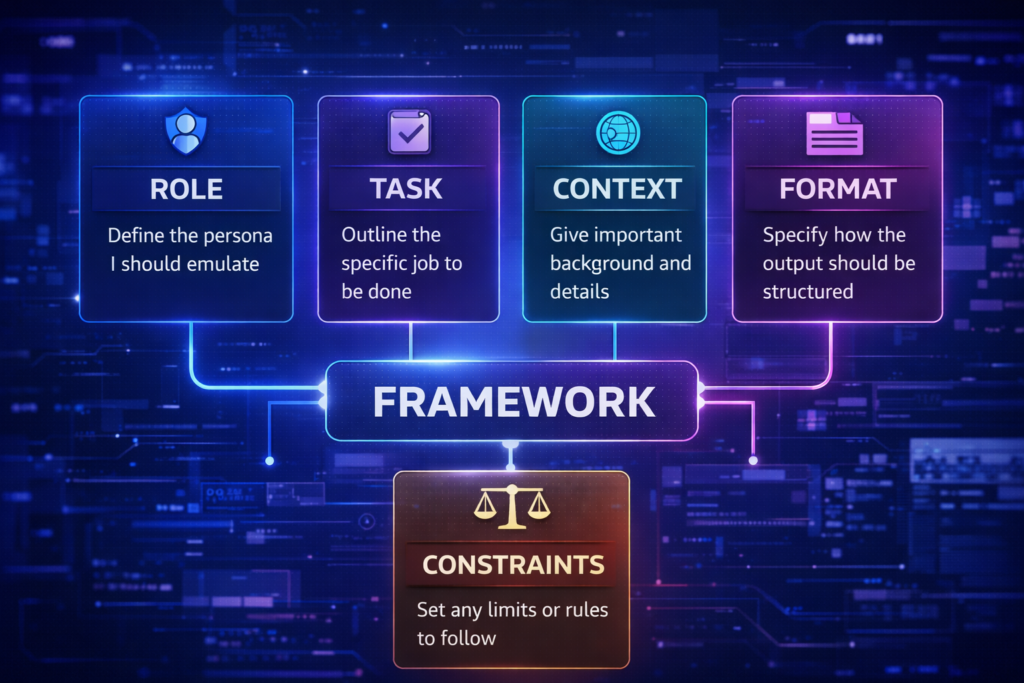
A strong AI prompt includes four core elements:
- Role — Who should the AI be? (“You are an expert SEO copywriter…”)
- Task — What exactly should it produce? (“Write a 600-word blog introduction…”)
- Context — Who is the audience? What’s the goal? (“The target reader is a freelancer aged 25–35…”)
- Format — How should the output be structured? (“Use short paragraphs, include 3 bullet points, end with a CTA…”)
Master these four elements and you unlock a dramatically different level of AI output — one that’s genuinely useful, professionally polished, and often immediately publishable.
To go even deeper into the framework behind building powerful prompts, explore our comprehensive guide on AI prompt engineering — the foundational skill that makes everything in this guide work better.
💡 “AI prompts are not just inputs — they are the lever that determines whether your AI tool frustrates you or transforms how you work.”
Why AI Prompts Matter in 2026

The adoption of AI tools has reached a tipping point. Hundreds of millions of people use ChatGPT, Claude, and Gemini every day. Everyone has access to the same powerful models.
The differentiator is no longer access. It’s prompting skill.
In 2026, the people producing the best AI outputs — and earning the most from them — are the ones who’ve invested in understanding how to write effective AI prompts. Here’s why this skill matters more than ever:
1. Generic output is everywhere — quality output is rare.
With millions of people using AI daily, the market is flooded with generic, templated content. Well-prompted AI produces output that stands out — content that ranks on Google, resonates with readers, and converts into income.
2. Better prompts unlock income streams that bad prompts can’t.
AI prompts can be used to generate content for blogs, YouTube channels, and affiliate websites — making them a powerful tool for building passive income streams. The difference between a creator earning $200/month from AI content and one earning $5,000/month is almost always the quality of their prompts.
3. Prompting is a skill with compound returns.
Every great prompt you write and save makes future content creation faster and more consistent. A library of 50 high-performing AI prompts becomes one of your most valuable professional assets.
4. The gap between users is widening fast.
Early adopters who master AI prompts in 2026 are building authority, audience, and income streams that will be significantly harder to replicate in 12–18 months.
5. AI prompt skills translate directly to marketable services.
Knowing how to write prompts that produce excellent outputs is a service businesses will pay for — through freelance writing, prompt consulting, and content production agencies.
For the full landscape of income opportunities built on prompting expertise, explore our guide on AI business ideas — covering the most profitable AI-powered models available in 2026.
Best AI Prompts for Content Creation
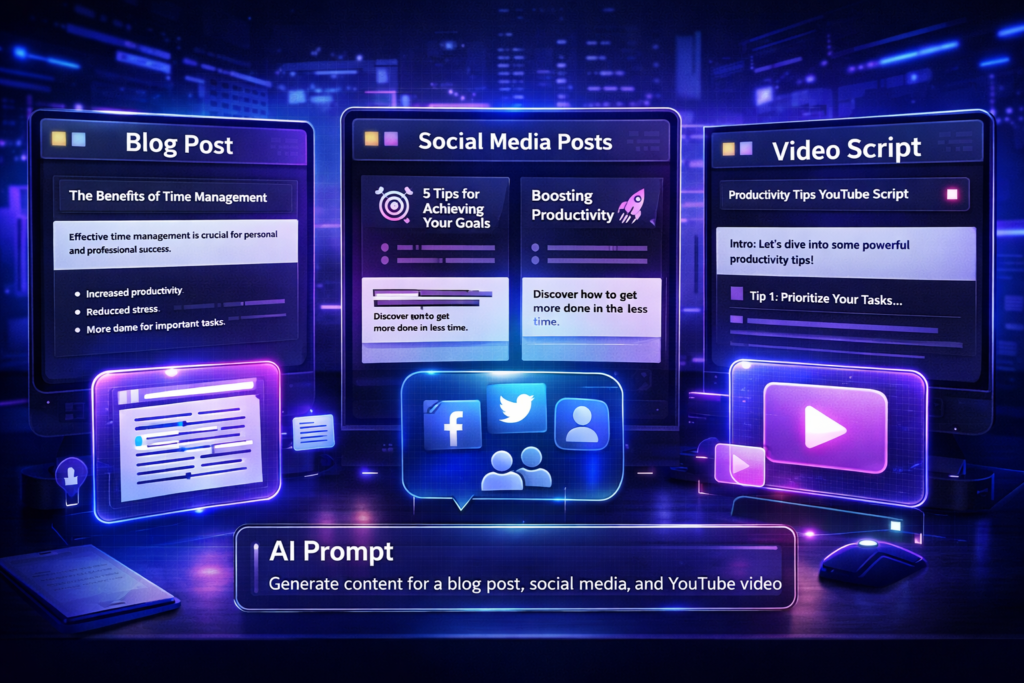
Content creation is where AI prompts deliver the highest ROI for most creators.
A well-structured content prompt can produce a blog introduction, social media caption pack, YouTube script, or email newsletter in minutes — at a quality level that would take hours to replicate manually. The key is giving the AI the context it needs: your audience, your tone, your format, and your goal.
The best content AI prompts don’t just generate words — they produce platform-optimized, audience-specific content that is immediately publishable.
For the platforms where these prompts produce the strongest results, explore our guide on AI tools for content creation — covering every major AI writing, video, and visual content tool available in 2026.
Best AI Prompts for Business & Marketing
The business and marketing AI prompts in this guide are built for real commercial application.
A strong business prompt can generate a client proposal that would have taken hours to write manually. A marketing prompt can produce a complete 90-day strategy, competitive analysis, or sales email sequence — in minutes. The key is providing enough context: your industry, your target customer, your goals, and your constraints.
Used consistently, these AI prompts can replace consulting fees, reduce agency costs, and give solo founders and small teams capabilities that used to require much larger organizations.
Best AI Prompts for Productivity
Productivity AI prompts are the category most people underestimate — and the one with the most immediate personal impact.
The right productivity prompt turns a chaotic task list into a structured weekly plan, converts messy meeting notes into a polished action document, and creates SOPs that new team members can follow without hand-holding.
Every hour saved through better productivity prompting is an hour you can redirect into income-generating work.
AI prompts for beginners (easy to use)
New to AI prompts? Start here. These five prompts require minimal context and deliver immediately useful results — perfect for your first session with ChatGPT, Claude, or Gemini:
Beginner Prompt #1 — Explain it simply
Explain [topic] as if you're talking to a complete beginner. Use simple language, short paragraphs, and one real-world analogy.Beginner Prompt #2 — Summarize this
Summarize the following text in 5 clear bullet points, keeping only the most important information: [paste text]Beginner Prompt #3 — Write a professional email
Write a professional email to [recipient] asking for [what you need]. Tone: friendly but professional. Keep it under 150 words.Beginner Prompt #4 — Generate ideas
Give me 10 creative ideas for [topic or project]. For each idea, include one sentence explaining why it would work.Beginner Prompt #5 — Make a simple plan
Create a 7-day action plan for [goal]. Each day should have one specific task that takes under 30 minutes to complete.These beginner AI prompts work across all three major platforms and require no technical knowledge. They’re the fastest path from zero to your first “wow” AI output.
💡 “The best AI prompts for beginners are simple enough to use in the next five minutes — but powerful enough to produce results that make you want to use AI for everything after.”
25 Best AI Prompts — Complete List
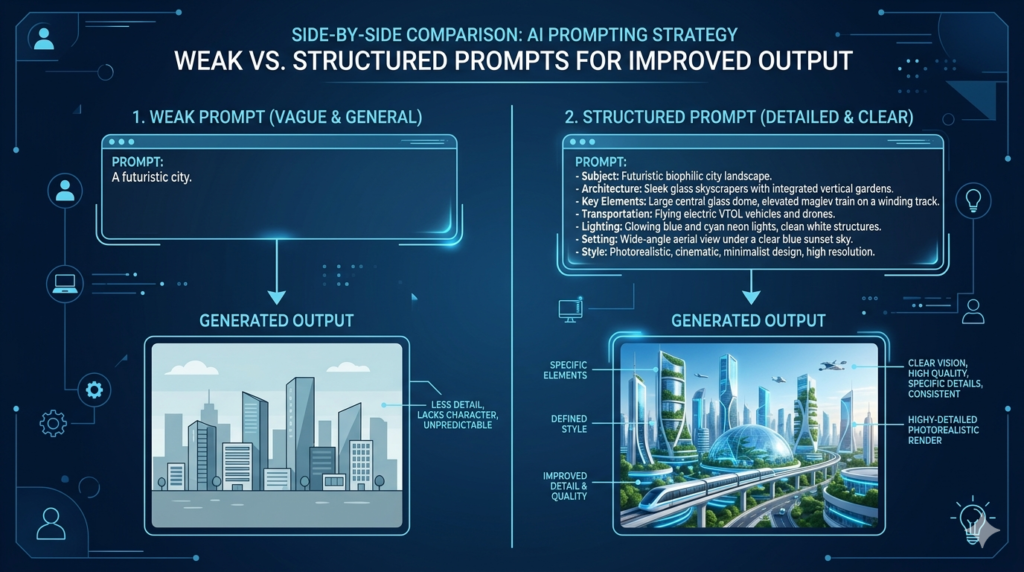
Below are 25 of the most practical, powerful, and income-generating AI prompts available in 2026. Each one includes the exact prompt text, what it does, and a real example output excerpt.
📝 Category 1: Content AI Prompts (#1–7)
Prompt #1 — SEO Blog Introduction
You are an expert SEO content writer. Write a compelling introduction for a blog post titled "[TITLE]".

Requirements:
- Include the keyword "[KEYWORD]" within the first 100 words
- Open with a relatable hook (question, bold statement, or surprising fact)
- Address the reader's main pain point directly
- End with a clear transition into the main content
- Word count: 150–200 words
- Tone: Conversational and engaging
- Audience: [DESCRIBE YOUR AUDIENCE]
What it does: Produces a keyword-optimized, reader-grabbing blog introduction that satisfies both Google’s ranking signals and human attention spans.
Example output excerpt:
“You’ve been posting consistently for six months. Your content is solid. Your ideas are good. So why is your traffic still stuck at 300 visitors per month? The frustrating answer is that most blogs fail not because of poor writing — but because of invisible optimization gaps that push them off Google’s first page before they ever get a real chance. In this guide, you’ll discover the exact fixes that took one creator’s traffic from 400 to 38,000 monthly visitors in under 10 months — no paid ads, no link schemes, no technical expertise required…”
Prompt #2 — YouTube Video Script
You are a professional YouTube scriptwriter specializing in [NICHE] content. Write a complete script for a [LENGTH]-minute video titled: "[VIDEO TITLE]"

Structure:
1. Hook (first 30 seconds — create curiosity or urgency, no intro yet)
2. Brief channel welcome (10 seconds max)
3. Main content: [NUMBER] key points with smooth transitions
4. Closing CTA: like, subscribe, and comment prompt

Tone: [CONVERSATIONAL / EDUCATIONAL / ENTERTAINING]
Audience: [DESCRIBE AUDIENCE]
Important: No filler phrases. Keep sentences short and easy to speak aloud.
What it does: Generates a complete, retention-optimized YouTube script that keeps viewers watching and drives channel growth.
Example output excerpt:
“[HOOK] Most people trying to grow on YouTube make the same three mistakes — and the worst part is they don’t even know they’re making them. If you’ve been posting for more than 90 days and you’re still under 500 subscribers, stay until the end. What I’m about to share has helped 12 creators in my community cross 10,000 subscribers in under 60 days — using a strategy most gurus never mention…”
Prompt #3 — Social Media Caption Pack (7 Days)
You are a senior social media strategist for [PLATFORM]. Create a 7-day caption pack for a [BRAND/NICHE] account.

For each day include:
- Post type: (educational / inspirational / promotional / storytelling / engagement)
- Caption: Optimized length for [PLATFORM]
- Hashtags: 5–10 relevant, current tags
- CTA: One specific reader action

Brand tone: [DESCRIBE TONE]
Target audience: [DESCRIBE AUDIENCE]
Weekly theme: [THEME]
Do not repeat the same opening word across posts.
What it does: Delivers a complete week of platform-ready social content in one prompt — saving 4–6 hours of weekly content planning.
Example output excerpt:
“Day 1 — Educational | Caption: ‘3 things I wish I knew before starting my first blog: [1] Traffic doesn’t come from publishing — it comes from optimizing. [2] One great post beats ten average ones every time. [3] Email subscribers convert at 5x the rate of social followers. Which of these surprised you most? | Hashtags: #blogginglife #contentcreator #digitalmarketing #bloggingtips #seo | CTA: Save this — you’ll need it.”
Prompt #4 — Email Newsletter Issue
You are an expert email copywriter. Write a complete newsletter issue for [NEWSLETTER NAME], a [NICHE] newsletter for [AUDIENCE].

Structure:
- Subject line: under 50 characters, curiosity-driven
- Preview text: under 90 characters
- Opening hook: 2–3 sentences
- Main section: [TOPIC] — 3 key insights in short, scannable paragraphs
- Quick tip of the week: 1–2 sentences
- One recommended resource with a brief description
- Closing CTA

Tone: [DESCRIBE TONE]
Total word count: 350–450 words
What it does: Produces a complete, publish-ready newsletter — from subject line to closing CTA — optimized for high open rates and reader engagement.
Example output excerpt:
“Subject: The 5-minute habit that changed my writing | Preview: I almost skipped it last week… | I almost didn’t write this email. It was 11pm, I’d had a full day, and the last thing I wanted to do was sit down at the keyboard. But then I remembered the 5-minute rule. Not 5 minutes of writing — 5 minutes of one specific thing that makes writing effortless. Here’s what it is, why it works, and how to try it tomorrow morning…”
Prompt #5 — Product Description (Conversion-Focused)
You are a conversion-focused e-commerce copywriter. Write a product description for [PRODUCT NAME].

Product details:
- Key features: [LIST FEATURES]
- Main benefit: [PRIMARY BENEFIT]
- Target customer: [DESCRIBE CUSTOMER]
- Price: [PRICE]

Structure:
1. Benefit-led opening sentence (not feature-led)
2. 3 bullet points: features written as tangible customer benefits
3. One paragraph: who it's for and why it works for them
4. Closing CTA sentence

Word count: under 150 words
Tone: Confident and direct. No hype, no clichés.
What it does: Generates conversion-optimized product copy that sells the outcome, not just the specification.
Example output excerpt:
“Stop losing your best ideas to a notepad that goes nowhere. The AI Workflow Planner organizes, prioritizes, and schedules your week automatically — so you spend your time executing, not planning. • Syncs with your existing tools in under 2 minutes — no migration, no learning curve • Smart time-blocking that adapts in real-time as your priorities shift • Daily focus score that shows you exactly where your energy is going Built for creators and founders who refuse to let their calendar control their output. Start your 14-day free trial — no card required.”
Prompt #6 — Full Blog Post Outline
You are an SEO content strategist. Create a detailed blog post outline for: "[ARTICLE TITLE]"

Focus keyword: [KEYWORD]
Target audience: [AUDIENCE]
Word count target: [WORD COUNT]

Include:
- SEO title (under 60 characters, keyword included)
- Meta description (150–160 characters)
- H1 with keyword
- Introduction angle (hook approach + keyword placement note)
- Minimum 5 H2 sections, each with 3–4 H3 sub-points
- Featured snippet opportunity (where and format)
- FAQ section (5 questions)
- CTA section note
- Conclusion angle

Flag every section where the focus keyword should appear.
What it does: Produces a complete, SEO-engineered content blueprint that any writer or AI can turn directly into a fully optimized long-form article.
Example output excerpt:
“SEO Title: How to Start a Blog and Make Money in 2026 | Meta: Learn how to start a blog and make money in 2026 — step-by-step guide covering setup, content, SEO, and monetization. Start today! | H2: What Is Blogging and Can You Still Make Money? [keyword note: include ‘blog’ in first 100 words] / H3: Is blogging dead in 2026? / H3: How much can bloggers actually earn? / H3: The niches making the most money right now…”
Prompt #7 — Content Repurposing Master Plan
You are a multi-platform content strategist. I have created a [TYPE OF CONTENT] about [TOPIC].

Repurpose it into:
1. 3 LinkedIn posts (format: hook + insight + CTA)
2. 5 Twitter/X posts or threads (short and punchy)
3. 3 Pinterest pin descriptions (discovery-optimized)
4. 1 email newsletter section (150 words max)
5. 2 YouTube Shorts scripts (30–60 seconds each)
6. 1 podcast episode outline (3 talking points)

For each format include: hook, core message, CTA, and one platform-specific optimization note.
What it does: Multiplies one content asset into a full week of cross-platform distribution — without creating a single new idea from scratch.
Example output excerpt:
“LinkedIn Post #1 | Hook: ‘I turned one blog post into 3 months of content. Here’s the exact system I used:’ | Core message: The content repurposing stack — one idea, six platforms, zero extra brainstorming | CTA: ‘Save this. Your future Monday morning self will thank you.’ | Platform note: Post as a 5-slide carousel — each slide covers one platform. Carousels get 3x the impressions of standard LinkedIn posts.”
💼 Category 2: Business & Marketing AI Prompts (#8–14)
Prompt #8 — Client Proposal
You are a senior [INDUSTRY] consultant with 15 years of experience. Write a professional client proposal for [SERVICE] for [CLIENT TYPE].

Include:
1. Executive summary: Their challenge + your solution (150 words)
2. Scope of work: 3 clearly defined phases with deliverables
3. Timeline: Week-by-week breakdown
4. Investment: Present [PRICE] as a business investment, not a cost
5. Why choose us: 3 differentiators (use [PLACEHOLDER] so I can customize)
6. Next steps: Specific CTA with a deadline

Tone: Expert, confident, and client-focused. No jargon.
What it does: Generates a boardroom-ready client proposal that positions your service as the obvious choice — in minutes instead of hours.
Example output excerpt:
“Executive Summary: [Client Company] is currently losing an estimated 15+ hours per week to manual processes that could be fully automated with the right systems. This proposal outlines a 6-week implementation plan designed to eliminate that overhead entirely — cutting operational costs while giving your team back the capacity to focus on revenue-generating work. Our approach has delivered an average 40% efficiency gain for clients in your sector within the first 90 days…”
Prompt #9 — 90-Day Marketing Strategy
You are a senior digital marketing strategist. Create a 90-day marketing plan for [BUSINESS TYPE] targeting [TARGET AUDIENCE].

Context:
- Current monthly revenue: [AMOUNT or "early stage"]
- Primary goal: [GOAL]
- Budget available: [BUDGET]
- Team size: [SIZE]
- Current channels: [LIST CHANNELS]

Deliverable: Month-by-month plan with:
- Monthly focus and rationale
- 3–5 specific tactics per month
- KPIs to track
- Tools recommended
- Expected outcome by day 90
What it does: Produces a complete, executable marketing strategy tailored to your specific business context — replacing expensive consultant fees.
Example output excerpt:
“Month 1 — Foundation | Focus: Content infrastructure + audience building | Tactics: [1] Publish 12 long-tail SEO articles targeting commercial intent keywords with KD under 25 / [2] Launch a lead magnet (AI-generated PDF guide) to start capturing email subscribers / [3] Set up 5-email welcome sequence / KPIs: 500 email subscribers, 20 published articles, 1,500 organic sessions / Tool recommendations: Surfer SEO, ConvertKit, ChatGPT for content…”
Prompt #10 — Competitor Gap Analysis
You are a business intelligence analyst. Conduct a competitor gap analysis for a [BUSINESS TYPE] in the [INDUSTRY] niche.

Competitors: [LIST 3–5]

For each competitor, identify:
1. Core value proposition and positioning
2. Content and marketing strategy (publicly observable)
3. 3 apparent strengths
4. 3 apparent weaknesses or gaps
5. Pricing model (if public)

Conclude with:
- 3 opportunities my business can exploit from these gaps
- 2 threats I should prepare for
- 1 priority strategic recommendation

Format as a structured report with clear headings.
What it does: Delivers competitive intelligence that informs positioning, content strategy, and product roadmap — in a structured, shareable format.
Example output excerpt:
“Competitor #1: [Name] | Positioning: ‘The enterprise-grade solution for scaling teams’ | Strengths: (1) Deep brand recognition / (2) 200+ integration library / (3) Exceptional onboarding support | Weaknesses: (1) Pricing inaccessible to solopreneurs and startups / (2) No AI-native features in core product / (3) Complex UI with steep learning curve | Gap opportunity: Position as the AI-powered, beginner-accessible alternative to [Competitor] — targeting the segment they’ve priced out…”
Prompt #11 — Cold Email Sequence (5 Emails)
You are an expert B2B sales copywriter. Write a 5-email cold outreach sequence for [PRODUCT/SERVICE].

Target: [JOB TITLE] at [COMPANY TYPE]
Pain point being solved: [PAIN POINT]
Key differentiator: [UNIQUE ANGLE]

For each email:
- Day to send (Day 1 / 3 / 7 / 14 / 21)
- Subject line (under 50 characters)
- Body copy (under 150 words)
- Single CTA

Tone: Professional and human. Build value first — never push for the sale before establishing relevance.
What it does: Generates a complete 5-touchpoint outbound sequence that warms cold prospects into qualified conversations — without sounding like spam.
Example output excerpt:
“Email 1 (Day 1) | Subject: Quick question, [First Name] | Body: Hi [First Name], I noticed [Company] has been scaling its content operation recently — congratulations on the growth. Most content leads I speak with at this stage tell me the biggest bottleneck isn’t ideas or writers — it’s the 12+ hours per week lost to briefing, reviewing, and reformatting. We’ve helped [X] companies in [Industry] cut that in half with a simple system. Worth a 15-minute conversation? | CTA: [Calendar link]…”
Prompt #12 — SWOT + Strategic Action Plan
You are a business strategist. Conduct a SWOT analysis and create a strategic response plan for [BUSINESS].

Context:
- Industry: [INDUSTRY]
- Stage: [STARTUP / GROWING / ESTABLISHED]
- Product/service: [DESCRIPTION]
- Target market: [MARKET]
- Biggest current challenge: [CHALLENGE]

Deliverable:
- SWOT: 4 points in each quadrant, formatted as a table
- Strategic response: 2 specific actions per quadrant
- Top 3 priority actions with 30/60/90-day milestones each

Be specific. Avoid generic strategic advice.
What it does: Replaces a consulting engagement with a structured, immediately actionable strategic planning document.
Example output excerpt:
“SWOT Analysis | Strengths: (1) Proprietary AI workflow that competitors can’t easily replicate / (2) Strong NPS score of 74 / (3) High customer retention (monthly churn under 3%) / (4) Deep subject matter expertise | Weaknesses: (1) Single primary acquisition channel — 90% of revenue from one source / (2) No mobile app / (3) Limited brand awareness outside current customer base… | Priority Action #1: Launch referral program — 30-day: Design structure and incentive / 60-day: Soft launch to top 20% of customers / 90-day: Full rollout + track referral rate…”
Prompt #13 — Brand Voice Guide
You are a senior brand strategist. Create a complete brand voice guide for [BRAND NAME].

Overview:
- Business type: [TYPE]
- Target audience: [AUDIENCE]
- Core values: [LIST 3–5]
- Product/service: [DESCRIPTION]

Deliverable:
1. 5 brand personality traits — one paragraph of explanation each
2. Tone of voice for 4 contexts: Social media / Email / Customer support / Advertising
3. "We are / We are not" table (5 rows each)
4. 5 example phrases in brand voice
5. 5 phrases to actively avoid
6. One example paragraph rewritten in brand voice (provide a generic paragraph I can replace)

Format with clear section headers. Practical enough for a new team member to apply from day one.
What it does: Produces a professional brand voice guide that ensures consistent, on-brand communication across every channel and team member.
Example output excerpt:
“Brand Personality Trait #1 — Empowering | We don’t tell our audience what they can’t do. We show them exactly what they can. Every piece of communication — from a tweet to a support email — is written to build confidence, not dependency. We use language that celebrates progress, not perfection, and we always assume our audience is more capable than they currently believe. When in doubt, ask: ‘Does this make the reader feel more capable, or does it make them feel like they need us to survive?'”
Prompt #14 — Ad Copy (3 Angles)
You are a direct-response advertising copywriter. Write 3 variations of ad copy for [PRODUCT/SERVICE].

Target audience: [DESCRIBE AUDIENCE]
Primary benefit: [MAIN BENEFIT]
Secondary benefits: [LIST 2–3]
Platform: [FACEBOOK / INSTAGRAM / LINKEDIN / TIKTOK]

For each variation:
- Label: (A: Curiosity / B: Problem-solution / C: Social proof)
- Headline (under 40 characters)
- Primary text (under 125 words)
- CTA button text

Each variation must use a completely different emotional angle. No overlap in opening approach.
What it does: Delivers three A/B/C-test-ready ad variations for immediate campaign launch — covering the three highest-performing emotional angles in paid social.
Example output excerpt:
“Variation A — Curiosity | Headline: ‘Why top creators never edit’ | Text: ‘The fastest-growing YouTube channels don’t spend more time editing — they’ve eliminated editing almost entirely. Here’s the workflow they switched to six months ago…’ | CTA: See How It Works | Variation B — Problem-solution | Headline: ‘Still editing for 3 hours?’ | Text: ‘If your editing process takes longer than filming, you don’t have a content business — you have a part-time editing job. Here’s what the top 1% of creators changed…’ | CTA: Fix This Now”
⚡ Category 3: Productivity AI Prompts (#15–20)
Prompt #15 — Weekly Priority Planner
You are a productivity coach and time management expert. Help me plan my work week.

My tasks for this week:
[PASTE YOUR FULL TASK LIST]

Available hours: [X] per day
Key deadline: [DEADLINE]
My peak focus time: [MORNING / AFTERNOON / EVENING]

Deliverable:
1. Eisenhower Matrix categorization (4 quadrants)
2. Day-by-day schedule (Mon–Fri) with time-blocked tasks
3. 3 tasks I should drop, delay, or delegate
4. ONE most important task (MIT) per day — starred
5. Friday shutdown ritual suggestion

Format: Table + brief daily notes.
What it does: Transforms a chaotic task list into a clear, structured, time-blocked week — eliminating decision fatigue and priority confusion.
Example output excerpt:
“Eisenhower Matrix | Urgent + Important: Client proposal (due Thursday) / Fix payment bug / Team presentation | Important, Not Urgent: Content calendar / Q3 strategy review / Onboarding docs update | MIT Monday: Client proposal — protect 9–11am as a no-meeting, no-phone block | MIT Tuesday: Team presentation — block 8:30–10:30am, all other tasks below this…”
Prompt #16 — Meeting Notes → Action Document
You are an executive assistant and project manager. Transform these raw meeting notes into a professional action document.

Meeting notes: [PASTE NOTES]

Deliverable:
1. Meeting summary (5 bullets — decisions only, no discussion)
2. Action items table: Task | Owner | Deadline | Priority
3. Open questions requiring follow-up
4. Suggested agenda for next meeting
5. One-paragraph executive summary for stakeholders who weren't present

Remove all filler. Format professionally.
What it does: Converts messy, disorganized meeting notes into a clean, stakeholder-ready project management document in under 60 seconds.
Example output excerpt:
“Meeting Summary — Key Decisions: (1) Q3 campaign budget approved at £38,000 / (2) Launch date confirmed June 14th / (3) Sarah leads influencer outreach / (4) Tom owns paid media execution / (5) Weekly check-ins every Monday 10am | Action Items: Fix landing page copy | Owner: Marketing | Deadline: May 18 | Priority: High / Brief influencer shortlist | Owner: Sarah | Deadline: May 22 | Priority: High…”
Prompt #17 — Standard Operating Procedure
You are an operations specialist. Write a detailed SOP for [TASK/PROCESS].

Context:
- Who performs this: [ROLE]
- Frequency: [HOW OFTEN]
- Tools used: [TOOLS]
- Known issues: [COMMON MISTAKES]

SOP structure:
1. Title + version number
2. Purpose (2 sentences)
3. Scope (who this applies to)
4. Prerequisites
5. Step-by-step instructions (numbered, specific)
6. Quality checkpoints (3–5)
7. Troubleshooting (3 common problems + solutions)
8. Notes and exceptions

Audience: A new team member with zero prior experience in this process.
What it does: Creates a professional, immediately usable SOP that eliminates repeated training, process inconsistency, and avoidable errors.
Example output excerpt:
“SOP: Weekly Social Media Publishing Process | Version 1.1 | Purpose: This SOP ensures social media content is published on schedule and in brand compliance across all platforms, eliminating ad-hoc decisions and reducing publishing errors. | Step 4: Before scheduling any post, run it through the Brand Compliance Checklist (see Appendix A). If any item is flagged, revise before proceeding. Do NOT bypass this step for time reasons — errors published live cost significantly more time to correct than prevention.”
Prompt #18 — 30-Day Skill Learning Plan
You are an expert learning coach. Create a 30-day plan to take me from complete beginner to confident intermediate in [SKILL].

My context:
- Starting level: Complete beginner
- Daily time available: [X] hours
- Learning style: [VISUAL / READING / HANDS-ON / MIXED]
- Goal: [SPECIFIC OUTCOME by Day 30]

Deliverable:
- Week-by-week themes with rationale
- Daily tasks (specific — not "research the topic")
- Free resources for each week
- One hands-on mini-project per week
- Day 30 milestone: What I should be able to do with confidence

Format week by week.
What it does: Creates a structured, achievable self-study curriculum for any skill — replacing aimless YouTube exploration with a clear daily roadmap.
Example output excerpt:
“Week 1 Theme: Foundations and Landscape | Rationale: Before practicing any skill, understand why it works — this prevents the most common beginner mistakes | Day 1: Read [specific beginner article] — 40 min. Summarize in 5 bullet points in your own words | Day 2: Watch [YouTube channel’s] beginner playlist (3 videos, 35 min). Note: What surprised you most? | Week 1 Mini-Project: Complete one beginner-level exercise that produces a real output — imperfect is fine. Done > perfect at this stage…”
Prompt #19 — Difficult Professional Message
You are an expert communicator with a background in professional conflict resolution. Help me write a [TYPE OF MESSAGE] to [RECIPIENT].

The situation: [DESCRIBE IN 3–5 SENTENCES]

My goal: [DESIRED OUTCOME]

Constraints:
- Tone: [PROFESSIONAL / DIRECT / EMPATHETIC / FIRM BUT RESPECTFUL]
- Max length: [X] words
- Do NOT mention: [WHAT TO AVOID]
- Must include: [KEY POINTS]

Write 2 versions:
- Version A: More direct approach
- Version B: Softer approach
Add one sentence explaining what each version prioritizes.
What it does: Removes the anxiety and time cost of drafting difficult professional messages — delivering two strategic options with different emotional register.
Example output excerpt:
“Version A (Direct) — Prioritizes clarity and accountability: ‘Hi [Name], I want to address something before it affects our working relationship further. Over the past three weeks, three consecutive deliverables have missed their agreed deadlines without proactive communication. I need us to agree on a new process that prevents this — I’d like to discuss on a call this week. Are you available Thursday?’ | Version B (Softer) — Prioritizes the relationship while still addressing the issue: ‘Hi [Name], I hope you’re well. I wanted to check in on [project] — I’ve noticed some timeline challenges recently and want to make sure we’re set up for success going forward. Do you have 20 minutes to chat this week?'”
Prompt #20 — Personal Bio (4 Platforms)
You are a personal branding specialist. Write 4 versions of a professional bio for [NAME].

Background:
- Role/title: [ROLE]
- Industry: [INDUSTRY]
- Experience: [YEARS]
- Top 3 achievements: [LIST]
- Unique angle: [WHAT MAKES YOU DIFFERENT]

4 versions:
1. Twitter/X bio (under 160 characters)
2. LinkedIn summary (under 300 words, first-person)
3. Speaker/press bio (third-person, 150 words, achievement-focused)
4. Website about page intro (200 words, conversational, story-led)

Each version should feel genuinely distinct — not just reformatted.
What it does: Produces four platform-ready personal bios in one prompt — eliminating the blank-page paralysis of writing about yourself.
Example output excerpt:
“Twitter Bio: Helping founders grow with AI systems | 10K+ hours building → 2M+ results | Practical > theoretical | LinkedIn Summary: I spent the first four years of my career convinced that working harder was the answer. More hours, more effort, more output. It wasn’t until I built my first repeatable system that I understood what I’d been missing: the difference between working in your business and working on it…”
🎓 Category 4: Learning & Research AI Prompts (#21–25)
Prompt #21 — Explain Any Complex Topic Simply
You are a world-class teacher with a gift for making complex ideas accessible to anyone. Explain [TOPIC] clearly.

Requirements:
- Zero unexplained jargon
- 2 real-world analogies a 14-year-old would understand
- Structure: What it is → Why it matters → How it works → One real example
- End with 3 questions I should explore to go deeper
- Format: Short paragraphs. Maximum 400 words total.
What it does: Breaks down any complex subject into an immediately understandable explanation — ideal for self-learning, content creation, or explaining concepts to non-expert audiences.
Example output excerpt:
“What it is: Compound interest is ‘interest on your interest’ — meaning your returns start generating their own returns, which generate more returns, and so on. The snowball gets bigger the longer it rolls. Why it matters: A one-time £1,000 investment at 8% annual return becomes £21,725 in 40 years without ever adding another pound. That’s not magic — that’s math. The longer the timeline, the more dramatic the effect. Why most people miss it: Our brains are wired for linear thinking (2, 4, 6, 8). Compound growth is exponential (2, 4, 8, 16, 32)…”
Prompt #22 — Deep Research Brief
You are a research analyst. Provide a comprehensive research brief on [TOPIC].

Structure:
1. Executive summary (100 words — the essential things to know)
2. Key facts and statistics (minimum 5, with context for each)
3. Main perspectives FOR and AGAINST (if applicable)
4. Common misconceptions + the truth behind them (3)
5. The most credible sources and experts in this field
6. 5 questions for deeper research

Flag any areas where information is contested or rapidly changing.
What it does: Produces a structured, expert-level research briefing on any topic — replacing hours of fragmented web browsing with one organized document.
Example output excerpt:
“Executive Summary: [Topic] has undergone three major shifts in the past 5 years, driven primarily by [Factor 1], [Factor 2], and [Factor 3]. The central debate within the field centers on [Key Tension] — with credible evidence supporting multiple positions. Key facts: (1) [Statistic] — context: this represents a [X]% change from [YEAR BASELINE], driven by [REASON]…”
Prompt #23 — Balanced Argument Analysis
You are a skilled critical thinker and debate coach. Present the strongest case for BOTH sides of this question: [QUESTION]

For each position:
- 4 compelling arguments (strongest first)
- 1 counterintuitive or non-obvious point
- Honest acknowledgment of the weakest point in this position

Conclude with:
- A nuanced synthesis (no winner declaration)
- 2 key factors that should most influence a thoughtful person's view

Stay genuinely neutral throughout. Steelman both positions.
What it does: Produces a balanced, intellectually rigorous analysis of any contested question — ideal for essays, presentations, debate prep, or developing nuanced personal views.
Example output excerpt:
“Position A — FOR [STANCE]: Argument 1 (Strongest): [Compelling case with supporting logic] / Counterintuitive point: Most people overlook [Non-obvious factor] — which actually strengthens this position more than any of the headline arguments / Honest weakness: The most significant vulnerability is [SPECIFIC GAP] — proponents tend to underweight this because [REASON]…”
Prompt #24 — Exam Study Guide
You are an expert educator and exam strategist. Create a comprehensive study guide for [SUBJECT] to prepare for [EXAM TYPE].

My level: [BEGINNER / INTERMEDIATE]
Time available: [X] weeks, [X] hours per day
Weakest areas: [LIST]

Study guide must include:
1. Priority concepts by exam frequency (most likely tested, first)
2. 10 practice questions with detailed answer explanations
3. 5 common exam mistakes + how to avoid them
4. Spaced repetition schedule for [X] weeks
5. Memory techniques for the 3 hardest concepts to retain
6. Day-before-exam checklist

Focus on what appears on exams — not exhaustive coverage.
What it does: Creates a targeted, exam-optimized study plan that maximizes retention and performance within the available time — far more effective than generic revision.
Example output excerpt:
“Priority Concept #1: [Key Concept] — Exam Frequency: High (estimated 30–40% of paper) | What you must know: [Specific knowledge] | Memory technique: Use the [ACRONYM] method — [Breakdown of letters to concepts] | Practice Question: [Specific question] | Answer: [X]. Explanation: Many students choose [Wrong Answer] because [Reason]. The distinguishing factor is [Key Insight] — once you see this pattern, you’ll get this question type right every time…”
Prompt #25 — Failure Analysis and Lessons Learned
You are a performance coach and strategic advisor. Help me extract maximum learning from a recent setback.

The situation: [DESCRIBE WHAT HAPPENED]

Walk me through:
1. Objective facts (what happened, without interpretation)
2. The expectation gap (what I assumed vs. what occurred)
3. Factors within vs. outside my control
4. What I would do differently with current knowledge
5. A blind spot or pattern this reveals
6. 3 specific actions in the next 7 days to reduce recurrence
7. The reframe: How could this setback be the best thing that happened long-term?

Tone: Direct, honest, and growth-focused.
What it does: Converts a failure or setback into a structured growth framework — replacing frustration with clarity, accountability, and a concrete next-step plan.
Example output excerpt:
“Objective Facts: The product launch generated 18 sales against a target of 200. Three verified factors: (1) email list was 60% smaller than the model assumed / (2) sales page went live 72 hours after the campaign started / (3) no time-limited offer was in place | Expectation Gap: You assumed product quality would drive organic word-of-mouth. What the data showed: quality is necessary but insufficient — launch mechanics and urgency are independent variables that operate regardless of product quality…”
How to Write Better AI Prompts
The 25 prompts above follow consistent principles you can apply to any custom prompt you create. Here’s the condensed framework:
1. Assign a role immediately.
“You are an expert [X]” is the single most impactful sentence you can add to any prompt. It shifts tone, depth, vocabulary, and analytical rigor before the task is even stated.
2. Define the deliverable with precision.
“Help me with my marketing” is not a deliverable. “Write a 90-day digital marketing plan for a SaaS startup targeting SMB founders with a $3,000/month budget” is a deliverable. The more specific, the more usable the output.
3. Provide context generously.
Every detail the AI lacks, it fills with generic assumptions. Every piece of context you provide makes the output more personalized, accurate, and immediately usable.
4. Specify format explicitly.
Tables, bullet points, word counts, heading structures, numbered lists — stating your format adds seconds to your prompt and saves significant reformatting time afterward.
5. Iterate conversationally.
When the output needs refining, don’t restart from scratch. Use natural follow-ups: “Make this more concise,” “Change the tone to be warmer,” “Add a specific example to point 3.” Conversation-style iteration is faster and more effective than starting over.
For the complete structural framework behind building powerful AI prompts from first principles, explore our full guide on AI prompt engineering — the foundational skill that multiplies the value of every tool in this guide.
Common Mistakes to Avoid
Mistake #1 — One-line prompts
“Write a blog post about productivity” will always produce generic, shallow output. Every prompt needs role, task, context, and format to produce something you’d actually use.
Mistake #2 — Accepting the first output
The first response is a first draft. Real quality emerges in iteration — asking the AI to adjust, expand, tighten, or restructure until the output is genuinely excellent.
Mistake #3 — Omitting audience information
The AI writes for a generic reader unless you specify yours. Always define who will consume the output — their knowledge level, goals, and what they need from the content.
Mistake #4 — Skipping format instructions
Unformatted output needs significant editing. Specifying bullet points, tables, headers, or word counts takes 10 seconds and saves 10 minutes of restructuring.
Mistake #5 — Using the same prompt across every AI model
ChatGPT, Claude, and Gemini have distinct strengths and default behaviors. Adapt your AI prompts slightly — Claude excels at nuanced long-form writing, ChatGPT at versatile rapid output, Gemini at Google-ecosystem alignment.
Mistake #6 — Not building a prompt library
When a prompt produces exceptional output, save it. Your personal prompt library is one of your highest-value professional assets — built through consistent, deliberate iteration.
How to Make Money Using AI Prompts
AI prompts aren’t just productivity tools. They are income-generating assets — and the creators earning the most from AI in 2026 have understood this from day one.
Here are the four most practical ways to turn prompting expertise into real income:
💰 Path #1 — Blogging
AI prompts can be used to generate content for blogs, YouTube channels, and affiliate websites, making them a powerful tool for building passive income streams.
Use the content prompts in this guide to produce 3–5 SEO-optimized blog posts per week in your chosen niche. Monetize through display advertising (Mediavine, Raptive), affiliate links, and sponsored content. A blog with 200+ AI-assisted articles targeting commercial intent keywords can generate $2,000–$10,000+/month in passive income within 12–18 months.
Explore the full blogging and content strategy workflow in our guide on AI tools for passive income.
💰 Path #2 — Affiliate Marketing
The business, review, and comparison AI prompts in this guide produce exactly the type of content that earns affiliate commissions — product reviews, tool comparisons, and “best of” roundups targeting buyers at the moment of decision.
Use ChatGPT or Claude to produce 5+ affiliate review articles per week. Target high-commission programs (SaaS tools pay 20–50% recurring). Build a portfolio of 100+ review articles in a profitable niche and you’re looking at $3,000–$15,000/month in recurring affiliate income.
See how the full affiliate model works in our comprehensive guide on AI business ideas.
💰 Path #3 — Freelancing
Offer AI-assisted content writing, email copywriting, social media management, or marketing strategy services — powered by the prompts in this guide. Deliver client work in a fraction of the traditional time, with margins that reflect the speed advantage.
Starting rates for AI-assisted freelance content writers: $50–$150 per article. For strategy documents, proposals, and email sequences: $200–$1,000 per project. With 5–10 regular clients, monthly income of $3,000–$8,000 is achievable for a solo operator.
💰 Path #4 — Selling Prompt Packs
Your best AI prompts are digital products. Package your highest-performing prompts into niche-specific collections — “50 AI Prompts for Real Estate Agents,” “30 AI Prompts for Fitness Coaches,” “25 ChatGPT Prompts for E-commerce Sellers” — and sell them on Gumroad, Etsy, or PromptBase.
Well-curated prompt packs priced at $15–$49 can generate $500–$5,000/month passively — from a product that took a weekend to create. Explore the full digital product strategy in our AI tools for content creation guide.
FAQ
1. What are AI prompts and why do they matter in 2026?
AI prompts are the instructions you give to AI models like ChatGPT, Claude, and Gemini to guide their responses. They matter because the quality of the output is almost entirely determined by the quality of the prompt. In 2026, when millions of people use the same AI tools, the differentiator is prompting skill — not tool access. Better AI prompts produce better content, faster results, and stronger income outcomes.
2. Which AI tool is best for the prompts in this guide?
All 25 prompts work across ChatGPT (from OpenAI), Claude (from Anthropic), and Gemini (from Google AI). ChatGPT is the most versatile. Claude produces particularly nuanced, human-sounding long-form content. Gemini performs well for content aligned with Google Search behavior. Test any prompt across all three to find which produces the strongest output for your specific use case.
3. Can complete beginners use these AI prompts effectively?
Yes — every prompt in this guide is copy-paste ready. Replace the bracketed placeholders with your specific details and paste it into any AI model. No technical background is required. Start with the beginner prompts in the H3 section for the fastest path from zero to your first excellent AI output.
4. How can I use AI prompts to generate income?
Strong AI prompts are the foundation of multiple income streams. Use content prompts to build an affiliate blog. Use business prompts to offer freelance services. Package your best prompts into digital products to sell passively. The income models section of this guide covers all four paths in detail — and our guide on AI tools for passive income covers the complete passive income landscape.
5. How do I write my own custom AI prompts for any task?
Follow the Role-Task-Context-Format-Constraints framework: assign an expert role, define the specific deliverable, provide relevant background, specify the output structure, and set guardrails on tone and style. This framework — covered in full in our AI prompt engineering guide — applies to any task across any AI platform.
🚀 Start Using These Prompts Today — Explore AI Arena
If used correctly, these AI prompts can help you save time, improve output quality, and even generate income through content, freelancing, or digital products.
Here’s exactly where to go next:
- 🎯 Master the framework — Read the complete AI prompt engineering guide to write better prompts for any task
- ✍️ Find the best platforms — Discover the AI tools for content creation where these prompts produce the strongest results
- 💡 Build income with AI — Explore AI business ideas built on prompting and content expertise
- 💰 Create passive income streams — See how AI prompts power real earning models in our AI tools for passive income guide
Bookmark this page. Share it with someone who uses AI every day. And start with just one prompt — your most pressing task right now. The difference in output quality will be immediate.
👉 Explore the full AI Arena resource library and master every dimension of AI in 2026.
Conclusion
Every result you get from ChatGPT, Claude, or Gemini is shaped by the AI prompts you write. And now, with 25 of the best AI prompts in 2026 — ready to copy, customize, and use immediately — there’s no reason to settle for mediocre AI output again.
Use the content AI prompts to produce blog posts, scripts, and social captions in a fraction of the time. Use the business and marketing AI prompts to generate strategies, proposals, and campaigns that would otherwise cost thousands. Use the productivity AI prompts to eliminate mental overhead and bring genuine clarity to your workweek. Use the learning AI prompts to accelerate your understanding of any subject.
And use all of them to build income — through the blogging, affiliate marketing, freelancing, and digital product paths covered in this guide.
AI prompts are not just a shortcut. They are a skill. And like every skill, they compound. The more intentionally you practice writing them, the better your outputs become — and the more value you extract from every AI interaction.
Save this guide. Build your prompt library. Iterate consistently. And start with one prompt today — because your best AI output starts the moment you ask the right question.
To improve your results, read our AI prompt engineering guide.
Explore the best AI tools for productivity to enhance your setup.
Learn automation in our AI automation workflows guide.
You can monetize this using how to make money with AI.
Published by AI Arena | Updated: March 2026