
The Question Everyone Is Asking — and Nobody Agrees On
The debate around AI vs human intelligence is no longer philosophical. In 2026, it is practical, urgent, and happening in boardrooms, classrooms, and hospitals every single day.
In May 1997, IBM’s Deep Blue defeated world chess champion Garry Kasparov. It felt like a watershed moment — the day machines began overtaking human minds. Yet Kasparov himself saw it differently. He argued the computer had not understood a single move. It had simply calculated faster than any human could.
That distinction — between calculating and understanding — remains the sharpest fault line in this debate.
Today, AI systems diagnose diseases, write novels, compose music, pass bar exams, and predict protein structures that stumped scientists for fifty years. And still, the question persists: can artificial intelligence truly surpass human intelligence, or are we comparing two fundamentally different kinds of capability?
The answer is more complicated — and more interesting — than most headlines suggest.
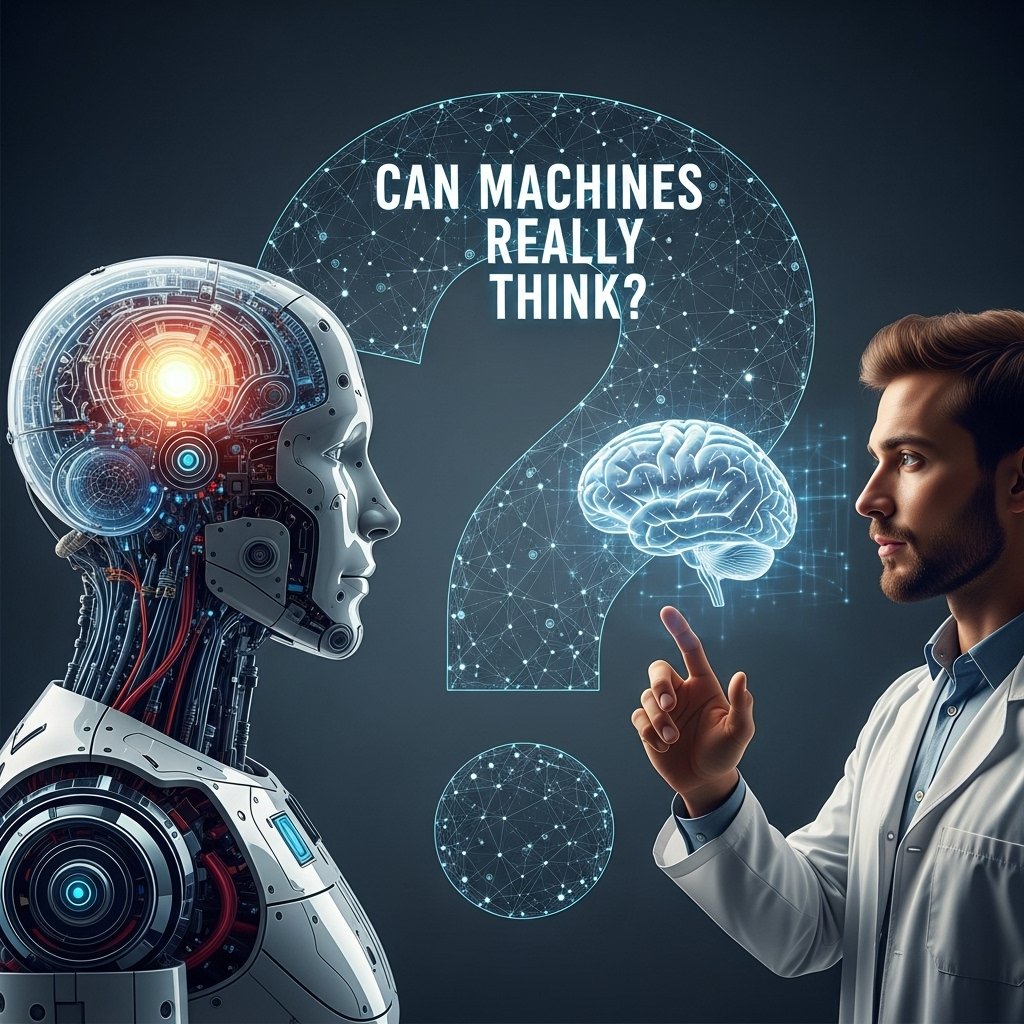
[INSERT IMAGE 1]
Placement: After the introduction
ALT text: “AI vs human intelligence — robot and human brain side by side”
Caption: “The debate between AI and human intelligence is one of the defining questions of our time. Image for illustration purposes.”
What Do We Actually Mean by Intelligence?
Before the AI vs human intelligence comparison can go anywhere useful, we need to define what we are actually comparing.
Human intelligence is multidimensional. Psychologists describe it as a combination of logical reasoning, emotional awareness, social understanding, creativity, intuition, and the ability to navigate genuine uncertainty. It is shaped by lived experience, culture, physical embodiment, and relationships built over a lifetime.
AI intelligence — in its dominant form today — is something different in mechanism, even when it appears similar in output. Large language models like GPT-4o and Google Gemini are trained on vast datasets and optimised to predict patterns and generate coherent responses. They can appear remarkably human-like in conversation.
But the process underneath is statistical pattern matching, not lived understanding.
This distinction matters. The challenge with “who will win” framing is that it assumes both sides are playing the same game. They may not be.
Where AI Already Exceeds Human Performance
Let’s be honest: AI outperforms human intelligence in several areas that matter enormously — and pretending otherwise is not useful.
Speed and scale at an entirely different level. A specialist radiologist can review 50 to 100 scans in a working day. An AI system analyses thousands in the same period. Studies published in Nature have shown that AI matches or exceeds specialist accuracy in detecting certain cancers from medical imaging. This is not a close competition on volume.
Memory without decay. AI systems do not forget, do not tire, and do not have off days. A large language model can retrieve and synthesise information across disciplines in seconds — a task no single human brain is structured to accomplish at that speed or breadth.
Pattern recognition at inhuman scale. In drug discovery, climate modelling, financial markets, and cybersecurity, AI identifies patterns in datasets too large and complex for human analysis. DeepMind’s AlphaFold solved a 50-year-old biology problem by predicting protein structures from amino acid sequences — a breakthrough accelerating drug development globally.
Consistency that humans simply cannot match. Human performance fluctuates with mood, fatigue, hunger, stress, and cognitive load. AI systems, operating within defined parameters, are remarkably consistent.
According to the McKinsey Global Institute, generative AI could automate tasks accounting for up to 70 percent of employees’ time across industries — not by replacing human roles entirely, but by absorbing the repeatable, high-volume components of those roles.
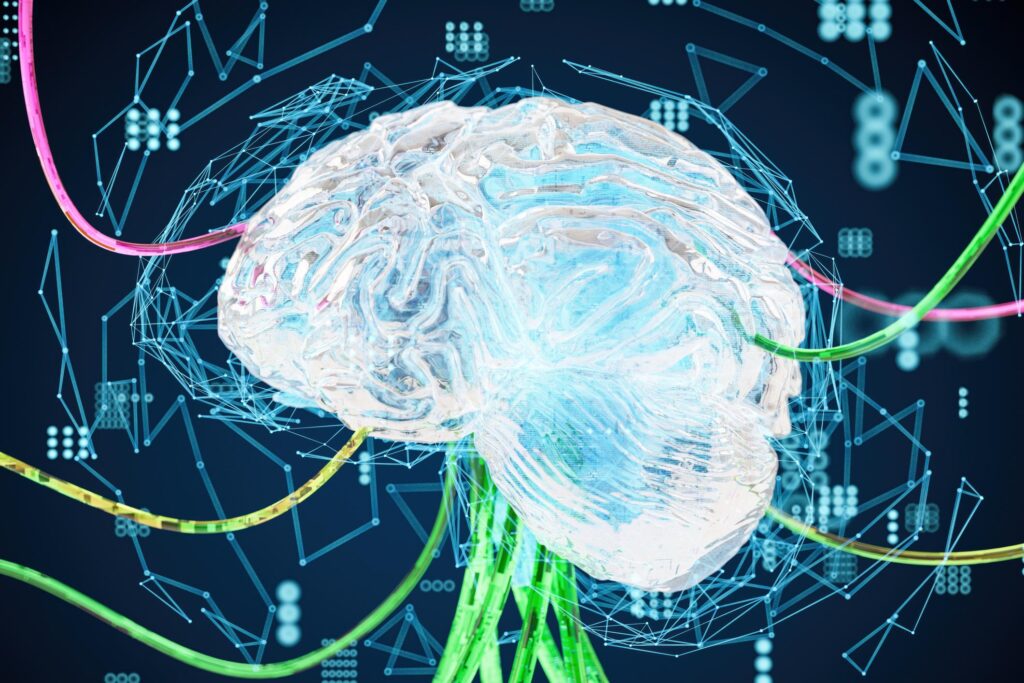
[INSERT IMAGE 2]
Placement: After the “Where AI Already Exceeds Human Performance” section
ALT text: “AI processing speed compared to human brain — AI vs human intelligence data visualization”
Caption: “AI systems can process and analyse data at a scale and speed the human brain was never designed to match.”
Where Human Intelligence Still Leads
Here is where the conversation gets genuinely interesting. The areas where human intelligence outperforms AI are not peripheral — they are central to how we live, lead, and make meaning.
Common sense and contextual judgment. AI systems fail in ways humans find baffling. They misinterpret sarcasm, miss obvious context, confidently assert incorrect facts, and struggle with situations that fall outside their training. Human beings navigate ambiguity and novelty naturally — because we have spent our entire lives doing exactly that.
Emotional intelligence — the dimension AI cannot replicate. AI can recognise emotional cues and generate empathetic-sounding responses. It cannot feel them. In counselling, grief support, conflict resolution, and caregiving, that distinction is everything. Research published by Harvard Business Review consistently identifies emotional intelligence as among the strongest predictors of leadership effectiveness — something statistical pattern matching cannot replicate.
Creative originality beyond recombination. AI generates creative output by recombining patterns from existing human work at extraordinary scale. Human creativity — at its most significant — involves genuine conceptual leaps: ideas with no clear precedent in what came before. Whether AI will eventually close this gap remains genuinely contested.
Ethical judgment and moral accountability. Who should an autonomous vehicle prioritise in an unavoidable collision? How should a medical AI weigh quality of life against survival probability? These are not computational questions. They are deeply human ones, involving values, competing moral frameworks, cultural context, and the weight of consequence. AI can model these decisions. It should not make them alone.
Embodied understanding. Human intelligence is not purely cognitive. It is shaped by having a body, aging, experiencing loss, forming relationships, and existing in time. This embodied dimension — entirely absent in current AI systems — shapes human reasoning in ways that are easy to underestimate until they matter.
If you’re looking to understand how AI tools can work with human strengths rather than against them, our guide to the best AI tools for productivity in 2026 covers the tools that complement human judgment rather than attempting to replace it.
AI vs Human Intelligence — Head-to-Head Comparison
| Dimension | AI | Human Intelligence |
|---|---|---|
| Processing Speed | Extremely fast — millions of calculations per second | Slower, but contextually nuanced |
| Memory Capacity | Near unlimited, perfect recall | Limited, subject to decay and bias |
| Emotional Intelligence | Simulated responses only | Genuine emotional experience and empathy |
| Creativity | Recombines existing patterns at scale | Capable of genuine conceptual originality |
| Common Sense | Often weak in novel situations | Strong, built from lifelong experience |
| Learning Style | Requires large datasets, structured training | Can learn from a single example or experience |
| Ethical Judgment | Rule-based, lacks moral agency | Complex, values-driven, contextually aware |
| Consistency | High — unaffected by mood or fatigue | Variable — affected by human conditions |
| Adaptability | Limited outside training domain | Highly flexible across entirely new situations |
| Self-Awareness | None currently demonstrated | Present and central to human cognition |
The Statistics Behind the AI vs Human Intelligence Debate
The numbers make the stakes concrete.
- Stanford’s AI Index 2024 reports that AI patent filings globally increased by 62 percent between 2022 and 2024 — reflecting accelerating development across every sector.
- The World Economic Forum’s Future of Jobs Report projects 85 million jobs displaced by automation by 2027, alongside 97 million new roles requiring human-AI collaboration.
- A Pew Research Center survey found 56 percent of technology experts anticipate AI will have a net positive impact on human well-being by 2035, while 33 percent foresee significant negative consequences — reflecting genuine uncertainty even among specialists.
These are not abstract projections. They describe the trajectory already in motion.
[INSERT IMAGE 3]
Placement: After the statistics section
ALT text: “AI vs human intelligence statistics chart showing global AI adoption trends 2024–2026”
Caption: “Global AI adoption is accelerating rapidly — and the implications for human work and intelligence are significant.”
Future Predictions: Will AI Surpass Human Intelligence?
The concept generating the most debate is Artificial General Intelligence — AGI — an AI system capable of performing any intellectual task a human can, at or above human level, across any domain.
Currently, no such system exists.
Today’s most capable AI models are narrow. GPT-4o can write code and explain Kant but cannot physically pick up a coffee cup. A chess engine can defeat any human grandmaster but cannot apply that capability to a different board game without being rebuilt from scratch.
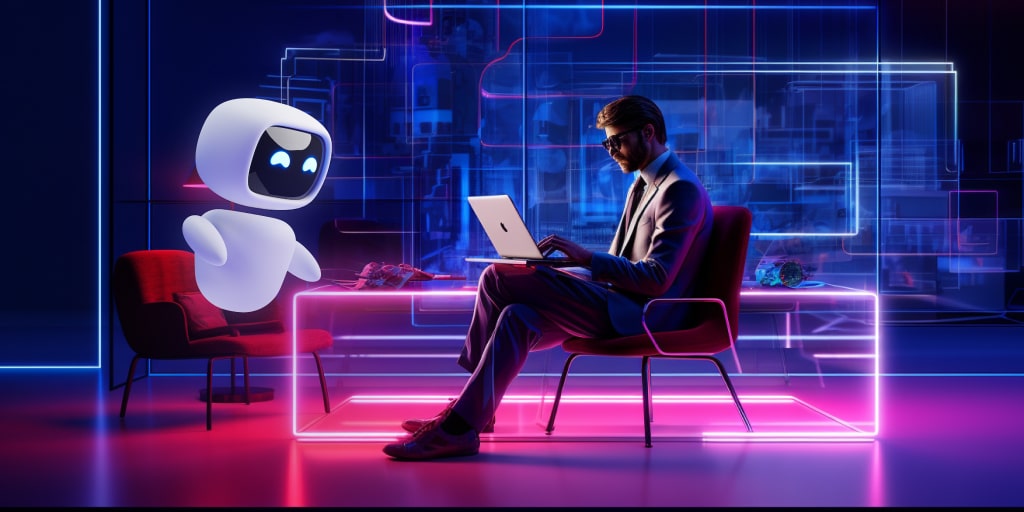
Whether AGI is achievable — and when — divides researchers sharply. Demis Hassabis of Google DeepMind has suggested it could arrive within decades. Others argue the distance between narrow AI and genuine general intelligence remains conceptually vast.
What seems increasingly clear is that the near-term future is not competition between AI and human intelligence, but collaboration. Humans using AI as cognitive infrastructure — for memory, pattern recognition, data synthesis, and rapid analysis — while retaining the roles requiring judgment, empathy, ethics, and original thought.
The better analogy may not be Kasparov losing to Deep Blue. It may be Kasparov using Deep Blue’s successor as a thinking partner to become a better analyst than either could be independently.
Curious about how content creators are already leveraging this collaboration? See our guide to AI tools for blogging and content creation for a practical look at how AI and human creativity work together.
[INSERT IMAGE 4]
Placement: After the Future Predictions section
ALT text: “Future of AI vs human intelligence — human and AI working together in 2026”
Caption: “The future of AI and human intelligence is more likely to be collaborative than competitive.”
Which Side of the AI vs Human Intelligence Debate Are You On?
Here is the honest conclusion: “who will win” is probably the wrong question.
It assumes a zero-sum contest between two players competing for the same prize. But AI and human intelligence are not optimised for the same outcomes.
AI will continue to surpass humans in speed, scale, memory, consistency, and pattern recognition within defined domains. Humans will continue to hold meaningful, irreplaceable advantages in judgment, empathy, ethical reasoning, creative originality, and the contextual wisdom that comes from being alive and accountable.
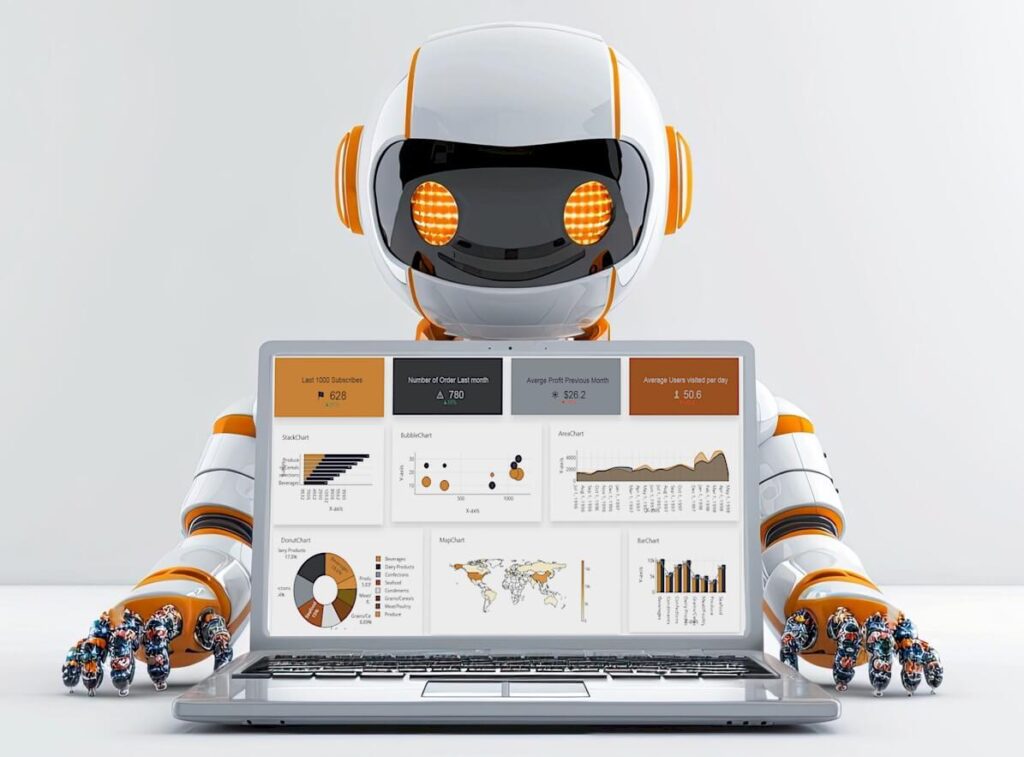
The more productive question — for individuals, organisations, and societies — is not who wins the comparison, but how we design a future where both kinds of intelligence are used well and responsibly.
If you are thinking about how to position yourself in that future, our guide on how to make money with AI in 2026 explores how human skills combined with AI tools are already creating significant opportunities for those who act early.
That question does not have a simple answer. It has a very human one.
What do you think? Will AI eventually surpass human intelligence in every meaningful way — or are there dimensions of human cognition that will always remain beyond the reach of machines? Share your perspective in the comments. This conversation is far from settled.
Frequently Asked Questions
Can AI surpass human intelligence?
In specific, well-defined domains, AI has already surpassed human performance — in chess, medical image analysis, protein structure prediction, and data processing at scale. Whether AI can surpass human intelligence broadly — achieving genuine general intelligence across all domains — remains deeply contested. No AI system currently demonstrates the common sense, emotional depth, or creative originality associated with full human-level general intelligence.
What is the difference between AI and human intelligence?
The core difference lies in origin and mechanism. Human intelligence emerges from biological development, lived experience, emotional depth, and embodied existence. AI intelligence is engineered — derived from large-scale pattern recognition across training data. AI excels at consistency, speed, and scale. Human intelligence excels at contextual judgment, empathy, creative originality, and ethical reasoning in ambiguous situations.
What are the biggest limitations of AI compared to human intelligence?
AI’s most significant limitations include: poor performance in genuinely novel situations outside its training distribution, lack of true common sense, absence of emotional experience, inability to apply ethical judgment with moral agency, and no capacity for embodied understanding. It also tends to produce confident but incorrect outputs — a failure mode with significant consequences in high-stakes domains.
Is AI a threat to human intelligence or a tool that enhances it?
Most evidence suggests AI functions better as an enhancement than a replacement. Tools that handle high-volume, repetitive cognitive tasks — data analysis, pattern recognition, information retrieval — free human intelligence to focus on judgment, creativity, and relationship-based work. The risk is not that AI replaces human thinking, but that dependency on AI tools reduces the development of human cognitive skills over time.
Published on AI Arena — exploring AI technology, tools, and the questions shaping our future. Updated March 2026.