
Introduction: The Agency Model Just Got a Whole Lot More Accessible
Starting a marketing agency used to mean hiring a team, investing in expensive software, and hoping your first few clients gave you enough margin to survive the early months.
In 2026, that calculus has changed entirely.
Knowing how to start an AI marketing agency today means you can deliver agency-level work as a solo operator — using AI tools that handle the production, optimisation, and reporting layers of marketing while you focus on strategy, client relationships, and growth.
The demand for AI-powered marketing services is accelerating. Most small and medium businesses know they need better content, better SEO, and better social media — but they cannot afford a full agency. They will pay a focused AI-assisted operator who delivers results at a fraction of the traditional cost.
This guide covers every step of building an AI marketing agency from zero — niche selection, service definition, tool stack, pricing, client acquisition, and scaling. No theory. No padding. Just the steps.
⚡ Featured Snippet: What Is an AI Marketing Agency?
An AI marketing agency is a business that delivers marketing services — including content creation, SEO, social media management, email marketing, and paid advertising — using artificial intelligence tools to produce higher-quality results faster and at lower cost than traditional agencies.
Unlike conventional agencies that rely on large human teams, AI marketing agencies use tools like ChatGPT, Jasper, and Surfer SEO to automate production workflows — enabling one or two people to serve multiple clients simultaneously at competitive rates.
❓ Featured Snippet Q&A
Q: What is an AI marketing agency?
A: An AI marketing agency uses artificial intelligence tools to deliver marketing services — content writing, SEO, social media, and email campaigns — faster and at lower cost than traditional agencies. Most AI agencies are operated by one or two people using tools like Jasper, Surfer SEO, and HubSpot.
Q: Is an AI marketing agency profitable?
A: Yes — and often more profitable than traditional agencies. Lower overhead (no large team), faster delivery (AI handles production), and competitive pricing create strong margins. Solo AI agency operators commonly reach $3,000–$8,000/month within 6–12 months.
Q: Can one person run an AI marketing agency?
A: Absolutely. Most successful early-stage AI marketing agencies are run by a single operator. AI tools handle the content production, SEO optimisation, design, and scheduling — leaving the owner to manage strategy, client communication, and business development.
Why Start an AI Marketing Agency in 2026?
The timing is better now than it has ever been — for three specific reasons.
Demand is outpacing supply. According to HubSpot’s 2024 marketing trends data, over 64% of marketers are already using AI tools in their work — but the majority of small businesses still have no AI-assisted marketing support. The gap between demand and available service is significant and growing.
Startup costs are negligible. A laptop, a reliable internet connection, and $100–$300 in monthly tool subscriptions is genuinely all the infrastructure required to start. Compare that to the traditional agency model with office costs, hiring costs, and equipment investment.
Margins are exceptional. When AI handles most of the production work, your cost per deliverable drops to near zero beyond the tool subscription. A client paying $1,500/month for blog content, SEO, and social media management costs you approximately $150/month in tools. That is a margin most businesses would not believe is possible.
AI creates a genuine quality advantage. AI tools produce SEO-optimised content faster than human writers, identify keyword opportunities that manual research misses, and maintain posting consistency that manual social media management rarely achieves. Your results for clients are genuinely better — not just cheaper.
How to Start an AI Marketing Agency in 2026 – Step-by-Step
Step 1: Choose a Niche
The biggest mistake new AI agency owners make is trying to serve everyone. The most successful early-stage agencies are narrow.
Why niche matters:
- You become the obvious specialist rather than a generic generalist
- You can charge more within a niche you understand deeply
- Your case studies, testimonials, and results all reinforce each other
- Your outreach messaging is specific and converts better
High-opportunity niches for AI marketing agencies in 2026:
- Local service businesses (dentists, solicitors, plumbers, estate agents)
- SaaS and B2B technology companies
- E-commerce and Shopify stores
- Fitness coaches and personal trainers
- Real estate agents and property developers
- Restaurants and hospitality businesses
Action step: Choose one niche based on industries you have any prior knowledge of, connection to, or genuine interest in. You can expand later. Specialisation wins early.
Real-world example: A former dental nurse starts an AI marketing agency serving dental practices exclusively. Her insider knowledge of the industry, combined with AI content tools, lets her produce higher-quality practice marketing than any general agency — and charge a premium for the specialisation.
Step 2: Define Your Services
Keep your initial service offering simple. Three to four clearly defined services are easier to sell, deliver, and systematise than a broad menu.
The most in-demand AI-powered marketing services in 2026:
- SEO content writing — keyword-researched, AI-generated, human-edited blog articles
- Social media management — content creation, scheduling, and analytics reporting
- Email marketing — automated sequences, newsletters, and campaign management
- Google and Meta ad copywriting — AI-generated ad creative and A/B testing
- Local SEO — Google Business Profile optimisation, citation building, and review management
Action step: Select two or three services for your launch offer. Master the delivery workflow for those services before adding anything new.
Step 3: Build Your AI Tool Stack
Your tools are your team. Invest in the right ones and your capacity multiplies.
Core AI tool stack for a marketing agency (covered in detail in the tools section below):
- Content creation: ChatGPT or Jasper AI
- SEO optimisation: Surfer SEO and Semrush
- Design: Canva Pro
- Social media: Hootsuite AI
- Ad copy: Copy.ai
- CRM and email: HubSpot
Action step: Start with ChatGPT (free) + Canva (free) + one SEO tool. Add tools as your client load grows and revenue justifies the investment.
Looking for a full breakdown of which marketing tools deliver the highest ROI? Our guide to the best AI tools for marketing in 2026 covers every tool an agency needs with honest pricing and use-case reviews.
Step 4: Create Your Core Offer
Your offer is not a list of services. It is a specific outcome delivered to a specific client type at a specific price.
Weak offer: “I offer SEO, content, and social media management.”
Strong offer: “I help independent dental practices get 10+ new patient enquiries per month through Google SEO and targeted content — guaranteed results in 90 days or your money back.”
The second version specifies who it is for, what result they get, and by when. That is what converts a prospect into a paying client.
Action step: Write your core offer in one sentence using this formula: “I help [specific client type] achieve [specific result] in [specific timeframe] using [your method].”
Step 5: Set Your Pricing
Pricing should reflect the value delivered — not the hours spent. AI tools reduce your time-per-deliverable dramatically. Do not pass that efficiency entirely to the client through lower prices. Maintain market rates and keep the margin.
Starter pricing (months 1–3, building case studies):
- Social media management: $400–$700/month
- SEO blog content (4 articles): $400–$600/month
- Email marketing management: $300–$500/month
- Full starter package (all three): $800–$1,200/month
Intermediate pricing (months 4–12, with proven results):
- Social media management: $700–$1,200/month
- SEO content package: $600–$1,000/month
- Full marketing retainer: $1,500–$2,500/month
Premium pricing (established reputation and case studies):
- Full-service marketing retainer: $2,500–$5,000+/month
- Specialist niche packages: $3,000–$7,000/month
Action step: Start at the lower end of intermediate pricing — not starter. Giving work away cheaply devalues your positioning and attracts clients who will not stay long-term.
Step 6: Build a Simple Website
Your website does not need to be sophisticated. It needs to do three things: explain what you do, show who you have helped, and make it easy to book a call.
Minimum viable agency website (3 pages):
- Home page — your core offer, who it is for, and a clear CTA to book a discovery call
- Services page — what you deliver, how it works, and what results clients can expect
- Contact/booking page — a Calendly link or simple contact form
Action step: Use a Squarespace, Webflow, or WordPress template. Do not spend more than one week on your website before starting client outreach. Done is better than perfect at this stage.
Step 7: Get Your First Clients
The fastest path to first revenue is direct outreach — not waiting for inbound leads.
Four channels that work for early-stage AI agencies:
1. Freelance platforms (fastest for first client)
Create profiles on Upwork and Fiverr with your niche focus clearly stated. Write a proposal for every relevant job posting for the first 30 days. Your first client rarely comes from your website — it comes from a platform with existing buyer traffic.
2. LinkedIn outreach (best for B2B niches)
Connect with business owners in your target niche. Send a brief, specific message: describe a problem you have noticed in their current marketing and offer a free audit as a conversation starter. Do not pitch on the first message.
3. Cold email (scalable and effective)
Build a list of 50–100 businesses in your niche using Google Maps or LinkedIn. Send a personalised three-sentence email: what you noticed about their marketing, what result you could help them achieve, and a single low-friction CTA (a brief call, not a proposal).
4. Local businesses (highest close rate)
Walk into or call local businesses in your niche. Face-to-face and phone conversations convert significantly higher than digital outreach for local service businesses. Dentists, restaurants, fitness studios, and hair salons all have marketing needs and modest budgets — but close quickly when approached professionally.
Real-world example: A 26-year-old with a background in fitness coaching reaches out to 40 gym owners via email over two weeks. She secures three discovery calls and closes two clients at $900/month each. Monthly revenue from zero to $1,800 in 14 days of focused effort.
Step 8: Deliver Results Using AI
The reason AI agencies outperform traditional agencies on speed and consistency is a systematic delivery workflow. Build yours from day one.
Example content marketing delivery workflow:
- Keyword research — Semrush identifies target keywords for the month
- Content briefs — Surfer SEO generates optimised content outlines
- First draft — ChatGPT or Jasper generates the article from the brief
- Human editing — you review for accuracy, brand voice, and quality
- Design assets — Canva produces featured images and social graphics
- Publishing — scheduled via WordPress or HubSpot
- Reporting — Google Search Console data compiled into monthly client report
This entire workflow for one article takes approximately 90 minutes. At four articles per month per client, that is six hours of delivery work per client at $600–$1,000 monthly revenue.
Action step: Document your delivery workflow before your first client. A repeatable system from day one prevents scope creep, quality inconsistency, and bottlenecks as you scale.
Step 9: Scale Your Agency
Once you have two or three clients and a proven delivery system, scaling follows a predictable path.
Phase 1 — Systematise (months 1–3): Document every process. Build templates for every deliverable. The goal is to make your workflow so clear that someone else could follow it.
Phase 2 — Increase rates (months 4–6): Once you have case studies and proven results, raise your rates on new clients. Existing clients can be moved to new rates at contract renewal.
Phase 3 — Add capacity (months 6–12): Hire a virtual assistant or freelance editor to handle lower-skill components of delivery — formatting, scheduling, basic editing. This frees your time for client strategy, sales, and business development.
Phase 4 — Add services (month 12+): Add complementary services to existing client accounts. A client paying $1,500/month for content can often be upsold to $2,500/month with the addition of social media or email management.
AI Marketing Agency Business Model
Services model (most common):
Monthly retainers where you deliver a defined set of outputs — articles, posts, emails, reports — for a fixed monthly fee. Retainer income is predictable, scalable, and ideal for building a sustainable business.
Project model (useful early on):
One-off projects — website copy, campaign launches, SEO audits — at a fixed price. Lower recurring value but faster to close and useful for generating initial case studies.
Performance model (advanced):
Fee plus performance bonus based on results delivered — rankings achieved, leads generated, revenue attributed. Higher earning potential but requires established measurement systems and client trust.
Solo vs team:
Most AI marketing agencies operate solo to five employees. AI tools enable one person to manage 6–10 clients simultaneously. Hiring is typically deferred until monthly revenue exceeds $8,000–$10,000 consistently.
Best AI Tools for Marketing Agencies
Some links in this article may be affiliate links. If you purchase through them, we may earn a small commission at no extra cost to you.
To build an efficient workflow, you can also explore our AI productivity tools guide for automation and time-saving systems.
HubSpot — Best CRM and Marketing Platform for Agencies
What it does: HubSpot combines CRM, email marketing, landing pages, social scheduling, and analytics into one platform — giving agencies a single source of truth for every client campaign.
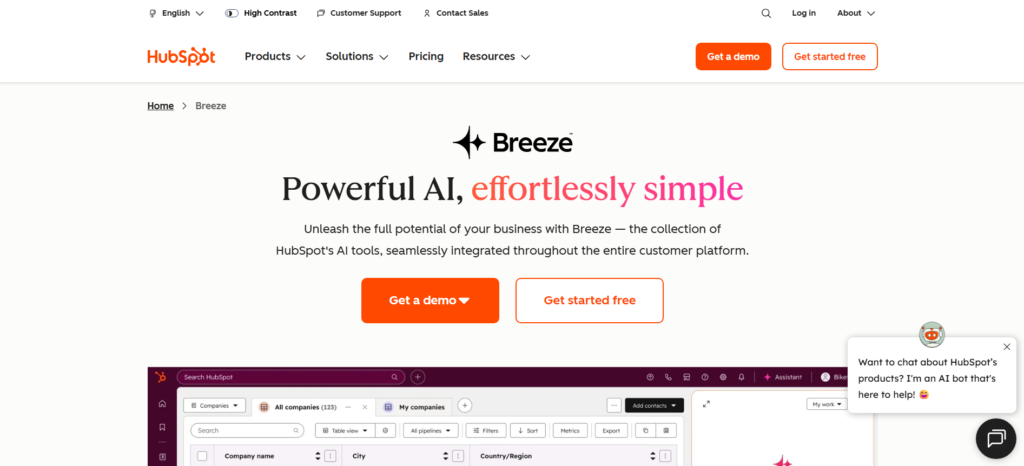
Why agencies use it: Manage multiple client relationships, track leads, automate email sequences, and generate performance reports from one dashboard without juggling disconnected tools.
Business benefit: Client reporting becomes a one-click export instead of a manual compilation process. Campaign performance is fully trackable and attributable from day one.
👉 Start using HubSpot to manage every client campaign from one dashboard →
Jasper AI — Best AI Content Tool for Agencies
What it does: Jasper produces brand-consistent long-form content at scale — with Brand Voice features that maintain each client’s unique tone across all AI-generated output.
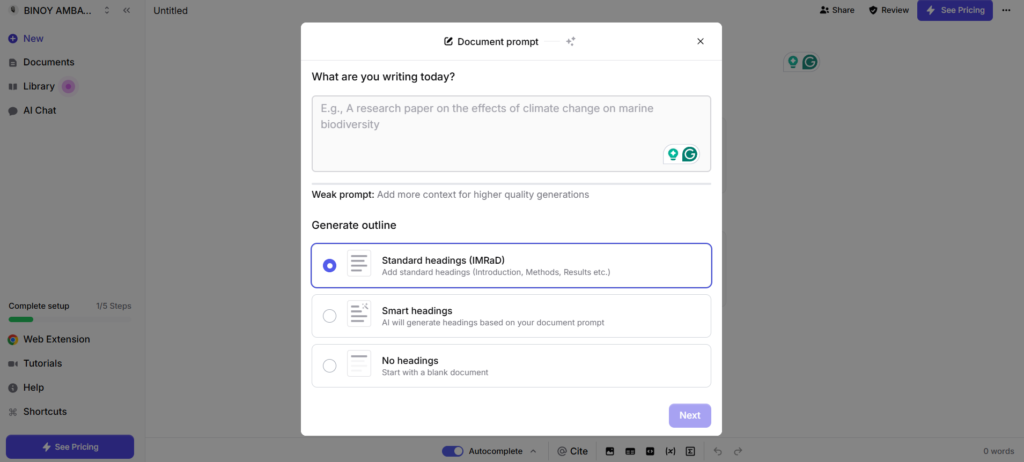
Why agencies use it: When managing content for multiple clients, brand voice consistency is the hardest quality standard to maintain. Jasper solves this systematically.
Business benefit: Produce four to six on-brand articles per client per week without hiring writers. Content quality is consistent and on-brand from the first piece.
👉 Start using Jasper AI to produce on-brand client content at scale →
Surfer SEO — Best SEO Tool for Agencies
What it does: Surfer SEO analyses top-ranking pages for any keyword and provides real-time content optimisation guidance — scoring every article against NLP data from the current top 10 results.
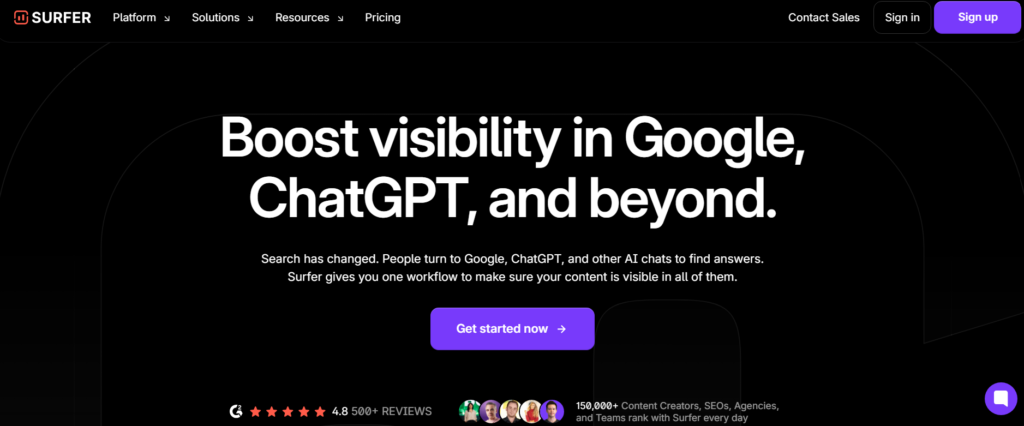
Why agencies use it: Client content that scores 70+ on Surfer consistently achieves first-page rankings within 60–120 days. This is your clearest proof of results to show clients.
Business benefit: Eliminates SEO guesswork entirely. Every article you deliver is optimised against current ranking data — not assumptions or outdated best practices.
👉 Start using Surfer SEO to rank client websites faster →
Semrush — Best Competitor Research Tool for Agencies
What it does: Semrush provides keyword research, competitor analysis, backlink auditing, technical SEO reporting, and content gap identification — the foundation of any serious SEO strategy.
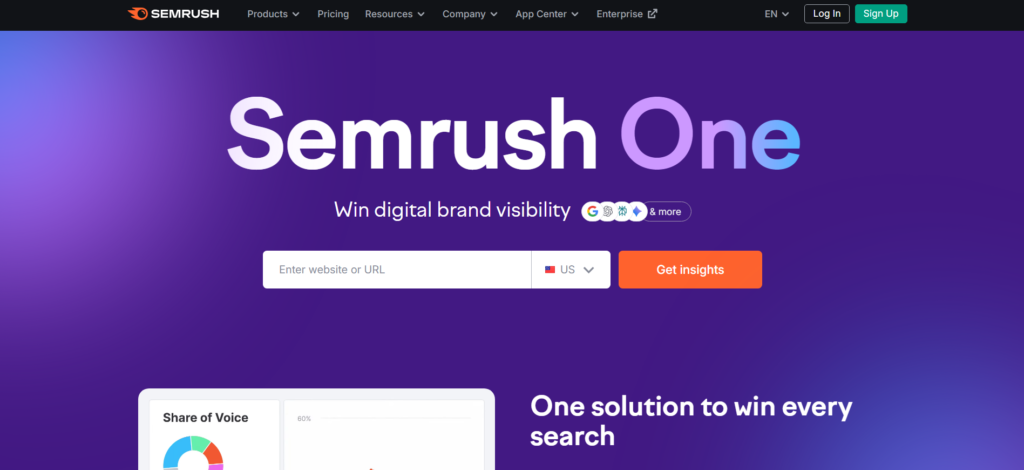
Why agencies use it: Semrush data justifies your strategy to clients. When you show a client which keywords their competitors rank for and they do not, the content roadmap sells itself.
Business benefit: Data-driven pitches close better than opinion-based ones. Semrush gives you the competitive intelligence to make compelling, specific proposals.
👉 Start using Semrush to build data-driven SEO strategies for every client →
Canva Pro — Best Design Tool for Agency Visual Content
What it does: Canva’s AI suite produces branded social media graphics, presentation decks, email headers, ad creative, and report designs — at professional quality without a design team.
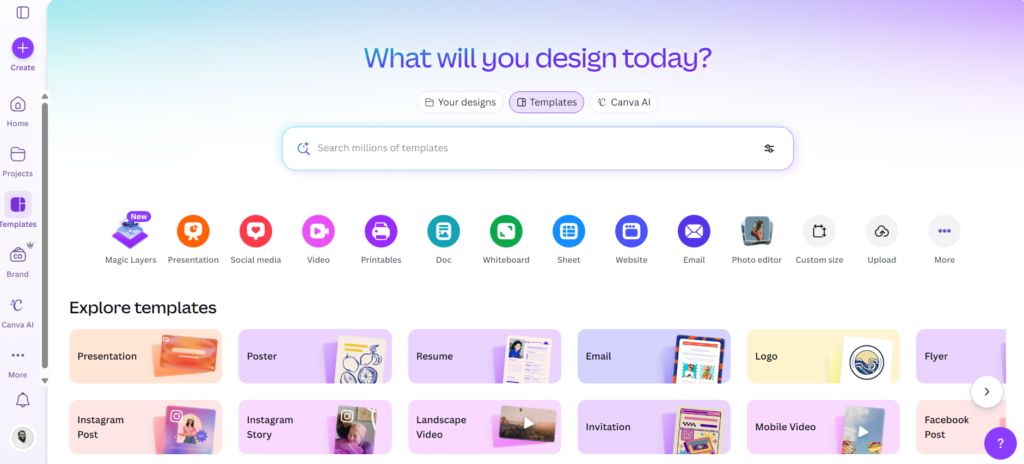
Why agencies use it: Every client needs visual content daily. Canva’s Brand Kit stores each client’s colours, fonts, and logos — so every graphic is on-brand in seconds.
Business benefit: Deliver professional visual content for every client without hiring a designer. The cost saving versus freelance design goes directly to agency margin.
👉 Start using Canva Pro to produce professional client visuals without a designer →
Copy.ai — Best Ad Copy Tool for Agencies
What it does: Copy.ai generates multiple ad headline, description, and CTA variations simultaneously — making it the fastest tool for scaling paid advertising creative and building systematic A/B test libraries.
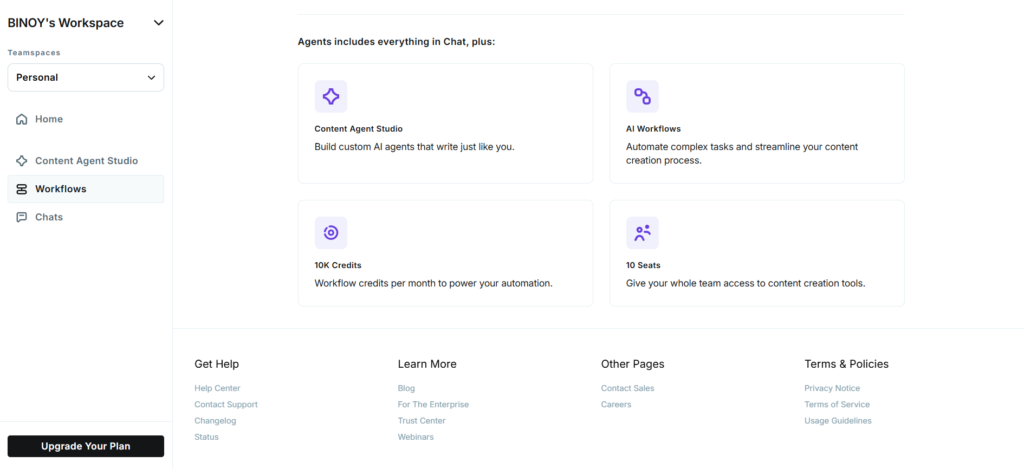
Why agencies use it: Agencies managing paid ads for multiple clients need continuous fresh creative. Copy.ai generates 20–30 variations in minutes instead of hours.
Business benefit: More creative variations tested means better-performing ads. Agencies using Copy.ai consistently improve client cost-per-acquisition without increasing ad spend.
👉 Start using Copy.ai to produce more ad variations and improve client ROAS →
Hootsuite AI — Best Social Media Tool for Agencies
What it does: Hootsuite manages social media scheduling, AI caption generation, posting time optimisation, brand monitoring, and performance analytics across multiple clients from one dashboard.
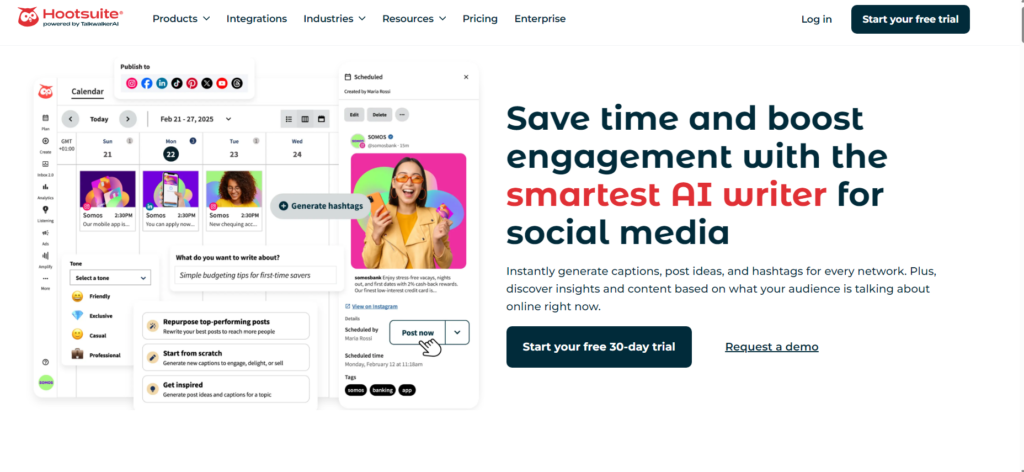
Why agencies use it: Managing five or six client social accounts manually is a full-time job. Hootsuite reduces that to a two-hour weekly task per client.
Business benefit: One social media manager can handle 8–10 client accounts simultaneously using Hootsuite — a scale that was previously impossible without a dedicated team.
👉 Start using Hootsuite to manage all client social media from one AI-powered dashboard →
Pricing Your AI Marketing Services
Setting the right price from day one protects your positioning and ensures your business is sustainable.
Beginner packages (months 1–3, building portfolio):
- 4 x SEO blog articles/month: $400–$600
- Social media management (3 platforms, 15 posts): $500–$700
- Email campaign management: $300–$500
- Starter bundle (all three): $900–$1,500/month
Growth packages (months 4–12, with results):
- Content + SEO retainer: $1,000–$1,800/month
- Social media + paid ads: $1,200–$2,000/month
- Full marketing management: $1,800–$2,800/month
Premium packages (established agency with results):
- Comprehensive marketing retainer: $3,000–$5,000/month
- Niche specialist package: $4,000–$7,000/month
Pricing rule: Always price to your value, not your time. A client gaining 15 new customers per month from your SEO work at $200 average order value is generating $3,000/month in new revenue. Charging $1,500/month for that outcome is reasonable — charging $400 undervalues both you and the result.
How to Get Your First Clients
First clients rarely come from a polished website. They come from direct effort.
Platform strategy (first 30 days):
- Create detailed Upwork and Fiverr profiles with your niche clearly stated
- Send 5–10 proposals per day on Upwork for 30 days
- Your profile needs three things: a specific niche, a clear outcome, and a portfolio piece (create one from a fictional business if needed)
LinkedIn strategy (best for B2B):
- Connect with 10–15 business owners in your niche daily
- Follow with a personalised message referencing something specific about their business
- Offer a free 30-minute marketing audit — no pitch, just value
- Follow up once after 5–7 days if no response
Cold email strategy (scalable):
- Build a list of 100 target businesses using Google Maps or LinkedIn Sales Navigator
- Send a three-sentence email: what you noticed, what result you can help them achieve, one low-friction CTA
- Target 20–30 sends per day with personalised first lines
- Expected outcome: 5–10% reply rate, 1–3 calls booked per 100 emails
Local outreach (fastest close rate):
- Walk into or call 5 local businesses per week
- Offer a free audit of their current marketing
- Present findings with specific, actionable recommendations
- Close on a 3-month trial engagement
⭐ Real Example: From Freelancer to AI Agency Owner
James, 28 — former freelance copywriter, UK
James had been freelancing as a copywriter for two years, earning $2,500–$3,000/month writing for various clients. He decided to pivot to an AI marketing agency focused exclusively on independent solicitor firms.
Month 1: Built a simple three-page website. Sent 120 cold emails to solicitor practices highlighting weaknesses in their Google search visibility. Booked four discovery calls, closed two clients at £900/month each.
Month 3: Two clients had measurable results — one had doubled their organic website traffic, the other was receiving regular Google review growth. Used these as case studies in updated outreach. Closed one more client at £1,200/month.
Tools used: ChatGPT (content drafts), Surfer SEO (optimisation), Canva Pro (graphics), Grammarly (editing), Otter.ai (client call notes), HubSpot (CRM and reporting).
Month 6: Four clients at an average of £1,100/month. Monthly revenue: £4,400. Hired a part-time VA at £500/month to handle scheduling and formatting.
Month 12: Seven clients. Monthly revenue: £8,200. Waiting list of two prospective clients. Full business, not a side hustle.
James’s trajectory is not exceptional — it is typical for AI marketing agency owners who choose a niche, stay consistent with outreach, and let the results do the selling.
How AI Gives You a Real Competitive Advantage
The advantage of an AI marketing agency over a traditional agency is structural — not just cosmetic.
Faster delivery. A traditional agency produces one 1,200-word SEO article in 3–4 hours (research, writing, editing). An AI agency produces the same article in 60–90 minutes. Same quality. Twice the output. You can serve more clients without more hours.
Lower cost base. A traditional agency needs writers, designers, and social media managers on payroll or on retainer. An AI agency needs $200–$400/month in software subscriptions. The difference in margin is extraordinary.
More consistent results. AI tools apply the same SEO optimisation standards, the same brand voice guidelines, and the same quality checks to every piece of output — every time. Human teams are variable. AI-assisted workflows are not.
Data-driven strategy. Semrush and Surfer SEO surface opportunities based on live competitive data — not instinct. Your recommendations to clients are backed by numbers, which builds trust and justifies premium pricing.
For the tools that make this advantage possible, explore our complete guide to the best AI tools for marketing in 2026 — it covers every platform an AI agency needs with pricing and use-case details.
Conclusion: The Agency Opportunity Is Open Right Now
The window to build an AI marketing agency with genuine competitive advantage over traditional operators is still open — but it narrows as more people realise what is possible.
In my experience, using AI tools like this reduced my work time significantly.
For example, I use this workflow daily for content and email generation.
The businesses that need AI-powered marketing are not waiting for the perfect agency. They are waiting for someone reliable, specific, and results-focused to show up and make a clear offer.
That can be you — this week.
Your starting action plan:
- Choose a niche today
- Define two to three services
- Sign up for ChatGPT and Canva (both free)
- Write your core offer in one sentence
- Send your first 10 outreach messages this week
The agency model has never had lower barriers to entry or higher margin potential. The tools exist. The demand exists. The only missing variable is the decision to start.
For more ways to build income with AI, see our practical guide on how to make money with AI in 2026 — it covers the full range of AI income methods from side hustles to full business models. And if you want to explore lower-commitment starting points first, our AI side hustles for beginners guide covers the methods that build toward an agency naturally.
To improve results, read our AI prompt engineering guide.
Explore the best AI tools for productivity.
Learn automation from AI automation workflows.
You can monetize using how to make money with AI.
Frequently Asked Questions
How much can you earn running an AI marketing agency?
Income varies by niche, number of clients, and service scope. Realistic benchmarks: $2,000–$4,000/month within 3–6 months with 3–4 clients; $5,000–$8,000/month within 6–12 months with 5–7 clients; $10,000+/month in year two with a systemised team. Solo operators in specialist niches regularly exceed $10,000/month within 18 months.
If your goal is building a scalable income stream, learn more in our guide on how to make money with AI.
Do you need marketing experience to start an AI marketing agency?
Relevant experience helps but is not required. What you need is a willingness to learn two to three core skills (SEO fundamentals, content strategy, client communication) and the discipline to use AI tools effectively. Many successful AI agency owners have backgrounds in completely unrelated fields — what they share is a systematic approach to learning and delivering results.
What are the best tools for an AI marketing agency?
The core stack for most AI marketing agencies is: ChatGPT or Jasper AI for content, Surfer SEO for on-page optimisation, Semrush for keyword research, Canva Pro for design, Hootsuite for social media, Copy.ai for ad copy, and HubSpot for CRM and reporting. Start with the free tiers of ChatGPT and Canva, then add tools as client revenue grows.
How long does it take to get the first client?
With active daily outreach — 10–20 Upwork proposals or cold emails per day — most people book their first discovery call within 2 weeks and close their first client within 30 days. The timeline extends without consistent outreach effort. The single biggest variable is how much time you spend actively finding clients in the first month.
Do I need a legal business structure to start?
For your first one or two clients, you can operate as a sole trader with a simple contract agreement. As revenue grows past $1,000–$2,000/month, registering as a limited company (UK) or LLC (US) is advisable for tax efficiency and professional credibility. Consult an accountant once monthly revenue is consistent — the cost of advice pays for itself quickly.
What niches work best for AI marketing agencies in 2026?
The highest-performing niches for AI marketing agencies in 2026 are local professional services (dentists, solicitors, accountants, estate agents), e-commerce brands, SaaS companies, fitness and wellness businesses, and hospitality. Specialist niches command higher rates and generate stronger case studies than general marketing services.
Recommended Images for SEO
| Image Idea | Recommended ALT Text |
|---|---|
| Agency owner working on laptop with client dashboards visible | how to start an AI marketing agency working from laptop in 2026 |
| Step-by-step infographic showing agency launch process | how to start an AI marketing agency step by step guide 2026 |
| AI tool dashboard collage (Jasper, Surfer SEO, HubSpot) | best AI tools for marketing agency workflow 2026 |
| Income growth chart from freelancer to agency owner | AI marketing agency income growth from zero to 8k per month |
| Client acquisition strategy diagram (email, LinkedIn, Upwork) | how to get first clients for AI marketing agency 2026 |
| Pricing table visual for AI marketing agency services | AI marketing agency pricing packages beginner to premium |
If you’re not ready to launch a full agency yet, start with smaller opportunities from our AI side hustles for beginners guide.