
Introduction: Teachers Are Doing Too Much. AI Can Change That.
The average teacher works 50+ hours per week. Less than half of that time is spent actually teaching.
The rest? Lesson planning. Marking. Parent emails. IEP documentation. Meeting notes. Resource creation. Behaviour records. Report writing.
That is where the best AI tools for teachers come in — not to replace what makes great teaching great, but to eliminate the surrounding workload that consumes the hours that should go elsewhere.
This guide covers 10 proven AI tools for teachers in 2026 — reviewed for real classrooms, real budgets, and real time savings. Free tools are highlighted clearly. Limitations are stated honestly.
If you find any of this useful, see how the same tools can support your students directly in our guide to the best AI tools for students in 2026.
If you’re also helping students use AI effectively, explore our guide on best AI tools for students in 2026 to support learning and research.
⚡ Featured Snippet: What Are AI Tools for Teachers?
AI tools for teachers are software applications powered by artificial intelligence that assist educators with time-consuming professional tasks — including lesson planning, resource creation, student feedback, text differentiation, meeting transcription, and grading support.
They do not replace teacher judgment or classroom expertise. They automate the repetitive production and administrative work so that more professional time goes to direct student instruction, relationship-building, and adaptive teaching.
❓ Featured Snippet Q&A
Q: What is the best AI tool for teachers in 2026?
A: MagicSchool AI is the best dedicated AI tool for teachers — built specifically for educator workflows with 60+ purpose-built tools, a free plan, and a Pro plan at just $3/month. For general-purpose use, ChatGPT is the most versatile starting point.
Q: Are there free AI tools for teachers?
A: Yes. ChatGPT, MagicSchool AI, Canva, Grammarly, Otter.ai, and Diffit all offer free plans with genuine classroom value. Most teachers can cover their core AI needs at zero cost.
Q: How much time can AI tools save teachers per week?
A: Teachers using two to four AI tools consistently report saving 5–10 hours per week on lesson planning, marking, resource creation, and administrative tasks.
🏆 Top Picks: Best AI Tools for Teachers at a Glance
Not sure where to start? Here are the top picks by use case before the full reviews:
| Use Case | Best Tool | Free Plan? |
|---|---|---|
| All-purpose planning | ChatGPT | Yes |
| Built for teachers | MagicSchool AI | Yes |
| Visual resources | Canva AI | Yes |
| Student feedback | Grammarly | Yes |
| Meeting transcription | Otter.ai | Yes |
| Text differentiation | QuillBot | Yes |
| Student tutoring | Khanmigo | Subscription |
| Differentiated reading | Diffit | Yes |
| Organisation | Notion AI | Yes |
| Google Workspace schools | Google Gemini | Yes |
📊 Quick Comparison: Best AI Tools for Teachers in 2026
| Tool | Best For | Pricing | Key Feature | Weekly Time Saved |
|---|---|---|---|---|
| ChatGPT | All-purpose planning | Free / $20/mo | Multi-subject generation | 3–5 hours |
| MagicSchool AI | Education workflows | Free / $3/mo | 60+ teacher tools | 4–6 hours |
| Canva AI | Classroom visuals | Free / $15/mo | Magic Design | 2–3 hours |
| Grammarly | Written feedback | Free / $12/mo | Tone + clarity checking | 1–2 hours |
| Otter.ai | Meeting transcription | Free / $16.99/mo | Real-time speaker ID | 1–2 hours |
| QuillBot | Text differentiation | Free / $9.95/mo | 7 paraphrasing modes | 1–2 hours |
| Khanmigo | Student tutoring | Khan Academy | Socratic guided learning | Varies |
| Diffit | Differentiated reading | Free / paid | Reading level adaptation | 2–3 hours |
| Notion AI | Teacher organisation | Free / $10/mo | AI note summarisation | 1–2 hours |
| Google Gemini | Google Workspace | Free / $19.99/mo | Inside Google Docs/Drive | 1–2 hours |
🛠️ Best AI Tools for Teachers in 2026 — Full Guide
1. ChatGPT — Best All-Purpose AI Tool for Teachers
What it does:
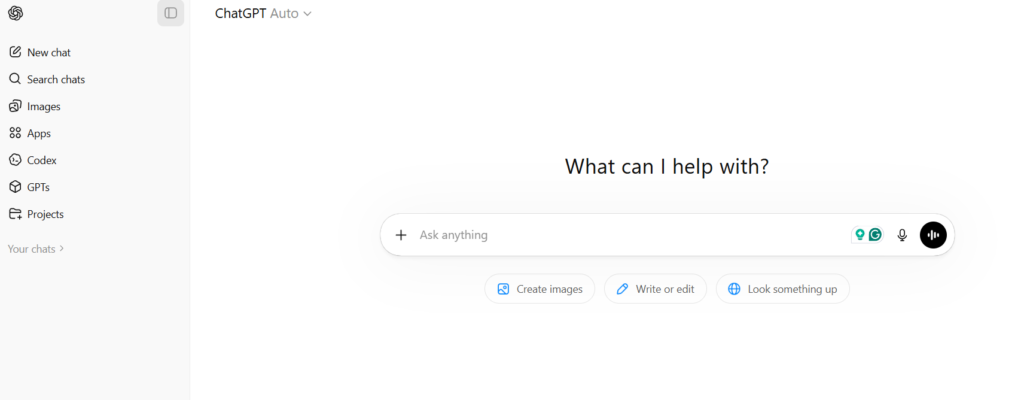
ChatGPT by OpenAI is the most versatile AI tool available to educators today. It generates lesson plans, assessment questions, rubrics, parent communications, discussion prompts, and differentiated activities across any subject and year group — through a simple conversational interface.
Key features:
- Complete lesson plan generation with differentiated activities
- Quiz, test, and exit ticket creation at specified difficulty levels
- Three-tier ability group resources from a single prompt
- Parent email, report comment, and letter drafting
- Standards-aligned rubric development
- Text simplification for EAL and lower-ability students
How teachers use it:
Describe your lesson objective in plain language. ChatGPT returns a full plan — starter, main activities, differentiated tasks, and a plenary — in under two minutes. Edit what you want to change. The heavy lifting is done.
Classroom benefit:
Planning that used to take Sunday evening now takes 20 minutes on Friday afternoon.
Pro Tip: Create a reusable prompt template that includes your year group, subject, curriculum framework, and school context. Save it in a notes app. Paste it before every new request. Your output quality will be significantly more relevant and consistent.
Pricing: Free (GPT-4o). ChatGPT Plus: $20/month.
Best for: All teachers, all subjects, all year groups.
👉 Try ChatGPT to generate a week of lesson plans before lunch on Friday →
2. MagicSchool AI — Best Dedicated AI Platform for Educators
What it does:
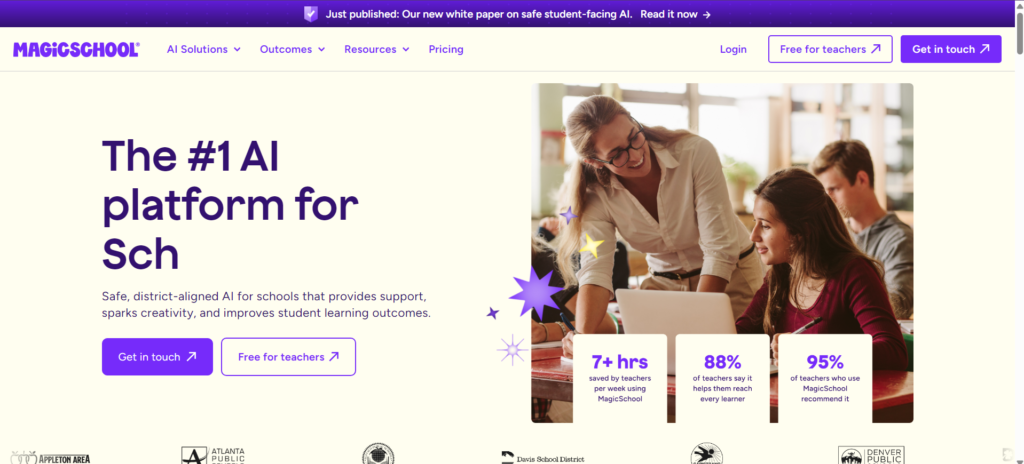
MagicSchool AI is the most complete AI platform built specifically for teachers. Every tool addresses a real educator workflow — from lesson planning and rubric generation to IEP support, behaviour documentation, and differentiation assistance. Nothing is adapted from a general-purpose tool.
Key features:
- 60+ AI tools purpose-built for teaching workflows
- Lesson plan generator with learning objective alignment
- Standards-aligned rubric and marking criteria creator
- IEP accommodation and modification generator
- Multi-level differentiation assistant
- Quiz, exit ticket, and assessment builder
- Behaviour reflection and restorative conversation templates
- Parent communication and report comment generators
How teachers use it:
Select the tool that matches your current task from the dashboard. Describe your need in plain language. Receive an educationally appropriate output immediately — no prompt engineering, no adapting a general AI tool for teaching contexts.
Classroom benefit:
Purpose-built tools produce better education-specific output than general AI tools adapted for classroom use. The IEP support alone saves SENCO coordinators hours per student per review cycle.
Pricing: Free plan with usage limits. Pro: $3/month — the most affordable paid upgrade on this list.
Best for: All teachers, especially new teachers, SEND coordinators, and teachers under heavy administrative workloads.
👉 Try MagicSchool AI — the only AI platform built exclusively for teacher workflows →
3. Canva AI — Best AI Tool for Classroom Visual Resources
What it does:
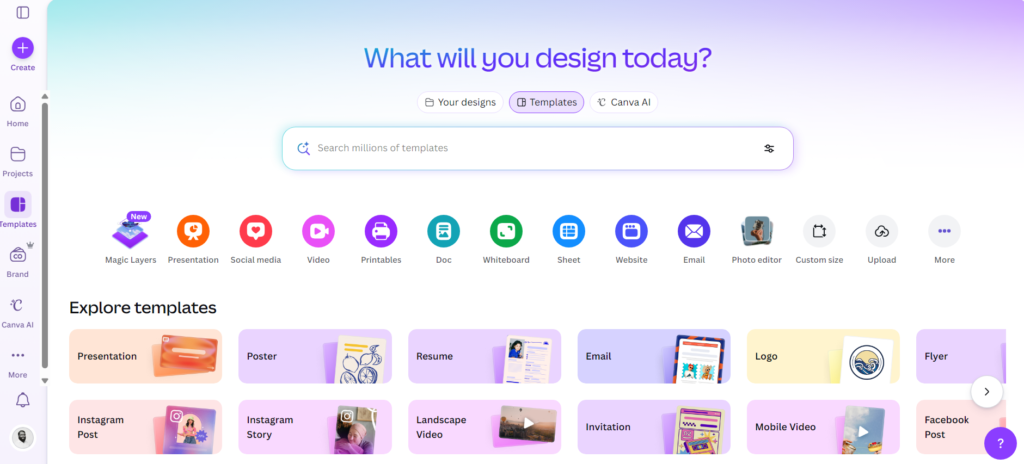
Canva’s Magic Studio brings professional AI-powered design to every teacher. It generates classroom presentations, worksheets, displays, and parent materials from text prompts — with thousands of education-specific templates and AI image generation for curriculum-relevant illustrations.
Key features:
- Magic Design: complete lesson presentations from a topic prompt
- AI image generation for unique curriculum illustrations
- Education templates across all subjects and age groups
- Magic Write for AI copy inside design canvases
- Background remover and photo enhancement
- Department collaboration for shared resource libraries
How teachers use it:
Type the topic. Select a template style. Canva AI generates a complete, designed presentation in under a minute. Adjust content, add your branding, and it is ready for the projector.
Classroom benefit:
Visually engaging resources improve student attention and comprehension. Canva AI makes high-quality design accessible to every teacher regardless of skill level.
Pricing: Free plan available. Canva Pro: $15/month (education discounts at canva.com/education).
Best for: Primary and secondary teachers, resource creators, pastoral teams creating display materials.
👉 Try Canva AI to create professional classroom resources without design experience →
4. Grammarly — Best AI Tool for Written Feedback and Communications
What it does:
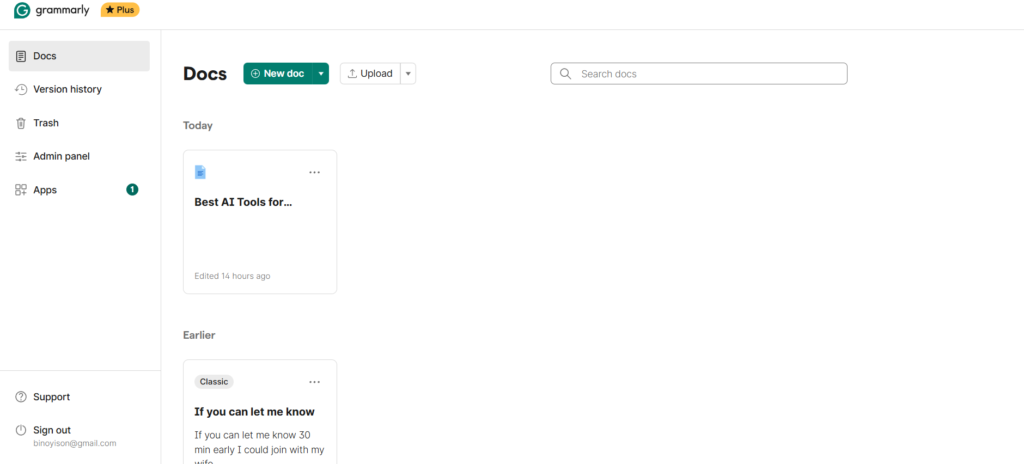
Grammarly reviews text in real time for grammar, tone, clarity, and structure — improving the quality and consistency of every piece of written feedback, report comment, and professional communication a teacher produces.
Key features:
- Real-time grammar, spelling, and punctuation corrections
- Tone detection — flags feedback that reads as harsh or unclear
- Clarity scoring with targeted rewrite suggestions
- Works inside Google Docs, Word, Gmail, and any browser
- GrammarlyGO for AI-assisted paragraph restructuringThe best AI tools for teachers can save hours every week and improve classroom
- Plagiarism detection for student work verification (Premium)
How teachers use it:
Install the browser extension. It works automatically inside every platform teachers already use — adding zero friction to existing workflows while consistently raising the quality of written output.
Pro Tip: Use Grammarly’s tone detector specifically when writing negative feedback. If it flags a comment as potentially harsh, take the suggestion. Students and parents respond differently to the same message depending entirely on how it is worded.
Classroom benefit:
Consistent, clear feedback improves student outcomes. Quality stays high even during heavy-marking periods when fatigue typically leads to rushed or unclear comments.
Pricing: Free plan available. Grammarly Premium: $12/month.
Best for: All teachers providing written feedback, university academics, teachers for whom English is an additional language.
👉 Try Grammarly to make every piece of student feedback clear and constructive →
5. Otter.ai — Best AI Tool for Meeting Transcription and Notes
What it does:
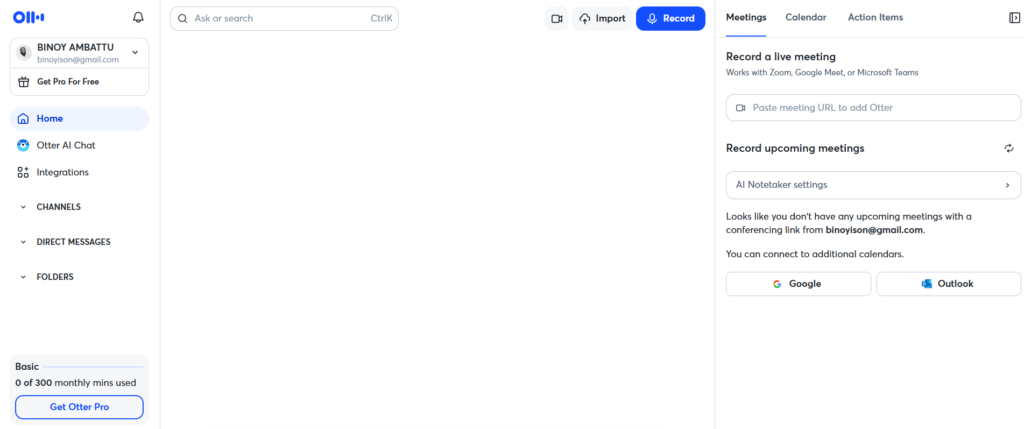
Otter.ai transcribes spoken audio to searchable, summarised text in real time — with speaker identification and automatic AI summaries. It eliminates manual note-taking in meetings and creates accessible written records of verbal instruction.
Key features:
- Real-time transcription with speaker labelling and timestamps
- Automatic AI summary generated after every session
- Full-text keyword search across all saved transcripts
- Zoom, Google Meet, and Microsoft Teams integration
- PDF and text export for documentation and sharing
- Mobile app for in-classroom recording
How teachers use it:
Open Otter.ai before any meeting. Let it run in the background. Leave the meeting with a complete, searchable transcript and an AI-generated summary — without writing a single note.
Classroom benefit:
Removes the cognitive load of simultaneous listening and note-taking. Provides written records for students with accessibility needs. Critical for SENCO coordinators maintaining EHCP documentation.
This is consistently identified as one of the best AI note-taking tools available specifically for educators — and our AI productivity tools guide covers how it fits into a broader teacher workflow.
Pricing: Free plan (300 minutes/month). Otter Pro: $16.99/month.
Best for: SENCO coordinators, university lecturers, teachers with regular meeting commitments.
👉 Try Otter.ai to arrive at every meeting knowing your notes will take care of themselves →
6. QuillBot — Best AI Tool for Text Differentiation
What it does:
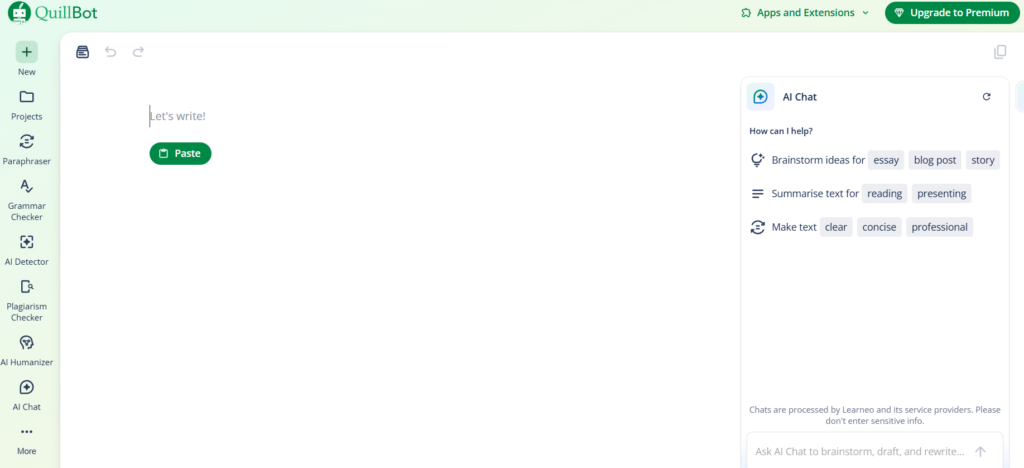
QuillBot is an AI paraphrasing tool with seven modes — Standard, Fluency, Formal, Academic, Simple, Creative, and Shorten — that adapt text to different tones, styles, and reading levels. For teachers, it is most valuable for differentiating reading materials and rewriting feedback to be clearer.
Key features:
- Seven paraphrasing modes for precise reading level control
- Summariser for condensing long texts into key points
- Grammar checker integrated with the rewriting environment
- Chrome extension for use inside any browser or document
- Plagiarism detector for verifying student submissions
How teachers use it:
Paste a complex article. Select Simple mode. QuillBot rewrites it at a lower reading level in seconds — preserving factual accuracy while making it accessible to lower-ability or EAL students.
Classroom benefit:
Differentiated resources in seconds rather than hours. Particularly high-impact in mixed-ability settings where the same content needs to be accessible to students reading at very different levels.
Pricing: Free plan (125 words/paraphrase limit). Premium: $9.95/month.
Best for: Mixed-ability classrooms, SEN teachers, EAL coordinators.
👉 Try QuillBot to differentiate any resource to the right reading level in seconds →
7. Khanmigo — Best AI Tutoring Tool for Student Support
What it does:
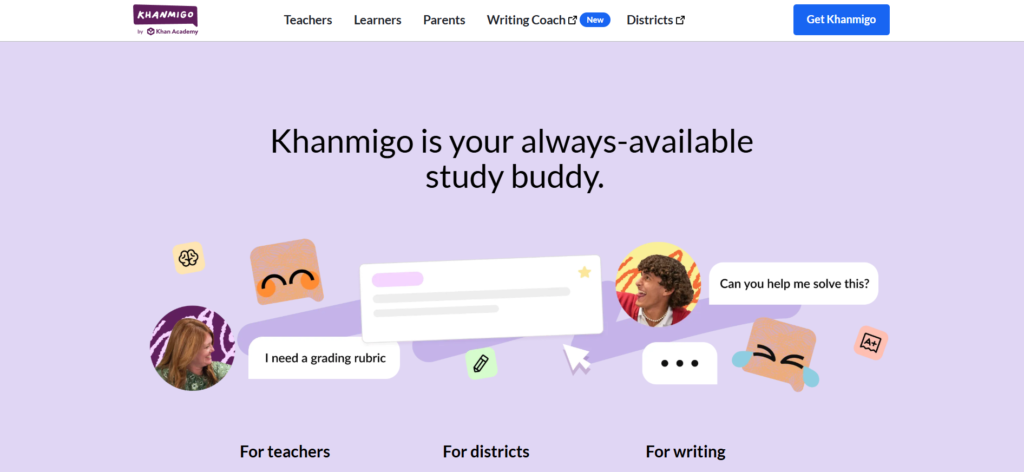
Khanmigo is Khan Academy’s AI tutor, built around one principle: students should be guided to answers, not given them. It asks Socratic questions, offers hints, and checks reasoning — producing genuine understanding rather than academic avoidance.
Key features:
- Guided problem solving across maths, science, and humanities
- Socratic questioning that builds comprehension, not dependency
- Writing feedback focused on argument structure and evidence
- Debate partner mode for critical thinking development
- Curriculum-aligned across school year levels
- Teacher dashboard for monitoring AI interactions and student progress
How teachers use it:
Assign Khanmigo for independent homework support. The teacher dashboard shows exactly where each student struggled and what guidance was provided — informing the next lesson without additional assessment tasks.
Classroom benefit:
Equitable academic support for all students, especially those without access to private tutoring. Provides teachers with actionable data on independent learning difficulties.
Pricing: Available via Khan Academy subscription.
Best for: Secondary and sixth-form teachers, flipped classroom settings.
👉 Try Khanmigo to give every student access to a personal tutor that teaches rather than tells →
8. Diffit — Best AI Tool for Differentiated Reading Materials
What it does:
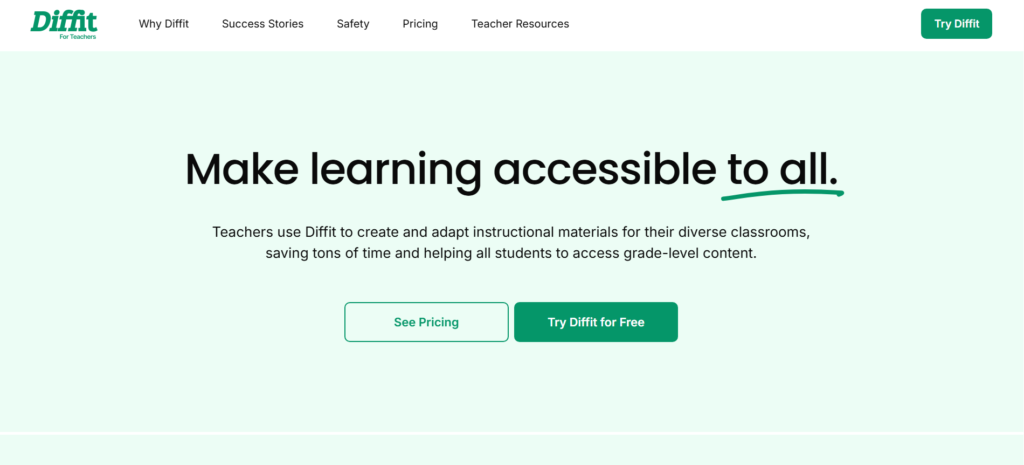
Diffit generates reading passages on any topic at a specified reading level — complete with comprehension questions, vocabulary definitions, and discussion prompts. It is one of the fastest tools available for creating differentiated versions of the same content.
Key features:
- Reading passage generation at any specified reading level
- Automatic comprehension questions matched to the text
- Embedded vocabulary definitions for key terms
- Translation support for EAL students
- Multiple reading levels for the same topic in one session
- Export to Google Docs or PDF
How teachers use it:
Enter a topic and select three reading levels. Diffit generates three complete reading passages — each with comprehension questions — in under three minutes. What previously required hours of manual resource creation is now a three-minute task.
Classroom benefit:
Meaningful differentiation without the disproportionate time investment it typically demands. High impact in subjects requiring regular reading across diverse ability groups.
Pricing: Free plan available. Paid plans with expanded features.
Best for: Mixed-ability classrooms, EAL teachers, literacy coordinators, humanities and English departments.
👉 Try Diffit to create differentiated reading materials for every ability group in minutes →
9. Notion AI — Best AI Tool for Teacher Organisation
What it does:
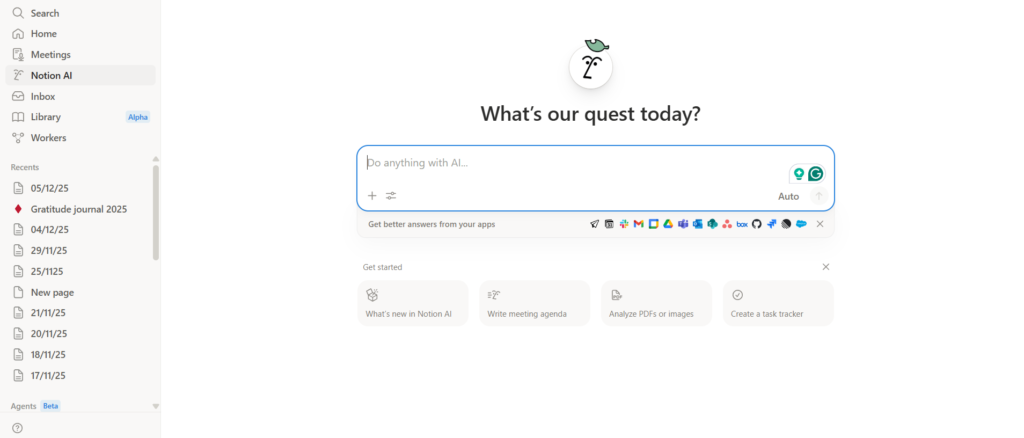
Notion AI combines a flexible workspace with AI that reads, summarises, generates, and organises content. For teachers managing lesson plans, curriculum maps, student records, and departmental planning, it is an always-organised professional hub.
Key features:
- Lesson plan generation from a prompt or objectives list
- AI summarisation of planning documents and meeting notes
- Curriculum and scheme of work database organisation
- Term planner with deadline tracking
- Student progress and intervention tracking
- Department workspace with collaborative editing
How teachers use it:
Build one Notion workspace for your entire teaching life — every lesson, every class, every unit, all connected and searchable. Notion AI generates plans, summarises notes, and surfaces what you need before you think to look for it.
Classroom benefit:
Replaces the combination of scattered spreadsheets, email chains, and paper planners that most teachers use to manage their workload — with one intelligent, searchable system.
Pricing: Free plan available. AI add-on: $10/month.
Best for: Teachers managing multiple classes or subjects, heads of department, tutors tracking individual student progress.
👉 Try Notion AI to put your entire teaching workload in one organised, AI-assisted place →
10. Google Gemini — Best AI Tool for Google Workspace Schools
What it does:
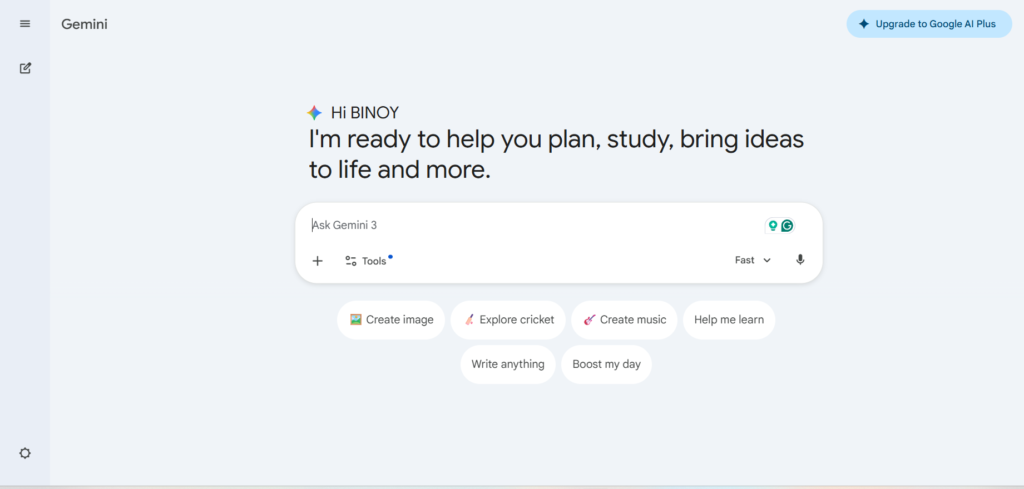
Google Gemini integrates AI directly into Google Docs, Drive, Gmail, and Google Classroom — making it the most frictionless AI option for schools already operating within the Google ecosystem. It adds AI capability without requiring teachers to adopt any new platform.
Key features:
- AI writing assistance built into Google Docs
- Document summarisation and search within Google Drive
- Smart email drafting in Gmail
- Multimodal analysis of uploaded files and images
- Google Classroom integration for assignment management
- Deep Research mode for curriculum and CPD preparation
How teachers use it:
Open a Google Doc. Ask Gemini to draft a new scheme of work. Review and edit directly in the document — no copy-pasting, no switching platforms. The AI works inside the tool teachers are already in.
Classroom benefit:
Zero adoption friction for Google-native schools. Teachers gain AI capability without changing their workflow.
Pricing: Free with Google account. Gemini Advanced: $19.99/month (included in some Google Workspace for Education plans — check with your IT team).
Best for: Schools using Google Workspace for Education, teachers deeply embedded in the Google ecosystem.
👉 Try Google Gemini to add AI to the tools your school already uses →
🌟 Real-World Example: How One Teacher Uses AI to Save 8 Hours Per Week
Sarah, secondary school English teacher, UK
Sarah teaches five classes across Years 9–13. Before AI tools, her planning and marking consumed most of every evening and both weekend days.
Here is her current AI workflow:
- Monday morning: Uses ChatGPT to generate lesson plan drafts for the week. Reviews and adjusts in 30 minutes. Previously took 3 hours.
- Mid-week marking: Runs written feedback through Grammarly before returning work. Catches unclear comments before students see them.
- Thursday department meeting: Otter.ai runs in the background. She leaves with a complete transcript and summary — zero notes taken.
- Friday resource prep: Uses Diffit to generate differentiated reading passages for the following week’s Year 9 mixed-ability class in 10 minutes.
- Weekend: Uses MagicSchool AI to produce rubrics for the following week’s assessments and IEP accommodation notes for two students.
Total time saved per week: approximately 8 hours.
Sarah’s experience is consistent with what teachers across the UK, US, and Australia report when adopting two to four AI tools with a deliberate workflow.
Category Breakdown: Best AI Tools for Teaching Tasks
AI Tools for Lesson Planning
ChatGPT and MagicSchool AI are the strongest tools — generating complete lesson plans with differentiated activities in minutes. Notion AI adds the organisational layer, keeping every plan connected to curriculum documentation and department resources.
For teachers building a full productivity system around lesson planning, our AI productivity tools guide covers the broader workflow tools that complement these.
To streamline your daily teaching tasks, check our AI productivity tools guide for tools that help manage planning, organization, and time more efficiently.
AI Tools for Grading and Feedback
Grammarly improves the clarity, tone, and consistency of written feedback across every marking session. MagicSchool AI provides standards-aligned rubric templates and marking criteria that reduce the cognitive load of assessment design. QuillBot rewrites unclear or harsh feedback comments into constructive language before students receive them.
AI Tools for Classroom Engagement
Canva AI produces visually engaging presentations, worksheets, and display materials that improve student attention. ChatGPT generates discussion prompts, scenario-based activities, and interactive question sets. Khanmigo supports active, engaged independent learning outside the classroom.
AI Tools for Note-Taking and Transcription
Otter.ai leads this category — eliminating manual meeting note-taking with real-time transcription and automatic summaries. For students who benefit from written records of verbal instruction, it provides accessible, searchable text from any recorded session.
🆓 Free AI Tools for Teachers — Honest Review
Budget matters. Here is exactly what each free tier delivers — and where it runs out.
| Tool | Free Tier Value | Main Limitation |
|---|---|---|
| ChatGPT | High — GPT-4o access, strong for daily use | Peak-hour usage limits occasionally apply |
| MagicSchool AI | High — full tool access with monthly limits | Limits reached quickly with heavy daily use |
| Canva | Good — thousands of templates, core design tools | Magic Design and AI image gen require Pro |
| Grammarly | Good — grammar and clarity checking everywhere | Plagiarism checker and advanced AI require Premium |
| Otter.ai | Moderate — 300 minutes/month transcription | Restricts use beyond 10 meetings/month |
| QuillBot | Limited — 125 words per paraphrase | Impractical for longer text adaptation tasks |
| Diffit | Good — core differentiation features | Expanded levels and export options in paid tier |
| Google Gemini | High for Google schools — full basic integration | Advanced features in Workspace Education plans |
Practical advice: Start entirely free. Identify which one tool saves you the most time in two weeks of consistent use. That is the one worth paying $3–$15/month to upgrade. You do not need to pay for all of them.
How to Choose the Best AI Tools for Teachers
Start with your biggest time drain. Do not try to adopt five tools at once. Identify the single task consuming the most of your professional time outside the classroom — planning, marking, meetings, resource creation — and adopt the tool that directly addresses it.
Prioritise ease of use. The tool you actually use consistently beats the more powerful tool you open twice. ChatGPT, MagicSchool AI, and Canva all require zero technical training — teachers produce useful output from their first session.
Check privacy and safeguarding requirements. For tasks using no student data, any reputable tool is safe. For tasks involving identifiable student information, verify GDPR compliance and data processing policies before use. MagicSchool AI and Google Workspace for Education both have explicit educational data protection commitments.
Match the tool to your setting. Google Gemini is the obvious choice for Google-native schools. MagicSchool AI suits all settings but is highest-value in schools with significant SEND caseloads. Diffit is most impactful in mixed-ability or EAL settings where differentiation is a daily requirement.
⏰ How AI Tools Help Teachers Save Time
Lesson planning: 3–5 hours saved per week
ChatGPT and MagicSchool AI generate complete lesson plans with differentiated activities in minutes. A Sunday afternoon planning session becomes a Friday lunchtime 30-minute task.
Grading and feedback: 1–2 hours saved per week
Grammarly speeds up feedback quality checking. MagicSchool AI rubric templates reduce assessment design time. Combined, they reduce marking load on complex written work by 20–30%.
Administrative tasks: 1–2 hours saved per week
Otter.ai eliminates meeting note-taking. ChatGPT drafts parent communications, report comments, and behaviour records. MagicSchool AI generates IEP documentation that previously required careful manual drafting.
Resource creation: 2–3 hours saved per week
Canva AI reduces design time from hours to minutes. Diffit generates differentiated reading materials in under five minutes. QuillBot adapts existing text to different reading levels without manual rewriting.
Total weekly saving for consistent users: 5–10 hours.
💡 Best AI Tool Stack for Teachers
Rather than using one tool for everything, the most effective setup combines two to three tools covering different workflow layers.
Pro Tip: Start with one stack. Master it over four weeks before adding new tools. Teachers who try to adopt too many tools at once end up using none of them consistently.
Stack 1 — The Starter Stack (Best for teachers new to AI)
ChatGPT + MagicSchool AI
ChatGPT covers general planning, content generation, and communications. MagicSchool AI handles education-specific documentation and differentiation.
Total cost with free tiers: $0. With MagicSchool Pro: $3/month.
Best for: Any teacher starting their AI journey. Maximum value, minimum cost.
Stack 2 — The Planning and Resources Stack (Best for classroom teachers)
ChatGPT + Canva AI + Diffit
ChatGPT generates lesson content and frameworks. Canva AI produces visual resources. Diffit creates differentiated reading materials across ability levels.
Total cost with free tiers: $0–$15/month.
Best for: Teachers regularly producing visual resources and differentiated content.
Stack 3 — The Organisation and Admin Stack (Best for heads of department and heavy admin roles)
Notion AI + Grammarly + Otter.ai
Notion AI organises curriculum and planning documentation. Grammarly ensures all professional communications and feedback are clear and well-toned. Otter.ai eliminates meeting note-taking.
Total cost: Approximately $39/month.
Best for: Department heads, pastoral leads, SENCOs managing complex documentation workloads.
Stack 4 — The Inclusion Stack (Best for SEND, EAL, and mixed-ability specialists)
MagicSchool AI + QuillBot + Diffit
MagicSchool AI handles IEP documentation and accommodation planning. QuillBot adapts text to different reading levels. Diffit generates level-appropriate reading passages.
Total cost with MagicSchool Pro: Approximately $14/month.
Best for: SENCO coordinators, EAL teachers, mixed-ability classroom specialists.
🎯 Conclusion: Start Free. Start This Week.
The best AI tools for teachers in 2026 do not replace what makes great teaching great. They recover the hours that go to everything surrounding it.
Every tool in this guide has a free plan. Every tool here can be tested within a single afternoon. The savings start in the first week of consistent use.
The best AI tools for teachers can save hours every week and improve classroom efficiency.
Start with one tool based on your biggest current challenge:
- Planning takes too long → ChatGPT (free)
- Marking is exhausting → Grammarly + MagicSchool AI (both free)
- Resources take hours → Canva AI (free)
- Meetings eat your time → Otter.ai (free tier)
- Students need more support → Khanmigo
- Everything is scattered → Notion AI
- You want education-specific AI → MagicSchool AI ($3/month Pro)
Sign up today. Use it on one real task this week. The result will tell you whether to expand from there.
And if you want to take things further — many educators are using these same tools to build income outside the classroom through digital courses, tutoring products, and content creation. Our guide on how to make money with AI covers the methods that work best for teachers specifically.
To improve results, read our AI prompt engineering guide.
Explore the best AI tools for productivity.
Learn automation from AI automation workflows.
You can monetize using how to make money with AI.
❓ Frequently Asked Questions
What are the best AI tools for teachers in 2026?
The best AI tools for teachers in 2026 are ChatGPT for all-purpose planning, MagicSchool AI for education-specific workflows, Canva AI for classroom visual resources, Grammarly for student feedback, Otter.ai for transcription, QuillBot for differentiation, and Khanmigo for student tutoring. Most have free plans that provide genuine classroom value.
Are free AI tools for teachers worth using?
Yes — significantly. ChatGPT’s free tier, MagicSchool AI’s free plan, Canva’s free templates, and Grammarly’s free grammar checking together cover lesson planning, resource creation, and feedback quality at zero cost. Most teachers can save 3–6 hours per week using only free tools before considering any paid upgrade.
Can AI tools replace teachers?
No. AI tools handle production, administration, and resource adaptation tasks. The relationship-building, adaptive instruction, classroom management, professional judgment, and student welfare responsibilities that define effective teaching require human expertise and presence. AI makes teachers more productive — not redundant.
Which AI tools are safest for use with student data?
MagicSchool AI and Google Gemini in Workspace for Education have explicit educational data protection policies aligned with FERPA and GDPR. For tasks using no student data — lesson planning, resource creation, drafting your own templates — any reputable tool is safe. Always anonymise before inputting identifiable student information into tools without verified education data policies.
What are the best AI tools for grading and feedback?
The best AI tools for grading are Grammarly for improving written feedback quality and tone, MagicSchool AI for rubric and marking criteria generation, and QuillBot for rewriting unclear feedback comments. None grade student work autonomously — they support the teacher’s judgment and communication.
How do I start using AI tools if I have no technical experience?
Start with MagicSchool AI — it is purpose-built for teachers, requires no prompt engineering, and produces useful output from the first session. Alternatively, open ChatGPT and type: “I am a [subject] teacher for [year group]. Write a lesson plan on [topic] with differentiated activities for three ability groups.” That sentence alone will show you what AI can do for your planning.
best AI tools for students in 2026
AI productivity tools guide
best AI tools for students in 2026
AI productivity tools guide
how to make money with AI
🖼️ Recommended Images for SEO
| Image Idea | Recommended ALT Text |
|---|---|
| Teacher at laptop with AI interface in modern classroom | best AI tools for teachers working in classroom 2026 |
| AI-generated lesson plan on screen next to blank page | AI tools for lesson planning saving teacher preparation time 2026 |
| MagicSchool AI or ChatGPT educator dashboard | best AI tools for teachers MagicSchool AI dashboard 2026 |
| Student using AI on tablet with teacher observing | AI tools for students and teachers in classroom 2026 |
| Grammarly feedback suggestion on marked student essay | AI tools for grading and teacher feedback quality 2026 |
| Weekly hour-saved infographic showing AI tool impact | how best AI tools for teachers save 8 hours per week |
Published on AI Arena — reviewing and comparing AI tools for education, productivity, and professional development. Updated March 2026.