
What is AI prompt engineering?
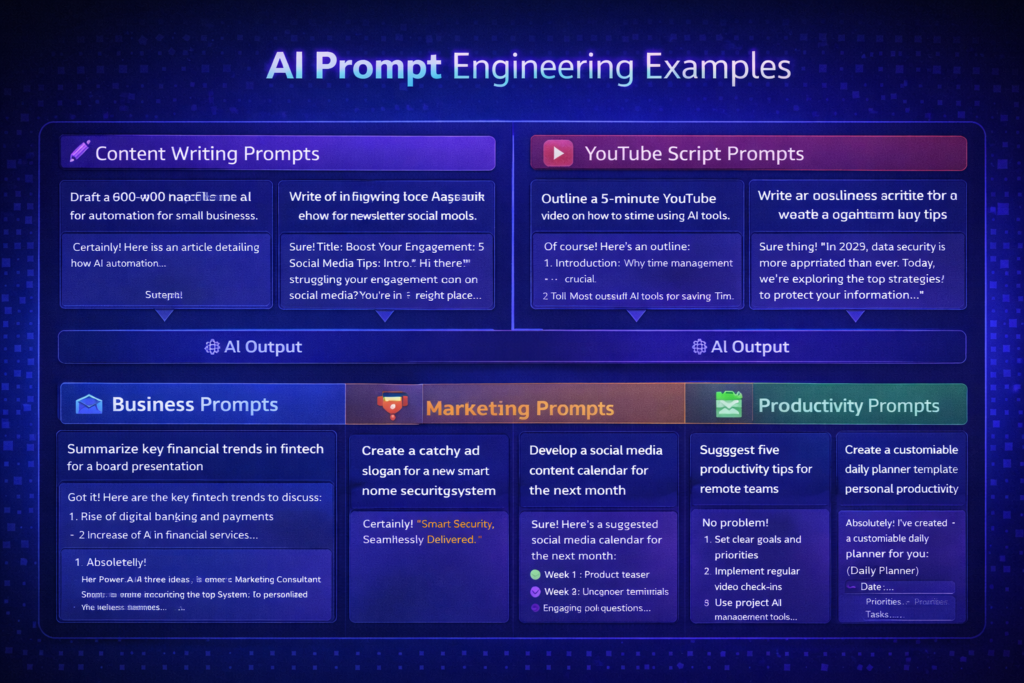
AI prompt engineering is the skill of writing clear, structured instructions that help AI tools like ChatGPT, Claude, and Gemini produce accurate, high-quality outputs. A well-engineered prompt includes a role, a specific task, context, and a desired format. Anyone can learn it — and in 2026, it is one of the most valuable digital skills you can develop, regardless of your background or technical ability.
Table of Contents
- Introduction
- What Is AI Prompt Engineering?
- Why AI Prompt Engineering Is Important in 2026
- How to Write Effective AI Prompts (Step-by-Step)
- 20 AI Prompt Engineering Examples
Introduction
You’ve opened ChatGPT. You’ve typed something in. The result was… fine. But not great. Not what you actually needed.
Sound familiar?
AI prompt engineering for beginners is one of the most valuable skills you can learn in 2026. It helps you write better prompts, get smarter AI results, and improve productivity across any task.
The gap between a mediocre AI response and a genuinely brilliant one almost always comes down to one thing: the quality of the prompt. And that’s exactly what AI prompt engineering teaches you to fix.
AI prompt engineering is the practice of crafting precise, well-structured instructions that guide AI tools toward exactly the output you want. It’s not a technical skill reserved for engineers or developers. It’s a communication skill — and anyone can learn it in a single afternoon.
In 2026, AI prompt engineering has become one of the most sought-after competencies in marketing, content creation, education, business, and beyond. Whether you’re using ChatGPT prompts to write content, drafting AI writing prompts for a creative project, or building AI workflows for your business — the ability to prompt effectively is what separates average results from outstanding ones.
This guide is your complete, beginner-friendly introduction to AI prompt engineering — with a step-by-step framework and 20 real, copy-paste-ready examples you can use today.
Let’s get you prompting like a pro.
What Is AI Prompt Engineering?
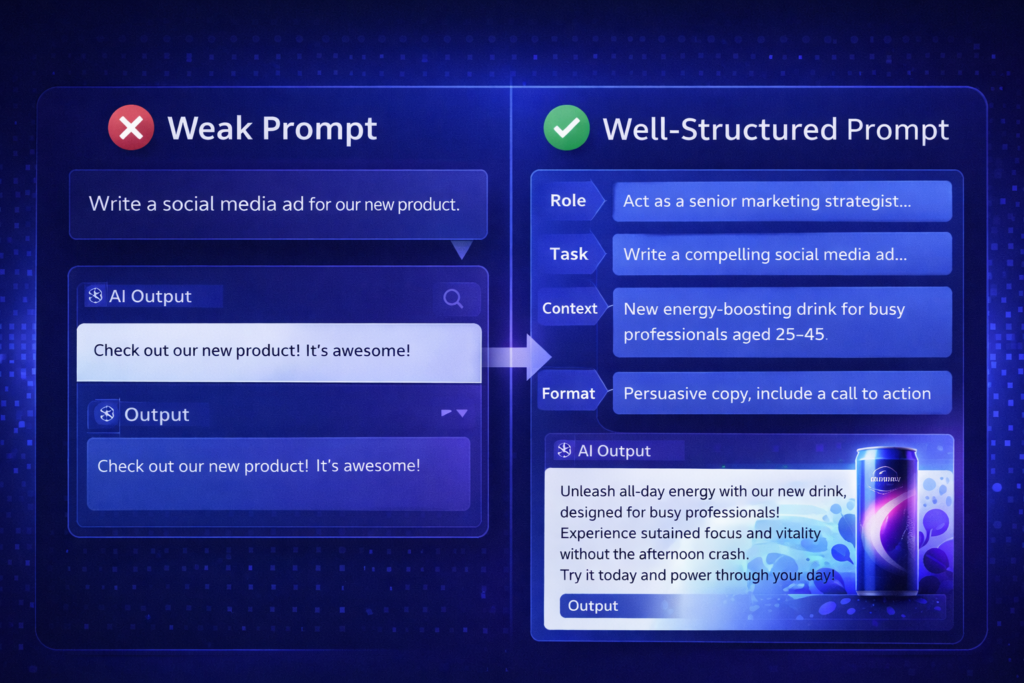
At its core, AI prompt engineering is the art and science of communicating with AI systems effectively.
Every AI model — whether it’s ChatGPT from OpenAI, Gemini from Google AI, or Claude from Anthropic — responds to the input it receives. The quality of that input directly determines the quality of the output. Better prompt, better result. Every time.
Think of it this way: asking an AI “write me a blog post” is like telling a chef “make me food.” You might get something edible. But if you say “make me a 400-calorie high-protein breakfast using eggs, spinach, and feta cheese, ready in 15 minutes” — you get exactly what you need.
AI prompt engineering is the skill of being that specific — consistently, across any task you want AI to help with.
Here’s what a well-engineered prompt includes:
- Role — Tell the AI who to be (“Act as a senior marketing strategist…”)
- Task — Tell it exactly what to do (“Write a 500-word blog introduction…”)
- Context — Give it the background it needs (“The target audience is small business owners aged 30–50…”)
- Format — Specify how you want the output (“Use bullet points, include a hook, and end with a CTA…”)
- Constraints — Set boundaries where helpful (“Avoid jargon. Use a friendly, conversational tone.”)
This framework is the foundation of effective AI prompt engineering — and we’ll apply it to 20 real examples later in this guide.
For a broader look at the tools where these prompts are applied, explore our full directory of best AI tools available in 2026.
Why AI Prompt Engineering Is Important in 2026
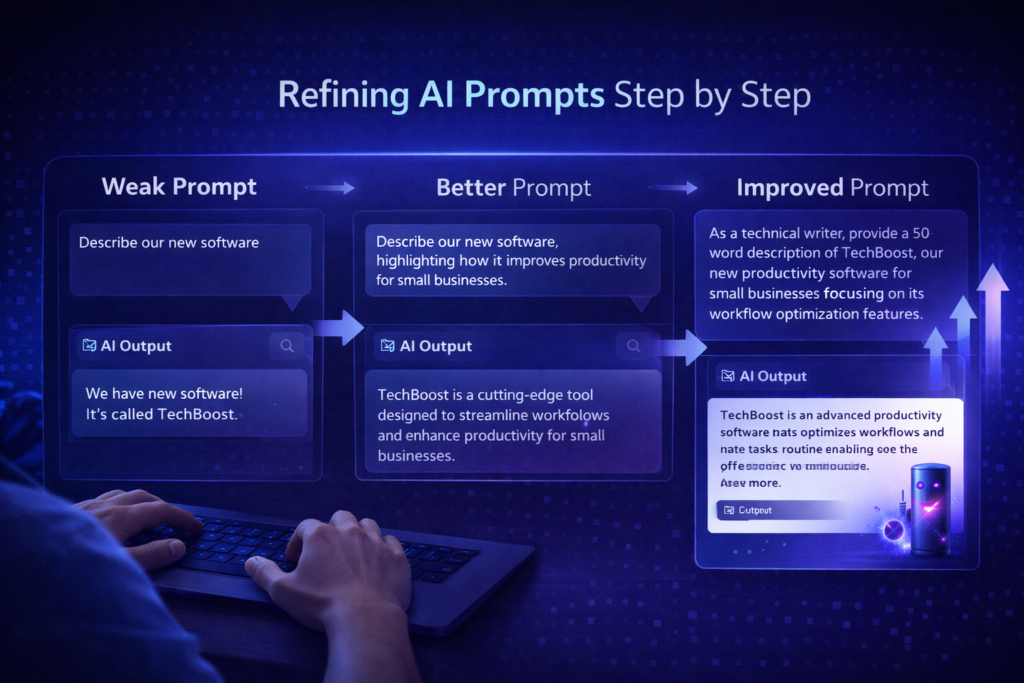
The explosion of AI tools has created a paradox: everyone has access to the same powerful models, but results vary wildly between users. The differentiating factor is almost always AI prompt engineering skill.
According to Forbes, prompt engineering has emerged as one of the highest-value skills in the modern digital economy — with businesses actively recruiting prompt specialists and paying significant premiums for professionals who can extract superior results from AI tools.
Here’s why AI prompt engineering has become so important specifically in 2026:
1. AI is now embedded in every industry.
Marketing, education, healthcare, law, finance, software development, content creation — AI tools are being used everywhere. The people who use them most effectively have a fundamental advantage over those who don’t.
2. Generic outputs are no longer acceptable.
As AI becomes ubiquitous, the bar for quality rises. A generic AI response that anyone could generate with a one-line prompt adds no competitive value. Engineered, precise outputs that require skill to produce — those are what the market rewards.
3. Prompt engineering scales your capabilities.
Good prompts don’t just improve one response. They become reusable templates, systematic workflows, and intellectual capital. A library of well-engineered prompts for your specific field is one of the most powerful productivity assets you can build.
4. It unlocks the full potential of AI tools.
Most users access perhaps 20% of what their AI tools are capable of. AI prompt engineering unlocks the other 80% — including advanced reasoning, structured analysis, creative ideation, and precise formatting that casual users never experience.
5. It applies across every use case.
From writing blog posts to analyzing spreadsheets, from preparing for job interviews to building AI automation tools — the ability to prompt effectively transfers across every AI application you’ll ever use.
Whether you’re exploring AI business ideas or studying for exams using AI tools for students — AI prompt engineering is the skill that multiplies the value of every other AI tool in your stack.
💡 “AI prompt engineering is not a niche technical skill — it is the new literacy of the AI era. The people who master it will consistently outperform those who don’t, across every field and function.”
How to Write Effective AI Prompts (Step-by-Step)
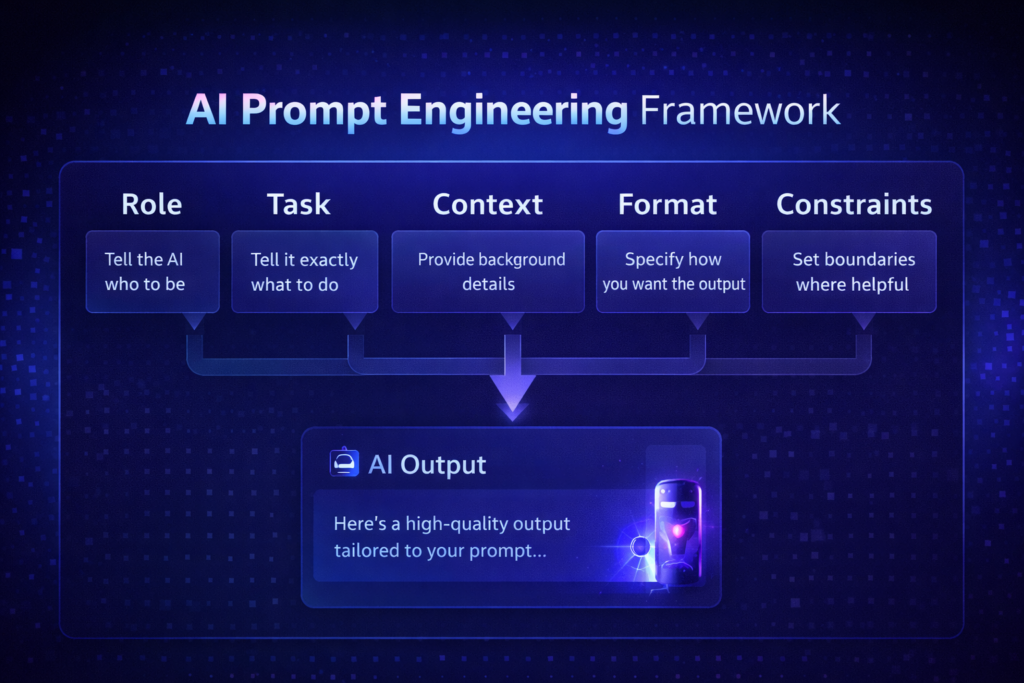
The most reliable framework for AI prompt engineering is built around five core elements. Master these five, and you can construct an effective prompt for virtually any task.
The RTCFC Framework for AI Prompt Engineering
R — Role
Tell the AI what expert perspective to adopt. This instantly shifts the tone, vocabulary, and quality of the response.
- ❌ Weak: “Write a marketing email.”
- ✅ Strong: “You are an expert email copywriter specializing in e-commerce conversions.”
T — Task
Define exactly what you want. Be specific about the deliverable, length, and objective.
- ❌ Weak: “Help me with my essay.”
- ✅ Strong: “Write a 600-word argumentative essay introduction on the ethics of AI in healthcare.”
C — Context
Provide the background information the AI needs to give you a relevant, accurate response.
- ❌ Weak: “Write a product description.”
- ✅ Strong: “The product is a reusable bamboo coffee cup targeting eco-conscious millennials. It keeps drinks hot for 6 hours, is dishwasher-safe, and retails at £24.99.”
F — Format
Specify exactly how you want the output structured. This prevents vague, unformatted walls of text.
- ❌ Weak: (no format instruction)
- ✅ Strong: “Format the response as three short paragraphs with a bold headline for each. End with a one-sentence CTA.”
C — Constraints
Set the guardrails — tone, word count, what to avoid, reading level, and any other limitations.
- ❌ Weak: (no constraints)
- ✅ Strong: “Use a friendly, conversational tone. Avoid technical jargon. Keep it under 150 words. Do not use the word ‘leverage.'”
Putting It All Together — A Full Prompt Example
Here’s what a complete, engineered prompt looks like using the RTCFC framework:
“You are an expert SEO content writer with 10 years of experience writing for B2B SaaS companies. Write a 400-word blog introduction for an article titled ‘How Project Management Software Saves 5+ Hours a Week.’ The target audience is small business owners aged 30–50 who are overwhelmed by manual workflows. Use a conversational tone, open with a relatable pain point, include the keyword ‘project management software’ in the first 100 words, and end with a clear transition into the main content. Avoid buzzwords and corporate-speak.”
That single prompt will generate an output dramatically superior to “write a blog intro about project management software” — every single time.
Practice this framework with every prompt you write, and within a week, you’ll notice a measurable improvement in every AI output you receive.
For applying these skills to content creation specifically, explore our guide on AI tools for content creation — it covers the platforms where these prompts deliver the most impact.
20 AI Prompt Engineering Examples
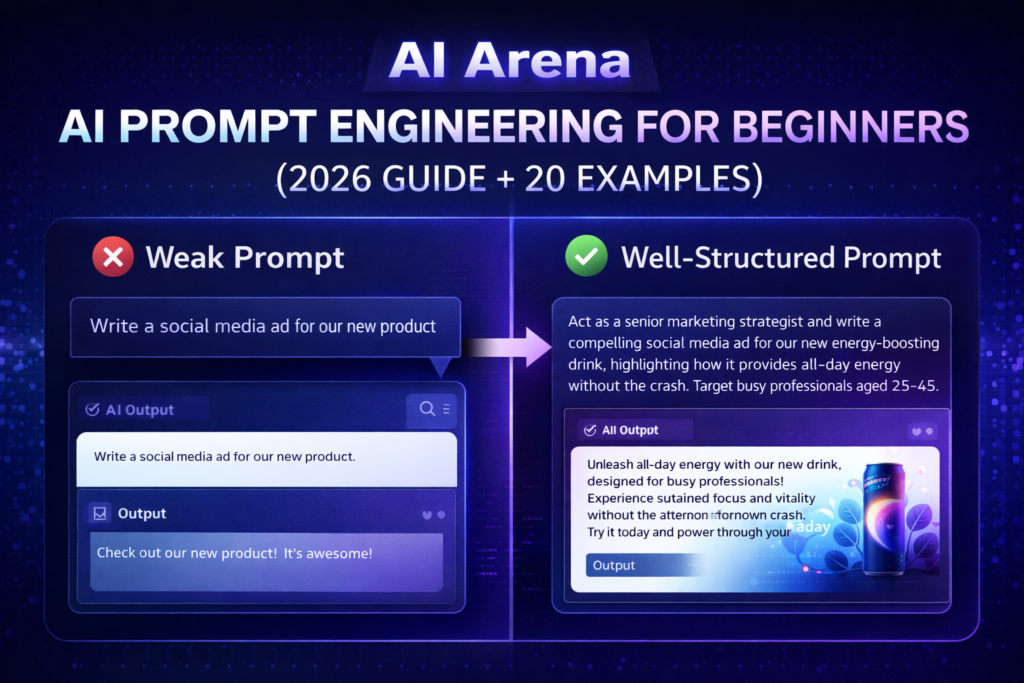
Below are 20 ready-to-use AI prompt engineering examples across five practical categories. Copy them, customize the details in brackets, and use them immediately.
✍️ Category 1: Content Writing Prompts
Prompt #1 — SEO Blog Post Introduction
“You are an expert SEO content writer. Write a compelling 150-word introduction for a blog post titled ‘[BLOG TITLE]’. The focus keyword is ‘[KEYWORD]’ and it must appear in the first 100 words. The target audience is [AUDIENCE DESCRIPTION]. Use a conversational tone, open with a hook, and end with a transition sentence into the main content.”
Prompt #2 — Listicle Article
“Act as a professional content strategist. Write a listicle article titled ‘[TITLE]’ with [NUMBER] items. Each item should include a bold subheading, 2–3 sentences of explanation, and one practical tip. The tone should be friendly and beginner-friendly. Target audience: [AUDIENCE]. Avoid filler sentences and keep each point actionable.”
Prompt #3 — Email Newsletter
“You are an experienced email copywriter. Write a weekly newsletter for [BRAND/NICHE] covering [TOPIC]. The email should be 300–400 words, have a subject line, an engaging opening, 3 key points formatted with short paragraphs, and a single CTA button text. Tone: conversational and warm. Avoid hard-sell language.”
Prompt #4 — Product Description
“You are a conversion-focused copywriter specializing in e-commerce. Write a product description for [PRODUCT NAME]. Key features: [LIST FEATURES]. Target customer: [AUDIENCE]. Include a benefit-led opening sentence, 3 bullet points of key features, and a 1-sentence closing CTA. Keep it under 120 words. Tone: confident and clear.”
🎬 Category 2: YouTube Script Prompts
Prompt #5 — YouTube Video Hook
“You are a viral YouTube script writer. Write 5 different hook options for a YouTube video titled ‘[VIDEO TITLE]’. Each hook should be under 30 seconds when spoken aloud (approximately 60–70 words), create curiosity or urgency, and be appropriate for a [NICHE] audience. Number each option clearly.”
Prompt #6 — Full YouTube Script
“Act as an experienced YouTube scriptwriter. Write a full script for a [LENGTH]-minute video titled ‘[VIDEO TITLE]’. Include: a 30-second hook, a brief intro with channel welcome, [NUMBER] main sections with clear transitions, and a closing CTA asking viewers to like and subscribe. Tone: engaging, conversational, and informative. Audience: [AUDIENCE DESCRIPTION].”
Prompt #7 — Video Description + Tags
“You are an expert YouTube SEO specialist. Write a video description and tag list for a YouTube video titled ‘[VIDEO TITLE]’. The description should be 150–200 words, include the primary keyword ‘[KEYWORD]’ in the first line, add a CTA to subscribe, and include 3 relevant links with placeholder text. Follow with 15 SEO-optimized tags separated by commas.”
Prompt #8 — YouTube Shorts Script
“Act as a short-form video expert. Write a YouTube Shorts script for a [NICHE] video that delivers one specific tip about [TOPIC]. The script should be 45–60 seconds when spoken (approximately 120–150 words). Open with a bold statement or question, deliver the tip in 3 clear steps, and end with a punchy CTA. No fluff.”
💼 Category 3: Business Prompts
Prompt #9 — Business Plan Executive Summary
“You are a business strategy consultant with 15 years of experience. Write an executive summary for a business plan for [BUSINESS NAME], a [BUSINESS TYPE] targeting [TARGET MARKET]. Include: the problem being solved, the solution, the target market size, the revenue model, and the key competitive advantage. Keep it under 350 words. Tone: professional and compelling.”
Prompt #10 — Client Proposal
“Act as an expert freelance consultant. Write a client proposal for [SERVICE] to be delivered to [CLIENT TYPE]. Include: an executive summary of their challenge, your proposed solution, a 3-phase delivery timeline, your pricing structure (use [PRICE] as the investment), and a professional closing paragraph. Tone: confident, expert, and client-focused.”
Prompt #11 — SWOT Analysis
“You are a business analyst. Conduct a detailed SWOT analysis for a [BUSINESS TYPE] operating in [INDUSTRY/LOCATION]. Identify 4–5 points under each category: Strengths, Weaknesses, Opportunities, and Threats. Format as a clear table with a brief explanation paragraph beneath each section. Be specific and actionable, not generic.”
Prompt #12 — Meeting Agenda
“Act as an efficient executive assistant. Create a structured meeting agenda for a [MEETING TYPE] meeting lasting [DURATION]. Attendees: [LIST ROLES]. Topics to cover: [LIST TOPICS]. Format with timed segments, a clear owner for each agenda item, and space for action items at the end. Include a pre-meeting preparation note at the top.”
📣 Category 4: Marketing Prompts
Prompt #13 — Social Media Content Calendar
“You are a senior social media strategist. Create a 1-week content calendar for [BRAND] on [PLATFORM/S]. Include one post per day, with: post type (reel, carousel, static, story), a content hook or headline, the core message, and a CTA for each. The brand tone is [TONE]. Target audience: [AUDIENCE]. Focus theme for the week: [THEME].”
Prompt #14 — Facebook/Instagram Ad Copy
“Act as a direct-response copywriter specializing in paid social. Write 3 variations of ad copy for [PRODUCT/SERVICE]. Each variation should include: a scroll-stopping opening line, 2–3 sentences of benefit-led body copy, and a strong CTA. Target audience: [AUDIENCE]. Key benefit to emphasize: [BENEFIT]. Keep each variation under 100 words.”
Prompt #15 — Brand Voice Guide
“You are a brand strategist. Create a brand voice guide for [BRAND NAME], a [BUSINESS TYPE] targeting [AUDIENCE]. Include: brand personality (3–5 adjectives with explanations), tone of voice for different contexts (social media, customer service, email, ads), 5 example phrases that reflect the brand voice, and 5 phrases to avoid. Format clearly with headings.”
Prompt #16 — Email Subject Line Generator
“Act as an email marketing expert with a proven track record in high open-rate campaigns. Generate 10 email subject lines for a campaign promoting [OFFER/TOPIC] to [AUDIENCE]. Include a mix of: curiosity-driven, benefit-led, urgency-based, and question-format subject lines. Label each type. Aim for under 50 characters where possible.”
⚡ Category 5: Productivity Prompts
Prompt #17 — Weekly Priority Planner
“You are a productivity coach. Help me plan my week using the Eisenhower Matrix. Here are my tasks for the week: [LIST TASKS]. Categorize each task as: Urgent & Important, Important but Not Urgent, Urgent but Not Important, or Neither. Then create a prioritized daily schedule from Monday to Friday, blocking time for deep work, admin, and breaks. Format as a clear table.”
Prompt #18 — Learning Plan
“Act as an expert learning coach. Create a 30-day self-study plan to learn [SKILL/SUBJECT] from beginner to intermediate level. Assume I can dedicate [HOURS] per day. Include: weekly themes, daily learning activities, recommended free resources (articles, videos, or courses), and a weekly review checkpoint. Format week by week.”
Prompt #19 — Decision-Making Framework
“You are a strategic thinking expert. Help me make a decision about [DECISION]. The options I’m considering are: [LIST OPTIONS]. Please evaluate each option using the following criteria: [CRITERIA LIST]. Score each option 1–10 per criterion, provide a total score, and give a final recommendation with a 2–3 sentence rationale. Format as a table followed by a summary.”
Prompt #20 — Standard Operating Procedure (SOP)
“You are an operations specialist. Write a Standard Operating Procedure (SOP) for [TASK/PROCESS]. The document should include: a title, purpose statement, scope, step-by-step instructions numbered clearly, any tools or resources required, quality checkpoints, and a notes section for exceptions. The audience is a new team member with no prior experience in this process.”
Best AI Prompt Engineering Tips for Beginners
These are the habits that separate consistent, high-quality AI users from frustrated beginners — apply them from day one:
Tip #1 — Always assign a role first.
The single fastest improvement you can make to any prompt. Adding “You are an expert [X]” at the start shifts the quality of every response immediately.
Tip #2 — Be specific, not vague.
“Write a short email” is vague. “Write a 100-word follow-up email to a client who hasn’t responded in 5 days, in a friendly but professional tone” is specific. Specificity is the core discipline of AI prompt engineering.
Tip #3 — Iterate, don’t start over.
If the first output isn’t quite right, don’t rewrite the whole prompt. Ask the AI to revise: “Make this more concise,” “Change the tone to be more casual,” or “Add two more examples.” Conversation-style iteration is faster than starting from scratch.
Tip #4 — Save your best prompts.
When a prompt produces excellent results, save it as a template. Build a personal prompt library in Notion, a Google Doc, or a text file. This library becomes one of your most valuable professional assets.
Tip #5 — Ask the AI to improve your prompt.
Meta-prompting is one of the most powerful techniques in AI prompt engineering. Try: “Here is a prompt I’ve written: [paste prompt]. How could I improve it to get a better result?” The AI will often identify gaps you’ve missed entirely.
Tip #6 — State what you don’t want.
Negative constraints are just as powerful as positive instructions. “Do not use bullet points,” “Avoid clichés,” “Do not mention competitors” — these guardrails prevent the AI from defaulting to generic patterns.
Tip #7 — Test across different AI tools.
Different models respond differently to the same prompt. What works brilliantly in ChatGPT might perform slightly differently in Claude or Gemini. For serious work, test your prompts across platforms and identify which tool delivers the best output for each task type.
For finding the right tools to practice these techniques, browse our curated best AI tools guide — it includes free options across every major AI category.
Students applying these prompting skills to study and assignments should explore our dedicated AI tools for students guide for context-specific prompting strategies.
Common Mistakes in AI Prompt Engineering
Even experienced users fall into these patterns. Recognizing them is the first step to eliminating them from your workflow.
Mistake #1 — Being too vague
This is the most common error in AI prompt engineering. A vague prompt forces the AI to make assumptions — and those assumptions are rarely aligned with what you actually need. The fix: add specifics at every opportunity. Length, audience, tone, format, objective — the more detail you provide, the less guessing the AI does.
Mistake #2 — Not providing context
Context is what makes a prompt personalized rather than generic. Without it, the AI gives you a response that could apply to anyone. With it, you get a response tailored to your exact situation. Always explain the background: who the audience is, what the goal is, and what the output will be used for.
Mistake #3 — Asking multiple unrelated questions in one prompt
One prompt, one task. Bundling multiple requests into a single prompt dilutes focus and produces mixed-quality outputs. If you need a blog post, a social media caption, and an email — run three separate, focused prompts.
Mistake #4 — Accepting the first output without iterating
The first response is a draft, not a final product. The real power of AI prompt engineering emerges in the follow-up conversation. Refine, redirect, and improve through iteration. Professionals who get consistently outstanding results always iterate.
Mistake #5 — Ignoring format instructions
Unformatted AI output — long, unbroken paragraphs with no structure — is hard to use directly. Always specify your format: bullet points, numbered lists, headers, tables, word counts. Format instructions take five seconds to add and save significant editing time.
Mistake #6 — Using the same prompt for every AI tool
Different AI models have different strengths, styles, and default behaviors. A prompt optimized for ChatGPT may need slight adjustments for Claude, Gemini, or Perplexity. Adapt your prompts to each tool’s characteristics for the best results.
Mistake #7 — Never saving or organizing successful prompts
Every time a prompt produces excellent output and you don’t save it, you lose that work. Building and organizing a personal prompt library is one of the highest-return habits in AI prompt engineering — treat your best prompts like intellectual property.
These same principles apply whether you’re using AI for content, automation, or business building. Explore how prompt engineering fits into larger AI automation tools workflows for a complete picture of how this skill scales.
Best Tools for AI Prompt Engineering
You can practice AI prompt engineering on any AI platform — but some tools are better suited for learning, testing, and applying prompts than others.
🥇 ChatGPT (OpenAI)
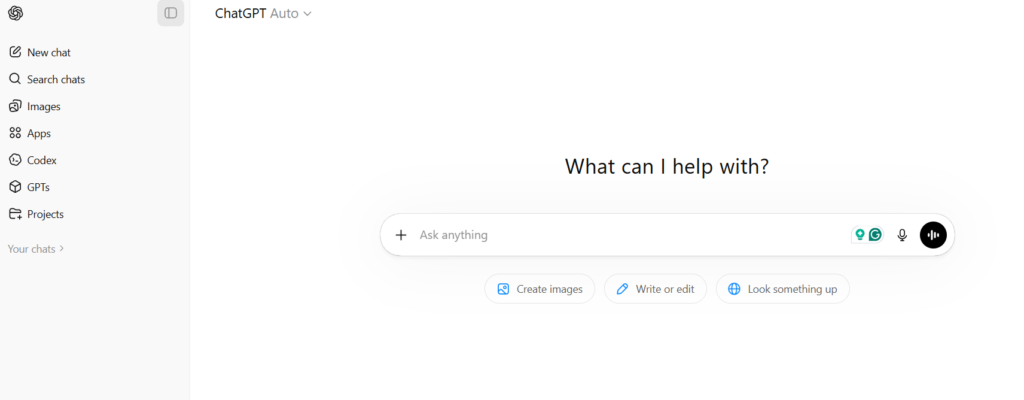
The most widely used AI model for prompt engineering practice. GPT-4o offers exceptional reasoning, instruction-following, and output quality. Its conversational interface makes iteration natural and fast. The custom GPTs feature lets you embed prompts as permanent system instructions — ideal for building reusable prompt templates.
Best for: Content writing, business prompts, coding, analysis, and general-purpose use.
Pricing: Free (GPT-3.5) | Plus from $20/month
🥈 Claude (Anthropic)
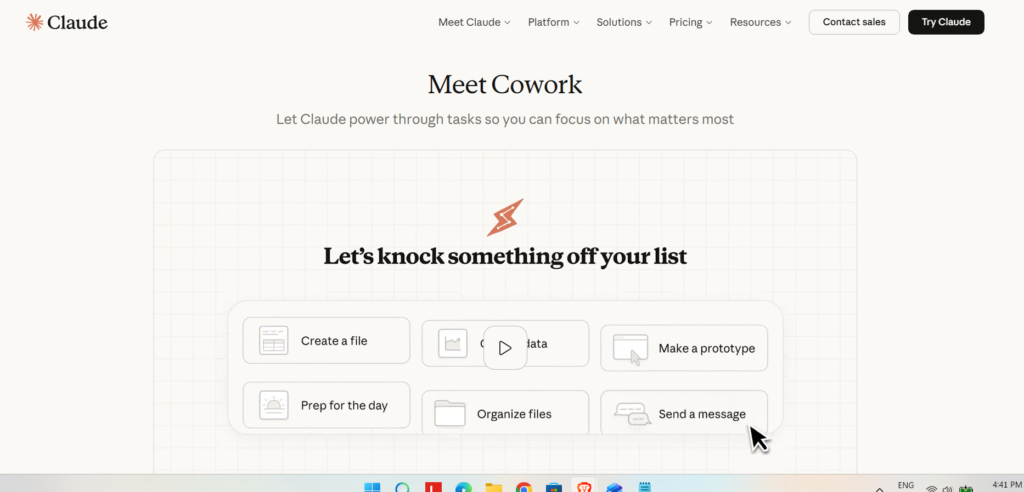
Claude excels at long-document analysis, nuanced writing, and following complex, multi-part instructions. It handles longer context windows better than most alternatives — making it ideal for prompts that involve extensive background information.
Best for: Long-form writing, document analysis, nuanced tone matching, and detailed research prompts.
Pricing: Free plan available | Claude Pro from $20/month
🥉 Gemini (Google AI)
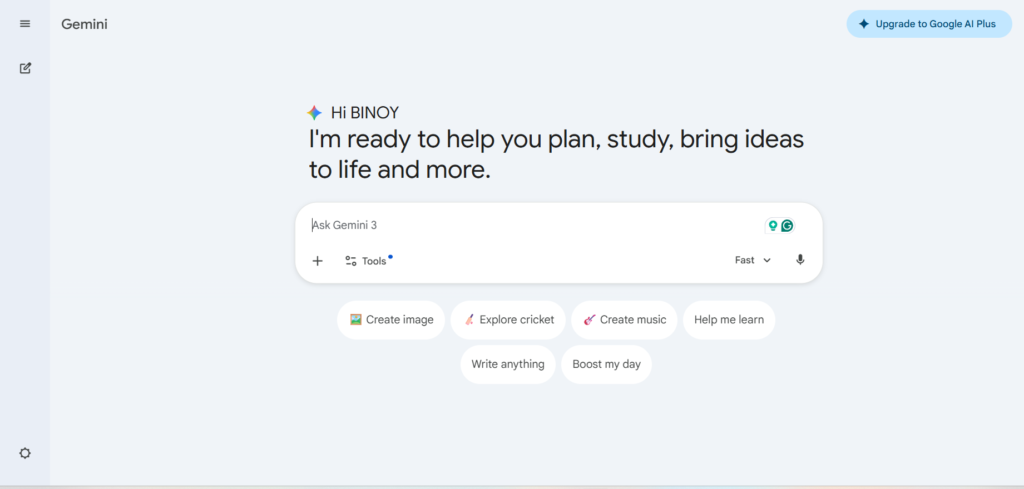
Google AI‘s Gemini model integrates directly with Google Workspace — making it powerful for prompts applied to Docs, Sheets, Gmail, and Slides. Its multimodal capabilities also make it effective for prompts involving images and data.
Best for: Productivity workflows, Google Workspace integration, and multimodal prompting.
Pricing: Free plan available | Gemini Advanced from $19.99/month
4. Perplexity AI
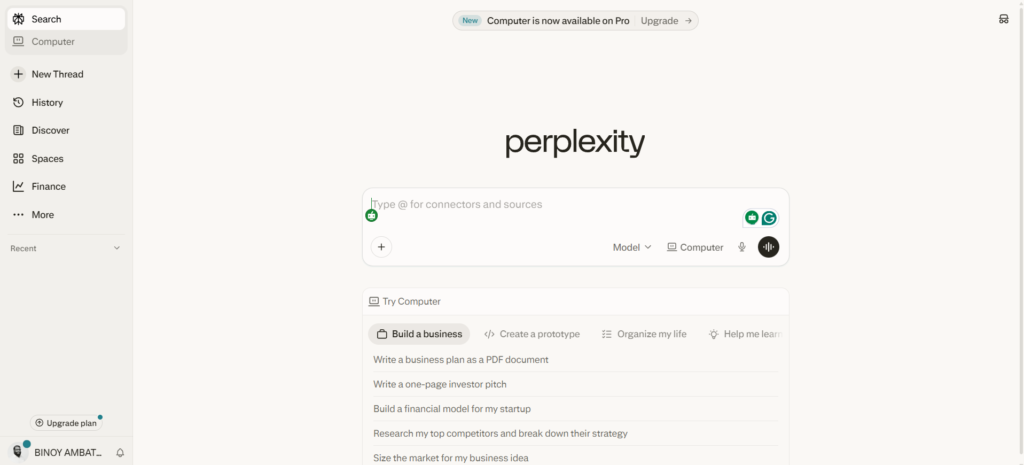
Perplexity combines AI reasoning with real-time web search — making it uniquely effective for research-focused prompts where current information matters. Great for prompts asking for market data, recent news, or competitive analysis.
Best for: Research prompts, fact-checking, and current-events analysis.
Pricing: Free plan available | Pro from $20/month
5. PromptBase
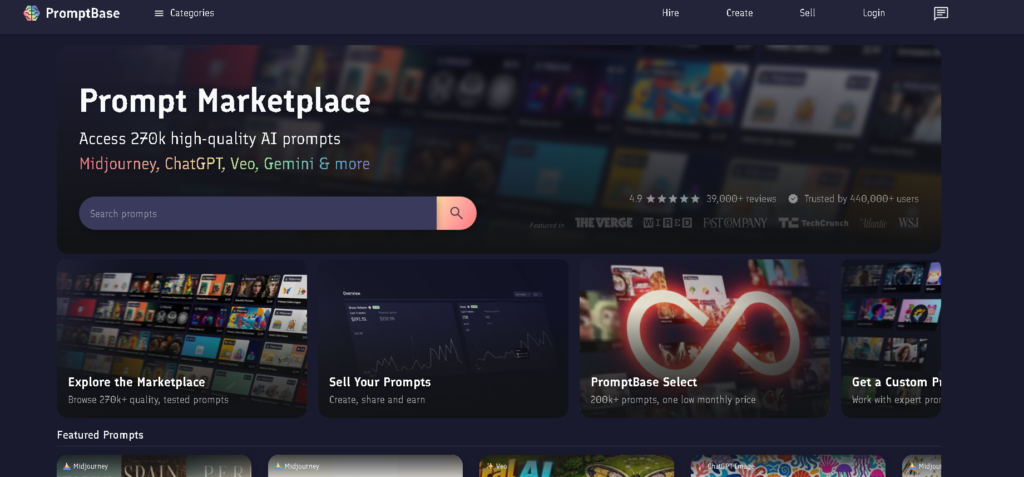
PromptBase is a dedicated marketplace for buying and selling engineered prompts. It’s an excellent resource for discovering how expert prompt engineers structure their instructions — and for accessing proven, tested prompts across every category.
Best for: Learning from expert prompts, building a prompt product business, and discovering new prompting patterns.
Pricing: Individual prompts from $1.99
Applying your prompt engineering skills to content creation at scale? Our guide on AI tools for content creation shows exactly which platforms produce the best results when paired with well-engineered prompts.
And if you’re thinking about turning your prompting expertise into income, explore the AI business ideas guide — prompt selling and AI content services are among the fastest-growing opportunities in 2026.
To improve your results, read our AI prompt engineering guide.
Explore the best AI tools for productivity to enhance your setup.
Learn automation in our AI automation workflows guide.
You can monetize this using how to make money with AI.
FAQ
1. What is AI prompt engineering and why does it matter?
AI prompt engineering is the skill of writing clear, structured instructions that guide AI models toward producing accurate, useful, high-quality outputs. It matters because the quality of what any AI tool produces is almost entirely determined by the quality of the input it receives. Better prompts consistently produce dramatically better results — making this one of the highest-value skills you can develop in 2026.
2. Do I need a technical background to learn AI prompt engineering?
Not at all. AI prompt engineering is fundamentally a communication and critical thinking skill — not a technical one. If you can write a clear sentence and understand what output you want, you can learn to prompt effectively. Most beginners see significant improvement in their AI outputs within hours of applying the basic RTCFC framework covered in this guide.
3. What makes a good AI prompt?
A good AI prompt is specific, contextual, and clearly formatted. It tells the AI who to be (role), what to do (task), why and for whom (context), and how to structure the response (format). The 20 examples in this guide all follow this pattern and demonstrate what quality AI prompt engineering looks like in practice across different use cases.
4. Can I make money from AI prompt engineering skills?
Yes — in several ways. You can sell prompt packs on platforms like PromptBase, offer AI content writing services using your prompting skills, build and monetize a faceless YouTube channel with AI-generated scripts, or work as a prompt engineer or AI content specialist for businesses. Explore the full range of options in our AI business ideas guide.
5. Which AI tool is best for practicing prompt engineering?
ChatGPT from OpenAI is the best starting point for learning AI prompt engineering because it’s the most widely used, has the most community resources, and handles a diverse range of prompt types exceptionally well. Once you’re comfortable with the fundamentals, experiment with Claude and Gemini to understand how different models respond to the same prompt structures.
🚀 Start Prompting Like a Pro — Explore More at AI Arena
AI Arena is your go-to resource for mastering every dimension of AI in 2026 — from foundational skills like prompt engineering to advanced tools, business models, and automation workflows.
Here’s where to go next:
- 🛠️ Build your AI tool stack — Browse the best AI tools available free and paid in 2026
- ✍️ Apply prompts to content creation — See how prompting fits into our AI tools for content creation workflows
- ⚙️ Level up with automation — Discover how prompt engineering powers AI automation tools workflows
- 💡 Turn this skill into income — Explore AI business ideas built around prompt engineering expertise
- 🎓 For students — Apply these skills to studying, research, and career building with our AI tools for students guide
Every great AI output starts with a great prompt. Start writing better prompts today — and everything you use AI for will improve immediately.
👉 Explore the full AI Arena resource library and take your AI skills to the next level.
Conclusion
You now have everything you need to start using AI prompt engineering effectively — from the foundational framework to 20 real-world examples you can copy and customize right now.
Here’s the key insight that ties everything together: AI prompt engineering is not a mysterious or technical skill. It is structured communication. It is the discipline of being clear, specific, and intentional about what you ask for — and the payoff is AI outputs that are genuinely useful, professionally polished, and consistently better than what most users experience.
The RTCFC framework — Role, Task, Context, Format, Constraints — is your starting point for every prompt you write from this day forward. Apply it consistently and you’ll see the difference in your first session.
Practice daily. Save your best prompts. Iterate relentlessly. And as your library of engineered prompts grows, so will the value they create — whether you’re building content, running a business, studying for exams, or exploring new AI business ideas powered by AI tools for content creation.
AI prompt engineering is the skill that makes every other AI skill better. And now you know how to use it.
Go prompt something great.